Sequelize: include on hasMany association only returning one of many results when no primary key
I looked around for this issue and couldn't find it mentioned exactly as I'm seeing it, so apologies in advance if this is a duplicate. The issue is that when I use include like so:
Project.findAll({ include: [{ model: Task }], where: { ... } })
the query is generated correctly and the correct projects are returned, but each contains an array of Tasks that is always of length one (when the Tasks have no primary key), even though many tasks match. I can confirm this using the raw query and verifying the results. If I add a primary key to Task, it then works correctly.
Here are the related definitions, in case there are some clues there.
sequelize.define('Project', {
       ...
    }, {
        timestamps: true,
        underscored: true,
        createdAt: 'created_at',
        updatedAt: 'last_modified',
        tableName: 'projects',
        classMethods: {
            associate: function(models) {
                Project.hasMany(models.Task, { foreignKey: 'projectId', onDelete: 'CASCADE' });
            }
        },

sequelize.define('Task', {
        ...
    }, {
        timestamps: true,
        underscored: true,
        createdAt: 'created_at',
        updatedAt: false,
        tableName: 'tasks'
    });
 mholtzman
All 64 comments
When we process associations we attempt to dedupe each row by either matching primary keys or row uniqueness.
Any chance the task rows are completely equal?
Seems like it's doing row uniqueness check although it shouldn't necessarily have to do a full check, nto sure.
 mickhansen
on 12 Jan 2016
mickhansen
on 12 Jan 2016
Looks like this is occurring when a field in the table is named 'id'. Here's a test case:
const Sequelize = require('sequelize');

const connection = new Sequelize('', '', '', { dialect: 'sqlite' });

const Task = connection.define('Task', {
    taskType: { type: Sequelize.INTEGER, field: 'id' },
    taskName: { type: Sequelize.STRING(50) }
});

const Project = connection.define('Project', {
    id: { type: Sequelize.INTEGER, primaryKey: true }
});

Project.hasMany(Task);

connection.sync()
    .then(() => Project.create({ id: 1 }))
    .then(() => Task.create({ taskType: 10, taskName: 'get food', ProjectId: 1 }))
    .then(() => Task.create({ taskType: 10, taskName: 'take out trash', ProjectId: 1 }))
    .then(() => Project.findAll({ include: [Task] }))
    .then(tasks => console.log(JSON.stringify(tasks, undefined, 2)));
If you remove the field: 'id' clause, this works as expected. Is this just a mapping error on my part?
mholtzman
on 13 Jan 2016
id is the default name for our primary key, so that should just work actually.
mickhansen
on 13 Jan 2016
I'm having the same issue.
Code
var User = sequelize.define('User', { name: Sequelize.STRING })
var Task = sequelize.define('Task', { name: Sequelize.STRING })
Task.removeAttribute('id') // This line is causing all the problems

Task.belongsTo(User, { foreignKey: 'User_ID', as: 'User' })
User.hasMany(Task, { foreignKey: 'User_ID' })

User.sync({ force: true })
  .then(function () { return Task.sync({ force: true }) })
  .then(function () {
    return User.create({
      name: 'Foo',
      Tasks: [
        { name: 'Baz' },
        { name: 'Bar' },
        { name: 'Boris' },
        { name: 'Barata' }
      ]
    }, { include: [ { all: true } ] })
  })
  .then(function () {
    User
      .all({ include: [ { all: true } ] })
      .then(function (users) {
        users.map(function (user) {
          console.log(user.toJSON())
        })
      })
  })
Result
Without id it only returns the first row.
{ id: 1, name: 'Foo', Tasks: [ { name: 'Bar', User_ID: 1 } ] }
Commenting the Task.removeAttribute('id') everything works properly.
{ id: 1,
  name: 'Foo',
  Tasks:
   [ { id: 4, name: 'Barata', User_ID: 1 },
     { id: 3, name: 'Boris', User_ID: 1 },
     { id: 2, name: 'Bar', User_ID: 1 },
     { id: 1, name: 'Baz', User_ID: 1 } ] }
SQL
The SELECT queries generated (with and without id):
SELECT "User"."id", "User"."name",                             "Tasks"."name" AS "Tasks.name", "Tasks"."User_ID" AS "Tasks.User_ID" FROM "Users" AS "User" LEFT OUTER JOIN "Tasks" AS "Tasks" ON "User"."id" = "Tasks"."User_ID";
SELECT "User"."id", "User"."name", "Tasks"."id" AS "Tasks.id", "Tasks"."name" AS "Tasks.name", "Tasks"."User_ID" AS "Tasks.User_ID" FROM "Users" AS "User" LEFT OUTER JOIN "Tasks" AS "Tasks" ON "User"."id" = "Tasks"."User_ID";
Identical with the exception of the extra column id.
Final
I also found that the method User.getTasks() works as intended without an _Primary Key_.
 thevtm
on 1 Mar 2016
thevtm
on 1 Mar 2016
When we process associations we attempt to dedupe each row by either matching primary keys or row uniqueness.
Is there a way to prevent this behavior? Lets say we have branches and employees. An employee can be associated to multiple branches and have multiple supervisors (other employees) in each branch.
Employee model definition:
var EmployeeModel = db.define('Employee', {
    idEmployee: {
        primaryKey: true,
        type: DataTypes.INTEGER
    },
    Name: DataTypes.STRING
}, {
    timestamps: false,
    classMethods: {
        associate: function (models) {

            // ... association with branches (omitted) ...

            EmployeeModel.belongsToMany(models.model('Employee'), {
                through: {
                    model: models.model('Branch_Employee_Supervisor')
                },
                as: 'Supervisors',
                foreignKey: 'employeeId',
                otherKey: 'supervisorId'
            });
        }
    }
});
Branch model definition:
var Branch = db.define('Branch', {
    idBranch: {
        primaryKey: true,
        type: DataTypes.INTEGER
    },
    Name: DataTypes.STRING,
}, {
    timestamps: false,
    classMethods: {
        associate: function (models) {
            // ... association with employees (omitted)...
        }
    }
});
Join table:
var Branch_Employee_Supervisor = db.define('Branch_Employee_Supervisor', {
    branchId: DataTypes.INTEGER,
    employeeId: DataTypes.INTEGER,
    supervisorId: DataTypes.INTEGER
}, {
    timestamps: false
  }
});
If I want every supervisor for a particular employee, I'd do something like:
let employees = await EmployeeModel.findAll({
    include: {
        model: EmployeeModel,
        as: 'Supervisors'
        required: false
    }
});
However, if an employee has the same supervisor in multiple branches I'd only get the supervisor once, which could be fine in some cases. But the branchId information is lost, isn't it?
 joeveiga
on 3 Oct 2016
joeveiga
on 3 Oct 2016
👍
Having the exact same problem on a model with the id removed.
 drc-crueber
on 17 Nov 2016
drc-crueber
on 17 Nov 2016
is this issues has been fixed ?
 ianfebriyanto
on 23 Nov 2016
ianfebriyanto
on 23 Nov 2016

😉
 felixfbecker
on 23 Nov 2016
felixfbecker
on 23 Nov 2016
...So does this mean the "hasMany" functionality doesn't actually do what it's supposed to?
 coder13
on 30 Nov 2016
coder13
on 30 Nov 2016
I'm seeing similar behavior as @thevtm. As soon as I include the primary key back into the attributes I get the full list. But when that Id is not selected then I only get the first of many, even though all of the records are unique.
 walexnelson
on 17 Dec 2016
walexnelson
on 17 Dec 2016
I just had the same problem. I ended up having to create an useless id column.
 renatoargh
on 9 Mar 2017
renatoargh
on 9 Mar 2017
@renatoargh Can you comment more on what you're doing to get the includes to work? I can't seem to figure it out. Thanks
 rttomlinson
on 29 May 2017
rttomlinson
on 29 May 2017
Do tables with composite primary keys is affected also? I face a severe trouble here also that results in first row only
 m0uneer
on 6 Jun 2017
m0uneer
on 6 Jun 2017
@rttomlinson If you are still facing this issue the workaround is to add primary key field to the table and include that field in your query or make composite unique key and include them in your select query. for ex:
- Add primary key
{
 'primary_field_id': {
   autoIncrement: true,
   primaryKey: true
 },
 ...
}
- Add composite unique key (if possible, so that you don't have to add useless primary key field as above)
{
  'field1': {
    type: SomeType,
    unique: 'composite_unique'
  },
  'field2': {
    type: SomeType,
    unique: 'composite_unique'
  },
 ...
}
This is how I got things work.
 lekhnath
on 21 Jul 2017
lekhnath
on 21 Jul 2017
This issue has been automatically marked as stale because it has not had recent activity. It will be closed if no further activity occurs. If this is still an issue, just leave a comment 🙂
![stale[bot] picture](https://avatars.githubusercontent.com/in/1724?v=4&s=40) stale[bot]
on 19 Sep 2017
stale[bot]
on 19 Sep 2017
I am having this same issue, is there any additional info regarding how to fix it?
 uncedric
on 22 Sep 2017
uncedric
on 22 Sep 2017
Any update on this?
 evenfrost
on 10 Nov 2017
evenfrost
on 10 Nov 2017
Seems like this one to many mapping has been bugging off a lot of people :(
 saigalamatya
on 27 Feb 2018
saigalamatya
on 27 Feb 2018
My problem is similar but slightly different. I'm fetching the raw data with include: [{ all: true }]. But the returned raw data only returns a single result from the join table, even though multiple results exist in the table.
The product has a many-to-many association with Tags through a join table called product_tag.
The join table has a composite primary key constraint with product_id and tag_id.
Product:
Product.belongsToMany(models.tag, {through: 'product_tag' });
Tag:
Tag.belongsToMany(models.product, {through: 'product_tag' });
db.models.product.findAll({
  raw: true,
  include: [{ all: true }]
} );
 holmberd
on 28 Feb 2018
holmberd
on 28 Feb 2018
@holmberd I think if you remove the raw: true parameter the response will contain all the objects.
uncedric
on 1 Mar 2018
@uncedric it sure will, but I don't need the objects, only the raw data.
From the docs:
// Are you expecting a massive dataset from the DB,
// and don't want to spend the time building DAOs for each entry?
// You can pass an extra query option to get the raw data instead:
Project.findAll({ where: { ... }, raw: true })
I know! I have the same problem :(
uncedric
on 2 Mar 2018
I also fix this problem by removing { raw: true} from my Model.findAll function
 trostinsky
on 2 Mar 2018
trostinsky
on 2 Mar 2018
Looking into the libraries it seems to stem from the conditional statement else if at this line in the query.
if (this.options.raw) {
      result = results.map(result => {
        let o = {};

        for (const key in result) {
          if (result.hasOwnProperty(key)) {
            o[key] = result[key];
          }
        }

        if (this.options.nest) {
          o = Dot.transform(o);
        }

        return o;
      });
    // Queries with include
    } else if (this.options.hasJoin === true) {
      results = AbstractQuery._groupJoinData(results, {
        model: this.model,
        includeMap: this.options.includeMap,
        includeNames: this.options.includeNames
      },
     ....
- Since
options.hasJoinis set to true if theincludeoptions is set, see Models. Which means thatAbstractQuery._groupJoinDatais never run and it is responsible for grouping the associations by callee.
The function takes the result of the query execution and groups
the associated data by the callee.
- At the end before returning the result of the
handleSelectQuerymethod we have this condition:
    // return the first real model instance if options.plain is set (e.g. Model.find)
    if (this.options.plain) {
      result = result.length === 0 ? null : result[0];
    }
    return result;
Assuming options.plain is set on Model.findAll(hard to deduce) which returns first row only result, since it is a SELECT query handled by the querySelectHandler.
Example of results input(see below) for the handleSelectQuery method with raw: true and plain: true set. Returns exactly the same output as its input format after executing the logic inside the conditional options.raw statement. If plain: true is set then only the first item in the array is returned with only a single associating, since groupJoinData was never run. Which is the result I'm seeing.
var results = [
        {
          some: 'data',
          id: 1,
          association: { foo: 'bar', id: 1 }
        }, {
          some: 'data',
          id: 1,
          association: { foo: 'bar', id: 2 }
        }, {
          some: 'data',
          id: 1,
          association: { foo: 'bar', id: 3 }
        }
     ];
I've seen people complain about association count giving false result for the has-many and belongs-to-many relations and I would guess that this might be related too. This is just a quick overview and it would be nice to hear from someone who actually knows the code base if this might be what is affecting the results, and what sort of flow the result is meant to have.
holmberd
on 2 Mar 2018
Hard to believe... I just added { plain: false, raw: true } and then I got this:
[ { id: 1,
    createdAt: 2018-05-02T22:57:45.858Z,
    updatedAt: 2018-05-02T22:57:50.965Z,
    'items.id': 1,
    'items.name': 'Test',
    'items.price': '12',
    'items.createdAt': 2018-05-02T22:57:42.861Z,
    'items.updatedAt': 2018-05-02T22:57:42.861Z,
    'items.CartItem.id': 2,
    'items.CartItem.qty': 2,
    'items.CartItem.createdAt': 2018-05-02T22:57:50.984Z,
    'items.CartItem.updatedAt': 2018-05-02T22:57:50.984Z,
    'items.CartItem.CartId': 1,
    'items.CartItem.ProductId': 1 },
  { id: 1,
    createdAt: 2018-05-02T22:57:45.858Z,
    updatedAt: 2018-05-02T22:57:50.965Z,
    'items.id': 1,
    'items.name': 'Test',
    'items.price': '12',
    'items.createdAt': 2018-05-02T22:57:42.861Z,
    'items.updatedAt': 2018-05-02T22:57:42.861Z,
    'items.CartItem.id': 1,
    'items.CartItem.qty': 1,
    'items.CartItem.createdAt': 2018-05-02T22:57:45.881Z,
    'items.CartItem.updatedAt': 2018-05-02T22:57:50.978Z,
    'items.CartItem.CartId': 1,
    'items.CartItem.ProductId': 1 } ]
This is the SQL generated:
SELECT "Cart"."id",
       "items"."id" AS "items.id",
       "items"."name" AS "items.name",
       "items"."price" AS "items.price",
       "items->CartItem"."id" AS "items.CartItem.id",
       "items->CartItem"."qty" AS "items.CartItem.qty",
       "items->CartItem"."createdAt" AS "items.CartItem.createdAt",
       "items->CartItem"."updatedAt" AS "items.CartItem.updatedAt",
       "items->CartItem"."CartId" AS "items.CartItem.CartId",
       "items->CartItem"."ProductId" AS "items.CartItem.ProductId"
FROM "Carts" AS "Cart"
LEFT OUTER JOIN ("CartItems" AS "items->CartItem"
                 INNER JOIN "Products" AS "items" ON "items"."id" = "items->CartItem"."ProductId") ON "Cart"."id" = "items->CartItem"."CartId"
WHERE "Cart"."id" = '1';
And this is the result if I run the query manually:

Now, if I set only { plain: false } the result of calling findOne() will be an array... and without those options it just returns the following:
const options = {
  include: [ {  model: Product, as: 'items' } ],
  where: { id: '1' },
};

Cart.findOne(options)
  .then(data => console.log(data.items.length)); // this will be 1 (but `items` should have 2 rows)
IMHO this is a critical issue because otherwise we can't be completely confident on this feature, or we're missing something else?
@mickhansen:
When we process associations we attempt to dedupe each row by either matching primary keys or row uniqueness.
That would be the problem in my case because:
CartItemhas anidas PKCartIdandProductIdare not PKs- the association was made by
belongsToManyand{ through: { model: CartItem, unique: false } }as options
Any chance the task rows are completely equal?
Both rows on the CartItem are referencing the same Cart and Product, so they're equal on its references but not necessarely identical (they have a qty column with a different value).
Seems like it's doing row uniqueness check although it shouldn't necessarily have to do a full check, nto sure.
There's a way to disable that deduplication/uniqueness check?
Thank you!
 pateketrueke
on 3 May 2018
pateketrueke
on 3 May 2018
@pateketrueke there's no reason to use plain unless you're playing with raw queries or custom aggregates.
You'd solve your issue most easily by having a primary key on your pivot table, i would advise that in general.
mickhansen
on 3 May 2018
Update: effectively as you said, I'm not longer using
plainso its original behavior remains untouched.
Please review the PR I just opened to trying to solve this _issue_, let me know if there's no need for that.
Otherwise I don't have any clue to achieve the same results I'm expecting (see the added test).
Thanks in advance.
pateketrueke
on 3 May 2018
any updates ?
 Nextt1
on 13 Jun 2018
Nextt1
on 13 Jun 2018
any updates?
 taraman
on 18 Jul 2018
taraman
on 18 Jul 2018
Solve the problem after placing aliases in the relations "hasMany - belongsTo", and in "findAll" since the names of the attributes of the primary keys were shortened by the name restrictions in Postgresql, which meant that it did not correctly "JOIN", once the names were shortened I got all the records in the array.
 ahelord
on 25 Jul 2018
ahelord
on 25 Jul 2018
by just removing the raw: true - solved my problem
 shivasurya
on 25 Aug 2018
shivasurya
on 25 Aug 2018
I ended up having no weak entities anymore.
I added a new useless id field.
I hope the concept of weak entities get introduced to sequelize one day.
 marcelorl
on 27 Aug 2018
marcelorl
on 27 Aug 2018
The same is true if the joined to table has composite primary keys.
In my situation, the table I'm joining to has two columns, which form the composite primary keys.
Given a value for the first column, I want all the values for the second.
Joining to this table from another only gives one associated result, rather than all, as expected.
 Relequestual
on 21 Dec 2018
Relequestual
on 21 Dec 2018
any updates ?
 AmbroiseVuaridel
on 21 Jan 2019
AmbroiseVuaridel
on 21 Jan 2019
It's 2019 guys any updates???
 EdByrnee
on 20 Mar 2019
EdByrnee
on 20 Mar 2019
Also seeing similar behavior on a corporate project I'm working on. We have a join table with a composite key of 3 different fields and we only see one result returning when doing an includes. Any update on when this will be addressed?
 masonjwhite
on 29 May 2019
masonjwhite
on 29 May 2019
Any update on when this will be addressed?
Could you help me and try #9384 on your codebase to see if it solves your issue?
So much thanks in advance @masonjwhite 🍻
pateketrueke
on 29 May 2019
Same Problem: SQL Server Query output (executed by sequelize)
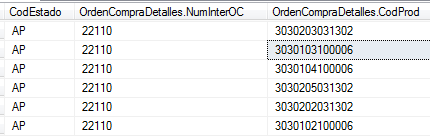
And Sequelize find all output

 jpierrep
on 18 Jun 2019
jpierrep
on 18 Jun 2019
any updates? 😅
 jembach
on 4 Aug 2019
jembach
on 4 Aug 2019
the same problem here? anyone?
 BartusZak
on 26 Aug 2019
BartusZak
on 26 Aug 2019
the same problem here? anyone?
The best workaround is to not use sequelize
EdByrnee
on 26 Aug 2019
And what do you recommend instead??
jpierrep
on 26 Aug 2019
@jpierrep @EdByrnee @BartusZak @jembach @masonjwhite @AmbroiseVuaridel @Relequestual @marcelorl - Can some of you please try the PR created by pateketrueke (#9384) and see if it fixes the problem for you?
You can try it by using npm install https://github.com/json-schema-faker/sequelize/tarball/bugfix/merge_nested_associations.
 papb
on 26 Aug 2019
papb
on 26 Aug 2019
Removing subQuery: false in findAll options solved the problem in my case.
 Gaetan-LeGac
on 28 Oct 2019
Gaetan-LeGac
on 28 Oct 2019
Removing raw:true from outer level worked for me
 majethiyanirav
on 14 Nov 2019
majethiyanirav
on 14 Nov 2019
Getting the same here. Not using 'raw: true'
 rochapablo
on 15 Dec 2019
rochapablo
on 15 Dec 2019
Had the same problem. The actual response (observed when using { plain: false, raw: true}) included all data, so I knew it wasn't a problem with my query.
I had a A.hasMany(B) relationship where the B table had a foreign key that referenced the primary key of A. The primary key of A was an unsigned integer. Changing this to a signed int solved my problem.
 dabbe
on 7 Jan 2020
dabbe
on 7 Jan 2020
I had the same problem and fixed it by changing my model definitions from:
attributes: ['list', 'of', 'most', 'attributes']
to
attributes: {exclude: ['list', 'of', 'other', 'attributes']}
In the end the same attributes where included, but this seems to make a difference in how sequelize calculates which rows are unique. I didn't have time to check the sequelize source code as to why exactly. Maybe someone a contributor can investigate further.
 VaguelySerious
on 15 Apr 2020
VaguelySerious
on 15 Apr 2020
Still no fix?!
 genio
on 27 Apr 2020
genio
on 27 Apr 2020
one-many association query caused a problem that duplicate rows appears from left table, how to fix or config that?
 EagleQL
on 8 May 2020
EagleQL
on 8 May 2020
Removing
raw:truefrom outer level worked for me
worked for me too...
 janudewangga
on 16 Aug 2020
janudewangga
on 16 Aug 2020
I had the same error, added composite pk to multiple columns of model without id, also added primaryKey: true for them, added .removeAttribute('id'), and all includes now works just fine
 iamolegga
on 1 Dec 2020
iamolegga
on 1 Dec 2020
Hey, i have same issue, have any fix?
i am using global raw:true;
Below code is working. But give me only first object not all objects. Any one help ?
Users.hasMany(Payments, { foreignKey: "user_id" });
  Users.findOne({
    where: { email: req.body.email, password: req.body.password },
    raw: true,
    nest: true,
    include: {
      attributes: {
        exclude: ["id"],
      },
      model: Payments,
      require: true,
    },
  })
 mahiraltinkaya
on 5 Mar 2021
mahiraltinkaya
on 5 Mar 2021
The solution that worked for me:
I do not have 'id' in my 'Models' , MySQL does actually have them as standard in the tables with auto increment but I rarely need to reference them as I store UUID and other unique data. The solutions that worked for me was to not assign a primaryKey in the 'Model's' instead when building association's I always write with 'foreignKey and sourceKey' as example:
 this.hasMany(Document, {
          foreignKey: 'orderNumber',
          sourceKey: 'orderNumber',
        })
Full disclosure: I'm not the most experienced Dev, nor do i work on large complex applications but hey this may help someone.
Cheers
 trig79
on 5 Mar 2021
trig79
on 5 Mar 2021
The solution that worked for me:
I do not have 'id' in my 'Models' , MySQL does actually have them as standard in the tables with auto increment but I rarely need to reference them as I store UUID and other unique data. The solutions that worked for me was to not assign a primaryKey in the 'Model's' instead when building association's I always write with 'foreignKey and sourceKey' as example:this.hasMany(Document, { foreignKey: 'orderNumber', sourceKey: 'orderNumber', })Full disclosure: I'm not the most experienced Dev, nor do i work on large complex applications but hey this may help someone.
Cheers
Hey bro i tried, but after added sourceKey gived me 'UnhandledPromiseRejectionWarning: TypeError: Cannot read property 'field' of undefined' this error.
Users.hasMany(Payments, { foreignKey: "user_id", sourceKey: "user_id" });
  Payments.belongsTo(Users, { foreignKey: "id" });
  Users.findOne({
    where: { email: req.body.email, password: req.body.password },
    raw: true,
    nest: true,
    include: {
      attributes: {
        exclude: ["id"],
      },
      model: Payments,
      require: true,
      all: true,
    },
  }),
Users.hasMany(Payments, { foreignKey: "user_id", sourceKey: "user_id" });
  Payments.belongsTo(Users, { foreignKey: "id" });
i had this error and it led to one of my models not having that field in it.
do you have 'id' in your User Model?
do you have 'user_id' in your User Model?
do you have 'id' in your Payment Model?
do you have 'user_id' in your Payment Model?
the sourceKey references User the User Model
like i say i haven't got lots of experience but maybe this helps?
trig79
on 5 Mar 2021
Users and Payments model has id also Payments model has user_id
mahiraltinkaya
on 5 Mar 2021
Hey mate
so the way I see it is you need to try
User hasMany Payments : change sourceKey to ‘id’.
The sourceKey is referencing User, so if you don’t have user_id on the User Model then that is where the error is probably coming from.
trig79
on 5 Mar 2021
Hey mate thank you for help;
Shared below complately. I think you can help me.
After edit;
SELECT `Users`.*, `Payments`.`user_id` AS `Payments.user_id`, `Payments`.`package` AS `Payments.package`, `Payments`.`price` AS `Payments.price`, `Payments`.`trtotal` AS `Payments.trtotal`, `Payments`.`dolar_kur` AS `Payments.dolar_kur`, `Payments`.`point` AS `Payments.point`, `Payments`.`type` AS `Payments.type`, `Payments`.`update` AS `Payments.update`, `Payments`.`status` AS `Payments.status`, `Payments`.`order_id` AS `Payments.order_id`, `Payments`.`createdAt` AS `Payments.createdAt`, `Payments`.`updatedAt` AS `Payments.updatedAt` FROM (SELECT `Users`.`id`, `Users`.`username`, `Users`.`password`, `Users`.`name`, `Users`.`email`, `Users`.`phone`, `Users`.`country`, `Users`.`city`, `Users`.`address`, `Users`.`type`, `Users`.`reference`, `Users`.`sponsor`, `Users`.`parent`, `Users`.`direction`, `Users`.`career`, `Users`.`status`,
`Users`.`createdAt`, `Users`.`updatedAt` FROM `Users` AS `Users` WHERE `Users`.`email` = '[email protected]' AND `Users`.`password` = 'xx' LIMIT 1) AS `Users` LEFT OUTER JOIN `Payments` AS `Payments` ON `Users`.`id` = `Payments`.`user_id`;


mahiraltinkaya
on 5 Mar 2021
I solved this problem by first fetching as a raw sequelize object, then calling .toJSON() on it.
Example:
const post = await db.Post.findByPk(postId, {
      include: [
        { model: db.Comment, as: "comments" }
      ],
      raw: false,
      plain: true,
      nest: true
    });
    console.log(await post.toJSON());
The relationship between Post and Comment is shown below:
 Post.hasMany(models.Comment, {
            foreignKey: "post_id",
            as: "comments"
  })
 KarenOk
on 12 Mar 2021
KarenOk
on 12 Mar 2021
So has anyone really found a fix to this problem? This thread evolved into two different issues. The second issue having to do with raw: true.
I am having the original problem from the opening comment. Our MSSQL db doesn't want Sequelize to Insert_Identity so the Primary Key is disabled to allow creation coupled with Model.removeAttribute('id'). On Read queries, hasMany loads only one record. @lekhnath commented on setting up a composite unique key, but I haven't had success with that either. Any thoughts left out there?
 uharston
on 23 Mar 2021
uharston
on 23 Mar 2021
Additionally I would like to add an example:
Foo.hasMany(bar)
Bar.belongsTo(foo)
Foo does not need the PK declared for it to work properly. Once you declare the PK on Bar, then it will fetch all of the associations.
Funny thing is that the SQL generated by both setups is exactly the same and they both retrieve all the association when inputted directly into SQL Server console. It seems that Sequelize configurations is blocking the rendering of all the associations.
uharston
on 23 Mar 2021
Not sure if 100% related to this - but we had an issue with a many to many relationship where the solution of using a primary key was found by a coworker in this documentation link https://sequelize.org/master/manual/advanced-many-to-many.html
We defined the ID in the Model as said and it all worked - so maybe it is not exactly an issue, more of a misunderstanding when using sequelize, or how sequelize does things. Just adding it because nobody pointed in the direction of that link and might be helpful.
You probably noticed that the User_Profiles table does not have an id field. As mentioned above,
it has a composite unique key instead. The name of this composite unique key is chosen
 automatically by Sequelize but can be customized with the uniqueKey option:

User.belongsToMany(Profile, { through: User_Profiles, uniqueKey: 'my_custom_unique' });
Another possibility, if desired, is to force the through table to have a primary key just like other
standard tables. To do this, simply define the primary key in the model:

const User_Profile = sequelize.define('User_Profile', {
  id: {
    type: DataTypes.INTEGER,
    primaryKey: true,
    autoIncrement: true,
    allowNull: false
  },
  selfGranted: DataTypes.BOOLEAN
}, { timestamps: false });
User.belongsToMany(Profile, { through: User_Profile });
Profile.belongsToMany(User, { through: User_Profile });
The above will still create two columns userId and profileId, of course, but instead of setting
up a composite unique key on them, the model will use its id column as primary key.
Everything else will still work just fine.
 maeriens
on 23 Mar 2021
maeriens
on 23 Mar 2021
This is great stuff right here.
Our problem specifically is that we cannot declare primaryKeys at all with our ORM because SQL Server does not want the ORM to Insert_Identity. So we are creating associations with out declaring the primary key. Ex:
`@Table
export class Foo {
@Column({primaryKey: false})
idFoo: number
@HasMany(() => Bar, {
sourceKey: 'idFoo',
})
Bars: Bar[];
}
@Table
export class Bar {
@Column({primaryKey: false})
idBar: number
@ForiegnKey( () => Foo, )
idFoo: number
@BelongsTo(() => Foo, {
targetKey: 'idFoo'
})
foo: Foo;
}
`
As soon as I turn primaryKey to true on Foo, I get all of my records rather that one when calling something like foo.getBars().
https://sequelize.org/master/manual/assocs.html#creating-associations-referencing-a-field-which-is-not-the-primary-key
uharston
on 23 Mar 2021
Related issues
 clutariomark
·
133Comments
clutariomark
·
133Comments
 krishangupta
·
106Comments
krishangupta
·
106Comments
 nullivex
·
77Comments
nullivex
·
77Comments
 ludydoo
·
114Comments
ludydoo
·
114Comments
 toaster33
·
62Comments
toaster33
·
62Comments
Most helpful comment
😉