One: [nnfwapi] Design an API for getting tensor model I/O index by tensor name
Initial Suggestion : #3340
It will be contained in nnfw_dev.h first(if possible) then we can move it to nnfw.h when it becomes mature.
 wateret
All 33 comments
Ideas...
Methods from #3340
Method 1 based
Add a name member to nnfw_tensorinfo.
typedef struct nnfw_tensorinfo
{
  NNFW_TYPE dtype;  // 4b
  int32_t rank;     // 4b
  int32_t dims[NNFW_MAX_RANK]; // 24b
  // EXTENDED PART BEGIN
  char *name;     // 4/8b
  char name[32];  // 32b
  // EXTENDED PART END
} nnfw_tensorinfo;
- (Probably?) backward-compatible as long as
nameis appended at last - Should add it to
nnfw.hdirectly as we are changing the existing struct
Two types for name
nameas a char pointer
- Who manages this pointer?
nameas a fixed-length string
- What if the name length exceeds the fixed-length?
- Struct takes a lot of space
Method 2 based
✨This method has been chosen.
Changed to return model I/O index instead of tensor index.
NNFW_STATUS nnfw_input_tensorindex(nnfw_session *session, const char *tensorname, uint32_t *index);
NNFW_STATUS nnfw_output_tensorindex(nnfw_session *session, const char *tensorname, uint32_t *index);
Another method 1
✨This method has been chosen. Here's the reason - https://github.com/Samsung/ONE/issues/3391#issuecomment-668577807
The reverse of Method 2.
NNFW_STATUS nnfw_get_input_tensorname(nnfw_session* session, uint32_t index, char* /* out */ buffer, uint32_t buffer_size);
NNFW_STATUS nnfw_get_output_tensorname(nnfw_session* session, uint32_t index, char* /* out */ buffer, uint32_t buffer_size);
@wateret
Method 1 based
Add a
namemember tonnfw_tensorinfo.
I am thinking of Method 1 when I heard the API request.
nameas a char pointer
Who manages this pointer?
I think runtime can manage name. names could be allocated and copied during loading model. name will be deallocated when the session is closed. We may allocate a chunk instead of allocation of [number of input + number of output].
nameas a fixed-length string
name can be const char *.
 glistening
on 23 Jul 2020
glistening
on 23 Jul 2020
nameas a char pointer
Who manages this pointer?I think
runtimecan managename.names could be allocated and copied during loading model.namewill be deallocated when the session is closed. We may allocate a chunk instead of allocation of [number of input + number of output].
That makes sense, I agree. Then the type must be const char * definitely.
And now the only concern about Method 1 is whether extending nnfw_tensorinfo breaks backward-compatibility or not.
- Offsets of the legacy members are going to be the same as before as we are appending a member, so it looks good.
- The struct size increases
nnfw_apply_tensorinfowill break since it acceptsnnfw_tensorinfoas value (But it is deprecated, so it may be OK)- What if user wrote some code that relies on the struct size? → I'm still not sure
wateret
on 24 Jul 2020
@wateret I didn't see backward compabitility issue.
What if user wrote some code that relies on the struct size?
Could you please give me an example for this case? If the developers are going to use new "nnfw.h`, his application code will be recompiled. I don't think there would be an issue.
glistening
on 27 Jul 2020
If the developers are going to use new "nnfw.h`, his application code will be recompiled.
If that's the case, I agree that it has no problem. But I'm not sure if we can call it backward-compatible.
I think it should work without app recompilation to be backward-compatible. If an app is recompiled, I would say it is written for the new version. For example, you have an app that runs with ONE 1.6.0 which is installed on the system. Then the system updates ONE to 1.7.0 but no changes on the app. If it just works, I think we can say 1.7.0 is backward-compatible with 1.6.0.
Please correct me if I'm wrong, I'm still not sure about it.
wateret
on 28 Jul 2020
I think it should work without app recompilation to be backward-compatible.
Then, most modules that I know is not backward-compatible (including tensorflw lite).
glistening
on 28 Jul 2020
Well, NN API is.
most modules that I know
Could you be more specific?
(including tensorflow lite)
Isn't it C++ API? I think they aren't backend-compatible too. And I thought it is OK since their schema file is backward-compatible.
wateret
on 30 Jul 2020
Could you be more specific?
As I mentioned, tensorflow lite is an example.
Isn't it C++ API?
No. It has C API. See tensorflow/lite/c/c_api.h. It has Python and Java API. I cannot find C++ API.
glistening
on 3 Aug 2020
Thanks, I was not awaare of C API. FYI C++ API is here -https://www.tensorflow.org/lite/api_docs
wateret
on 3 Aug 2020
I looked at tensorflow lite C API.
In https://github.com/tensorflow/tensorflow/blob/master/tensorflow/lite/c/common.h , it says
// NOTE: The order of values in these structs are "semi-ABI stable". New values
// should be added only to the end of structs and never reordered.
If assuming all the app code is recompiled, we don't have to keep the order of existing struct. I'm not sure about what "semi-ABI stable" means, but this implies it is not completely stable. And I think struct size changes matters.
I am not sure C API is official, or it is backward-compatible. There is only Java, Python and C++ in the document - https://www.tensorflow.org/lite/api_docs .
There is comment in https://github.com/tensorflow/tensorflow/blob/master/tensorflow/lite/c/common.h , it implies that this is not official yet.
// TfLiteTensor wraps data associated with a graph tensor.
//
// Note that, while the TfLiteTensor struct is not currently opaque, and its
// fields can be accessed directly, these methods are still convenient for
// language bindings. In the future the tensor struct will likely be made opaque
// in the public API.
Plus, TfLiteTensor was evolved(some data definitions have been appended) for a few times. But it looks like they are likely to change it to an opaque pointer sometime later, and IMHO that is because of backward-compatibility.
wateret
on 3 Aug 2020
About recompilation, say we have nnfw 1.0.0 installed in the platform and there is an app that worked with nnfw 1.0.0. And the platform updates it to 1.1.0, the app would not work unless there is a compiled binary with 1.1.0.
wateret
on 3 Aug 2020
@wateret
TensorflowLite C++ API reference guides us to include "interpreter.h", which includes many headers that expose implementation details including "c/common.h". I didn't imagine they call it C++ API. For me, it looks implementation itself.
Plus, TfLiteTensor was evolved(some data definitions have been appended) for a few times. But it looks like they are likely to change it to an opaque pointer sometime later, and IMHO that is because of backward-compatibility.
Yes, exactly. As you pointed out they know it should be updated.
glistening
on 4 Aug 2020
About recompilation, say we have nnfw 1.0.0 installed in the platform and there is an app that worked with nnfw 1.0.0. And the platform updates it to 1.1.0, the app would not work unless there is a compiled binary with 1.1.0.
Yes. backward compatibility is common problem in platforms. It depends on each platform's policy.
What about creating another issue if you would like to talk more about backward compatibility.
glistening
on 4 Aug 2020
What about creating another issue if you would like to talk more about backward compatibility.
So I guess what we need to decide is "whether NNFW API supports binary compatibility or compilation(?) compatibility". Let's bring the discussion offline.
wateret
on 4 Aug 2020
If we are going to provide binary backward compatibility, which means all binaries that worked with old onert should be guaranteed to work without recompilation, it would be better to use opaque pointers instead of exposing structure itself. Once a structure is exposed, its layout and size cannot be changed.
(ADDED) nnfw_tensorinfo seems the only exposed structure in nnfw.h. nnfw_dev.h has more.
glistening
on 4 Aug 2020
Conclusion from the offline meeting
We are going to keep the ABI(binary?) compatibility. So appending a member to a struct is not allowed, for now.
wateret
on 4 Aug 2020
I am going to go with "Another method 1" since "Method 2" could be ambiguous. It looks like two or more tensors could have the same name. It is going to be added to nnfw_experimental.h first.
wateret
on 4 Aug 2020
@wateret
- I've assumed that tensor names are unique. When do we have same name tensors? I consider
namemeansidwhen we see in netron.
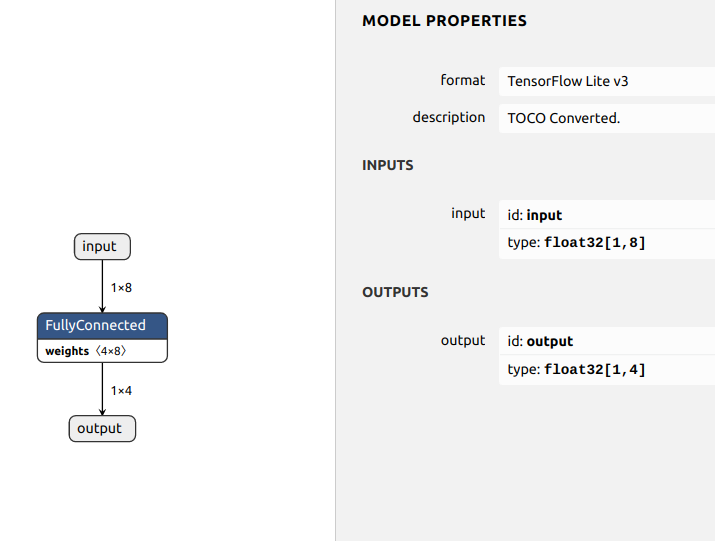
I am not sure we need to consider the models with same name for different tensors.
- assume some input or output tensors have same name. Why do we need to get buffer from user in this case?
glistening
on 5 Aug 2020
When do we have same name tensors?
I don't know, just to avoid that situation just in case.
wateret
on 5 Aug 2020
@wateret Could you please answer to my 2nd question assuming we have same name?
- assume some input or output tensors have same name. Why do we need to get buffer from user in this case?
glistening
on 5 Aug 2020
Why do we need to get buffer from user in this case?
I don't understand. Do you mean why would a user want to get the index with its name? Then I don't think that would be useful too. But if it is not guaranteed that all tensors are of distinct name, I must care. I just chose that way to avoid potential ambiguity.
I can go with "Method 2" if what you assumed is always true, but I just don't want to deep dive into it. Even if Tensorflow does, we still should decide the same thing for Circle, not that I can do alone.
wateret
on 5 Aug 2020
@wateret I am asking about change:
char* /* out */ buffer, uint32_t buffer_size
It requires user to pass _user-allocated_ buffer. I don't understand why it is changed by possibility of duplicated tensor name.
glistening
on 5 Aug 2020
@glistening So you mean passing an output buffer is more inconvenient than passing an input buffer and you'd like go with "Method 2"? OK then, I will. And for duplicated names, the API will return the one at the earliest index.
wateret
on 6 Aug 2020
@wateret Thank your for clarifying the two changes (duplicated names and user-allocated buffer) are irrelevant. There was concern of returning pointer to internal constant at early design of API last year. Thus, I would like to get the reason of requiring _user-allocated buffer_. I prefer method 2 because it is simple and convenient in client's perspective.
glistening
on 7 Aug 2020
(This is not relevant to the main topic)
There was concern of returning pointer to internal constant at early design of API last year.
If we chose first way, it would return the internal pointer. Then would it have been an issue?
Thus, I would like to get the reason of requiring user-allocated buffer.
I thought passing user-allocated buffer is for avoiding internal pointer. Did I get something wrong?
wateret
on 7 Aug 2020
I thought passing user-allocated buffer is for avoiding internal pointer. Did I get something wrong?
No. I just want how you think. I am not expert of security. I am not sure how much prohibiting internal pointer is effective.
Anyway, If you would like to avoid returning internal pointer, it should be the form of char* /* out */ buffer, uint32_t buffer_size.
In addition, all API should not use returning internal pointer. nnfw.h seems not have API that returns internal pointer till now.
glistening
on 7 Aug 2020
In addition, all API should not use returning internal pointer. nnfw.h seems not have API that returns internal pointer till now.
That makes sense, but I asked since that seems like contradiction with the earlier comment. https://github.com/Samsung/ONE/issues/3391#issuecomment-662765866
nameas a char pointer
Who manages this pointer?I think
runtimecan managename.names could be allocated and copied during loading model.namewill be deallocated when the session is closed. We may allocate a chunk instead of allocation of [number of input + number of output].
I understood this returning internal pointers.
wateret
on 7 Aug 2020
Turns out that we understood things differently. Resolved with offline discussion. 😄
wateret
on 7 Aug 2020
@wateret, @sj0-park If you're going to use the index to set input and output, what about the form of:
Method 4
auto status = nnfw_set_output(session_dec, "input1", NNFW_TYPE_TENSOR_FLOAT32, input1, szInput1 * sizeof(float));
if (status != NNFW_STATUS_NO_ERROR)
 // handling error
It takes const char* instead of index.
Method 2
It would be done like the following with Method 2.
uint32_t input1Idx;
auto status = nnfw_output_tensorindex(session, "input1", &input1Idx);
if (status != NNFW_STATUS_NO_ERROR)
 // handling error
status = nnfw_set_output(session, input1Idx, NNFW_TYPE_TENSOR_FLOAT32, input1, szInput1 * sizeof(float));
if (status != NNFW_STATUS_NO_ERROR)
 // handling error
I would prefer Method 2. For method 4, I just found NNFW_STATUS nnfw_set_input_tensorinfo(nnfw_session *session, uint32_t index, const nnfw_tensorinfo *tensor_info); also uses the input index. So with Method 4, we will need a string version too. So rather than that, Method 2 looks better to me.
wateret
on 7 Aug 2020
@wateret Yes, for nnfw developer's perspective, method 2 is preferred since only 1 additional API is enough. I suggested Method 4 in the nnfw user's perspective. Both work for me.
glistening
on 7 Aug 2020
@wateret @glistening
Thank you very much for your efforts to help me.
The API of Method 4 is actually what I wanted to do, because it can make my codes simple.
So, I prefer Method 4, but if you have any problem, Method 2 is also fine.
 sj0-park
on 7 Aug 2020
sj0-park
on 7 Aug 2020
Included in nnfw_experimental.h since 1.9.0.
wateret
on 15 Sep 2020
Related issues
 KimDongEon
·
4Comments
KimDongEon
·
4Comments
 mhs4670go
·
4Comments
mhs4670go
·
3Comments
mhs4670go
·
4Comments
mhs4670go
·
3Comments
 jinevening
·
3Comments
mhs4670go
·
3Comments
jinevening
·
3Comments
mhs4670go
·
3Comments