Leetcode: 【每日一题】- 2020-05-29 - 886. 可能的二分法
给定一组 N 人(编号为 1, 2, ..., N), 我们想把每个人分进任意大小的两组。
每个人都可能不喜欢其他人,那么他们不应该属于同一组。
形式上,如果 dislikes[i] = [a, b],表示不允许将编号为 a 和 b 的人归入同一组。
当可以用这种方法将每个人分进两组时,返回 true;否则返回 false。
示例 1:
输入:N = 4, dislikes = [[1,2],[1,3],[2,4]]
输出:true
解释:group1 [1,4], group2 [2,3]
示例 2:
输入:N = 3, dislikes = [[1,2],[1,3],[2,3]]
输出:false
示例 3:
输入:N = 5, dislikes = [[1,2],[2,3],[3,4],[4,5],[1,5]]
输出:false
提示:
1 <= N <= 2000
0 <= dislikes.length <= 10000
1 <= dislikes[i][j] <= N
dislikes[i][0] < dislikes[i][1]
对于 dislikes[i] == dislikes[j] 不存在 i != j
来源:力扣(LeetCode)
链接:https://leetcode-cn.com/problems/possible-bipartition
著作权归领扣网络所有。商业转载请联系官方授权,非商业转载请注明出处。
 azl397985856
All 2 comments
思路
这是一个图的问题。解决这种问题一般是要遍历图才行的,这也是图的套路。 那么遍历的话,你要有一个合适的数据结构。 比较常见的图存储方式是邻接矩阵和邻接表。
而我们这里为了操作方便(代码量),直接使用邻接矩阵。由于是互相不喜欢,不存在一个喜欢另一个,另一个不喜欢一个的情况,因此这是无向图。而无向图邻接矩阵实际上是会浪费空间,具体看我下方画的图。
而题目给我们的二维矩阵并不是现成的邻接矩阵形式,因此我们需要自己生成。
我们用1表示互相不喜欢(dislike each other)。
        graph = [[0] * N for i in range(N)]
        for a, b in dislikes:
            graph[a - 1][b - 1] = 1
            graph[b - 1][a - 1] = 1
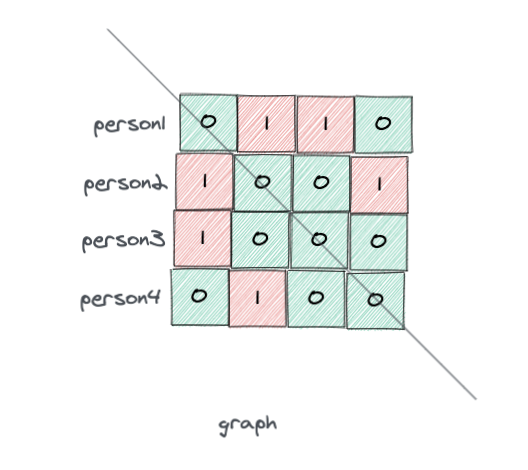
(无向图这样表示的话是基于我画的直线对称的,因此会有一半的空间浪费,我们暂时不考虑这个浪费)
同时可以用hashmap或者数组存储N个人的分组情况, 业界关于这种算法一般叫染色法,因此我们命名为colors,其实对应的本题叫groups更合适。
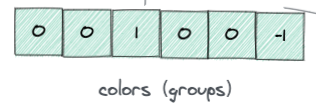
我们用:
- 0 表示没有分组
- 1 表示分组1
- -1 表示分组2
之所以用0,1,-1,而不是0,1,2是因为我们会在不能分配某一组的时候尝试分另外一组,这个时候有其中一组转变为另外一组就可以直接乘以-1,而0,1,2这种就稍微麻烦一点而已。
具体算法:
- 遍历每一个人,尝试给他们进行分组,比如默认分配组1.
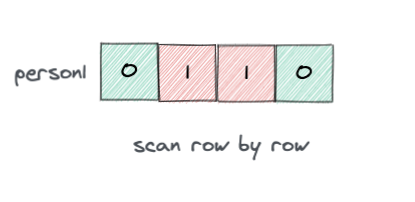
- 然后遍历这个人讨厌的人,尝试给他们分另外一组,如果不可以分配另外一组,则返回False
那问题的关键在于如何判断“不可以分配另外一组”呢?
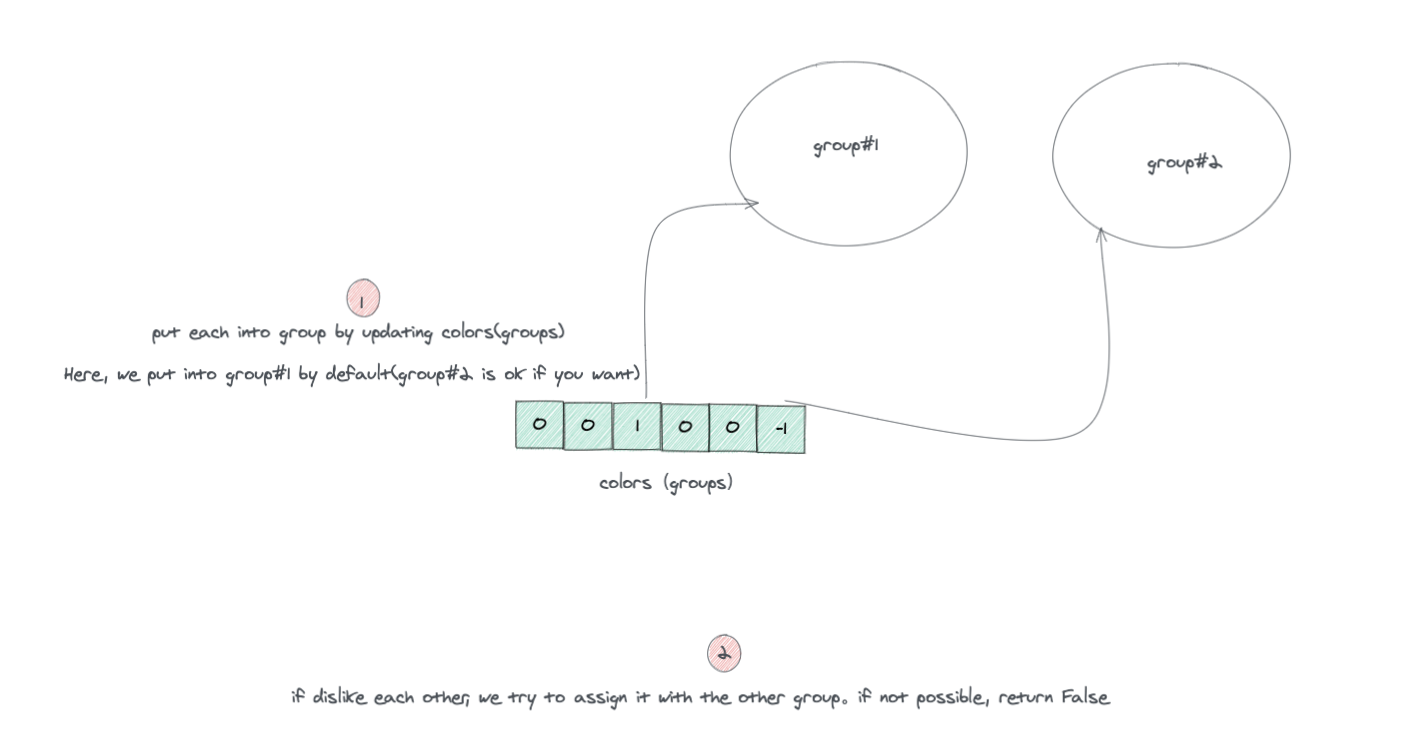
实际上,我们已经用colors记录了分组信息,对于每一个人如果分组确定了,我们就更新colors,那么对于一个人如果分配了一个组,并且他讨厌的人也被分组之后,分配的组和它只能是一组,那么“就是不可以分配另外一组”。
代码表示就是:
# 其中j 表示当前是第几个人,N表示总人数。 dfs的功能就是根据colors和graph分配组,true表示可以分,false表示不可以,具体代码见代码区。
if colors[j] == 0 and not self.dfs(graph, colors, j, -1 * color, N)
关键点
- 二分图
- 染色法
代码
class Solution:
    def dfs(self, graph, colors, i, color, N):
        colors[i] = color
        for j in range(N):
            # dislike eachother
            if graph[i][j] == 1:
                if colors[j] == color:
                    return False
                if colors[j] == 0 and not self.dfs(graph, colors, j, -1 * color, N):
                    return False
        return True

    def possibleBipartition(self, N: int, dislikes: List[List[int]]) -> bool:
        graph = [[0] * N for i in range(N)]
        colors = [0] * N
        for a, b in dislikes:
            graph[a - 1][b - 1] = 1
            graph[b - 1][a - 1] = 1
        for i in range(N):
            if colors[i] == 0 and not self.dfs(graph, colors, i, 1, N):
                return False
        return True
This issue has been automatically marked as stale because it has not had recent activity. It will be closed if no further activity occurs. Thank you for your contributions.
![stale[bot] picture](https://avatars.githubusercontent.com/in/1724?v=4&s=40) stale[bot]
on 28 Jul 2020
stale[bot]
on 28 Jul 2020
Related issues
azl397985856
·
3Comments
azl397985856
·
4Comments
azl397985856
·
3Comments
azl397985856
·
4Comments
azl397985856
·
3Comments
Most helpful comment
思路
这是一个图的问题。解决这种问题一般是要遍历图才行的,这也是图的套路。 那么遍历的话,你要有一个合适的数据结构。 比较常见的图存储方式是邻接矩阵和邻接表。
而我们这里为了操作方便(代码量),直接使用邻接矩阵。由于是互相不喜欢,不存在一个喜欢另一个,另一个不喜欢一个的情况,因此这是无向图。而无向图邻接矩阵实际上是会浪费空间,具体看我下方画的图。
而题目给我们的二维矩阵并不是现成的邻接矩阵形式,因此我们需要自己生成。
我们用1表示互相不喜欢(dislike each other)。
(无向图这样表示的话是基于我画的直线对称的,因此会有一半的空间浪费,我们暂时不考虑这个浪费)
同时可以用hashmap或者数组存储N个人的分组情况, 业界关于这种算法一般叫染色法,因此我们命名为colors,其实对应的本题叫groups更合适。
我们用:
之所以用0,1,-1,而不是0,1,2是因为我们会在不能分配某一组的时候尝试分另外一组,这个时候有其中一组转变为另外一组就可以直接乘以-1,而0,1,2这种就稍微麻烦一点而已。
具体算法:
那问题的关键在于如何判断“不可以分配另外一组”呢?
实际上,我们已经用colors记录了分组信息,对于每一个人如果分组确定了,我们就更新colors,那么对于一个人如果分配了一个组,并且他讨厌的人也被分组之后,分配的组和它只能是一组,那么“就是不可以分配另外一组”。
代码表示就是:
关键点
代码