Kibana: [DocViewer/Table] empty date fields are listed
Kibana version: 7.8 - master
Elasticsearch version: 7.8 - master
Original install method (e.g. download page, yum, from source, etc.): source
Describe the bug:
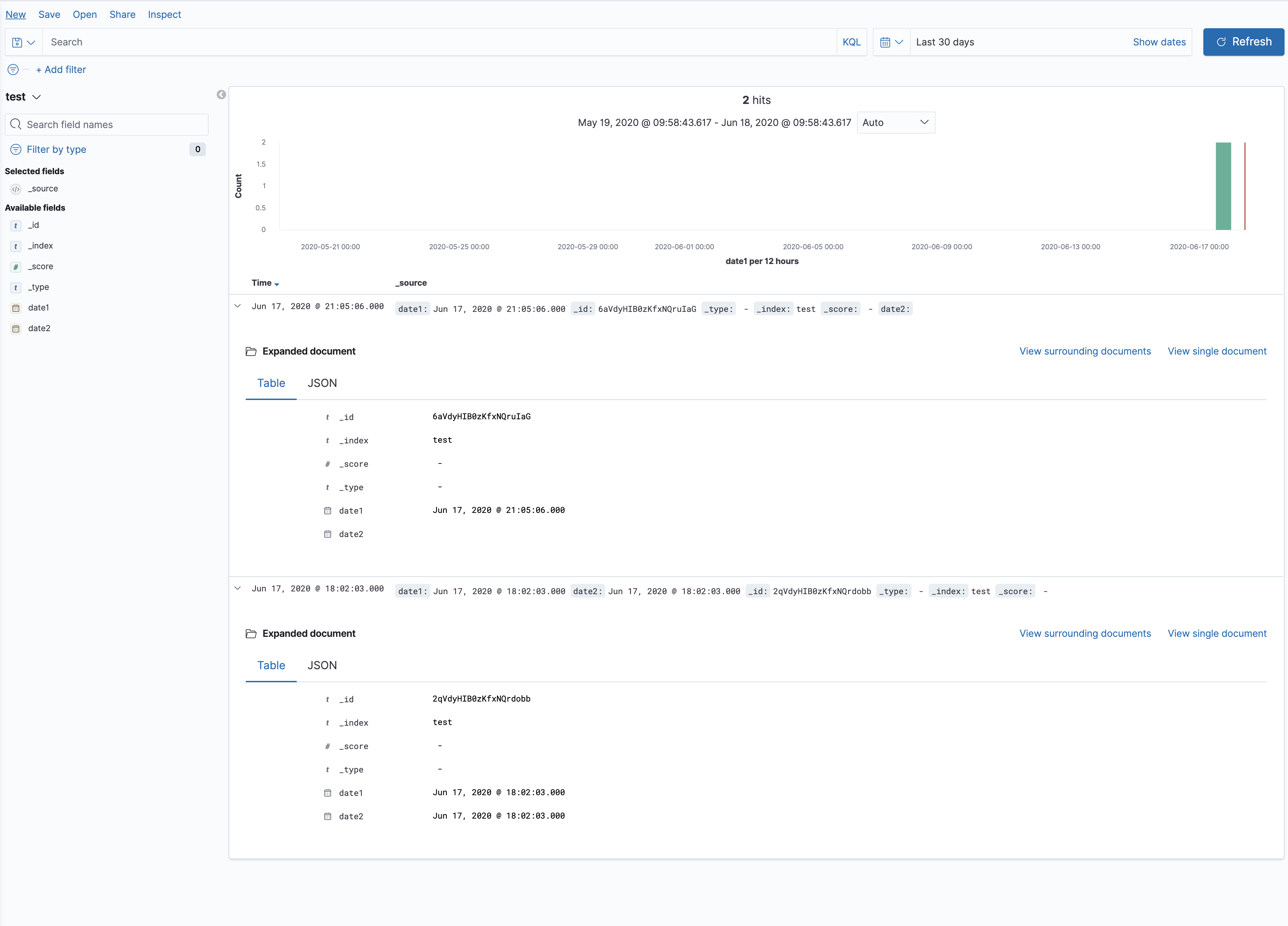
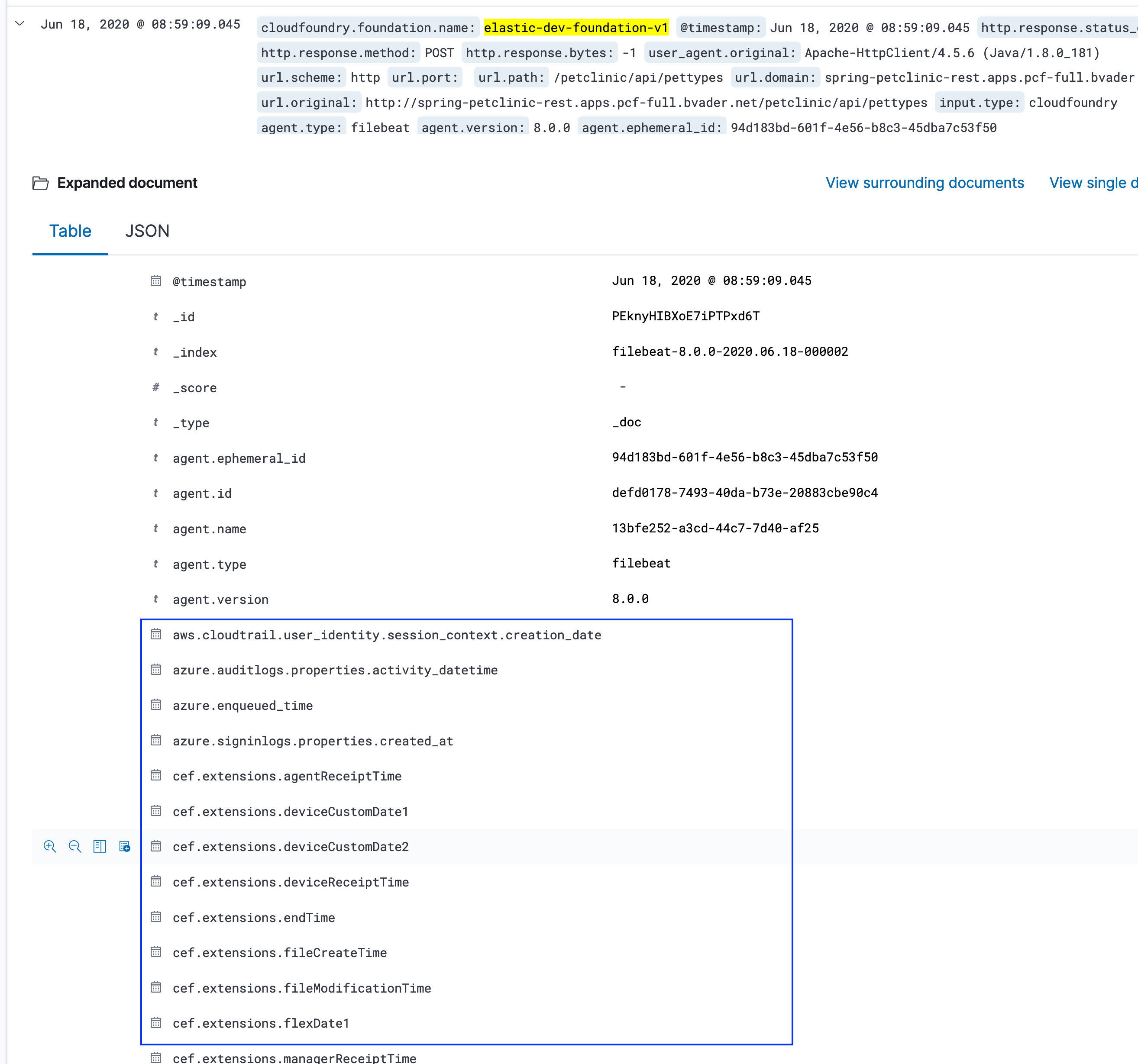
If you have multiple date fields in your index (metricbeats created dozens of them) but documents use only a handful of those date fields at a time, Discover renders all of the date fields even when they are not found in the _source of the document.
Steps to reproduce:
- Index two test documents in console:
POST /test/_doc
{
  "date1": "2020-06-18T01:02:03Z",
  "date2": "2020-06-18T04:05:06Z"
}
POST /test/_doc
{
  "date1": "2020-06-18T01:02:03Z"
}
- Create a
testindex pattern - Open up discover and see the extra date field is rendered when it shouldn't be
Expected behavior:
Discover should only show fields that are relevant to a specific document.
Screenshots (if relevant):
 spalger
All 6 comments
Just to add context for filebeat-* and metricbeat-* many, perhaps 10-20 or more empty fields are displayed
 bvader
on 18 Jun 2020
bvader
on 18 Jun 2020
@kertal I marked this as a blocker for 7.8.1
 timroes
on 22 Jun 2020
timroes
on 22 Jun 2020
Elasticsearch in 7.8 seems to have changed the docvalue_fields of search result. So the following request with the data @spalger provided returns:
Request in 7.8:
POST /test/_search
{
  "docvalue_fields": [
    {
      "field": "date1",
      "format": "date_time"
    },
    {
      "field": "date2",
      "format": "date_time"
    }
  ]
}
Hits in response in 7.8
 [
      {
        "_index" : "test",
        "_id" : "tofp3XIBeEof-q9jHaWL",
        "_score" : 1.0,
        "_source" : {
          "date1" : "2020-06-18T01:02:03Z",
          "date2" : "2020-06-18T04:05:06Z"
        },
        "fields" : {
          "date2" : [
            "2020-06-18T04:05:06.000Z"
          ],
          "date1" : [
            "2020-06-18T01:02:03.000Z"
          ]
        }
      },
      {
        "_index" : "test",
        "_id" : "wYfp3XIBeEof-q9jOqWi",
        "_score" : 1.0,
        "_source" : {
          "date1" : "2020-06-18T01:02:03Z"
        },
        "fields" : {
          "date2" : [ ],
          "date1" : [
            "2020-06-18T01:02:03.000Z"
          ]
        }
      }
    ]
Hits in 7.7:
[{
        "_index" : "test",
        "_type" : "_doc",
        "_id" : "nCPu3XIB3tjGouxM1KJr",
        "_score" : 1.0,
        "_source" : {
          "date1" : "2020-06-18T01:02:03Z",
          "date2" : "2020-06-18T04:05:06Z"
        },
        "fields" : {
          "date1" : [
            "2020-06-18T01:02:03.000Z"
          ],
          "date2" : [
            "2020-06-18T04:05:06.000Z"
          ]
        }
      },
      {
        "_index" : "test",
        "_type" : "_doc",
        "_id" : "niPu3XIB3tjGouxM46I3",
        "_score" : 1.0,
        "_source" : {
          "date1" : "2020-06-18T01:02:03Z"
        },
        "fields" : {
          "date1" : [
            "2020-06-18T01:02:03.000Z"
          ]
        }
      }]
So 7.7 returns also empty fields. If this is an intended change from ES side, we need to change the way we prepare the data. Because currently we display what ES returns
 kertal
on 23 Jun 2020
kertal
on 23 Jun 2020
This is a regression in ES, and the PR is already in the works to fix it, will link it here once available
kertal
on 23 Jun 2020
Should by fixed by https://github.com/elastic/elasticsearch/pull/58418
kertal
on 23 Jun 2020
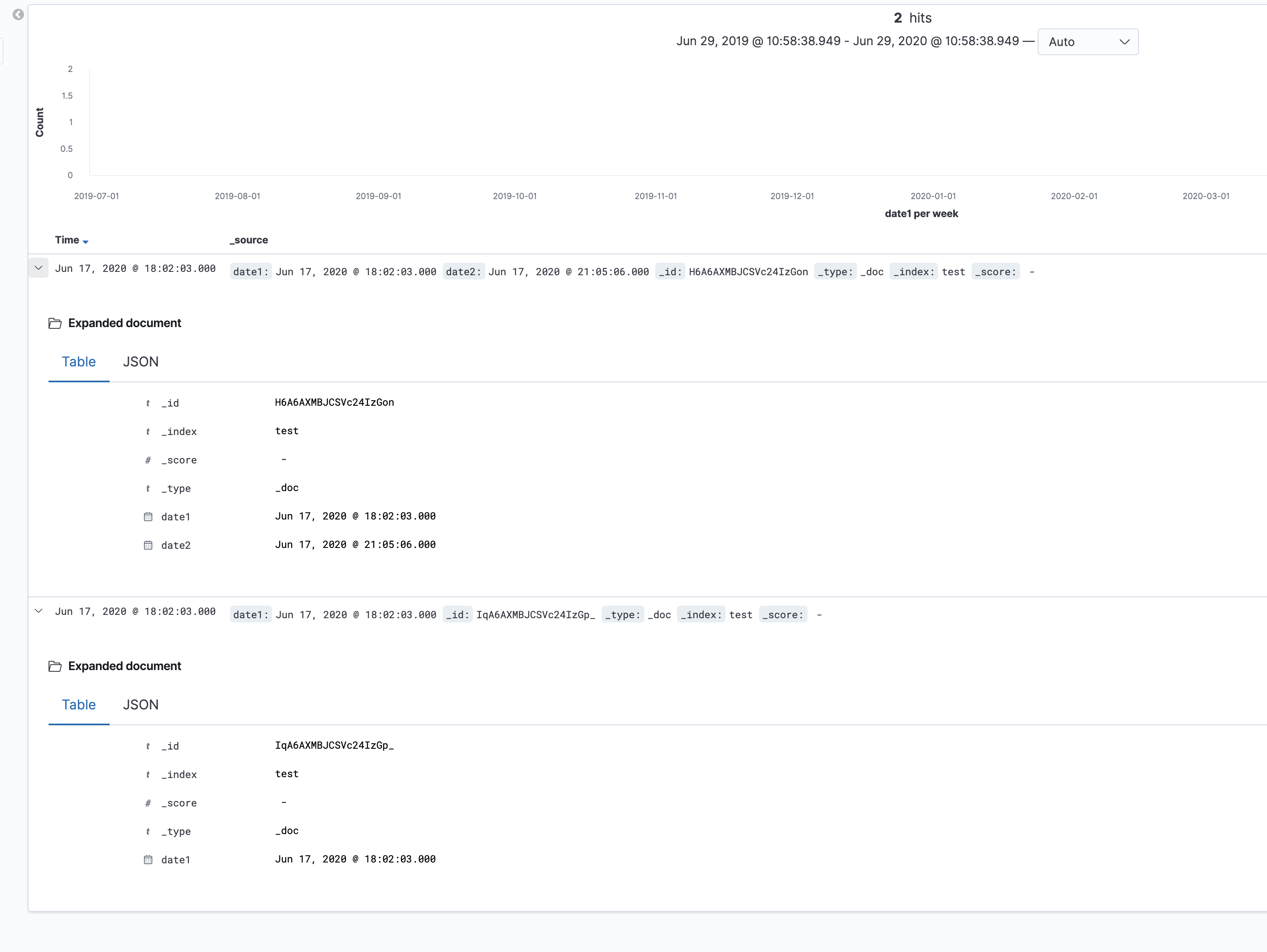
Confirmed this is fixed in 7.8+
Thanks all!
spalger
on 29 Jun 2020
Related issues
 MaartenUreel
·
3Comments
spalger
·
3Comments
MaartenUreel
·
3Comments
spalger
·
3Comments
 stacey-gammon
·
3Comments
stacey-gammon
·
3Comments
 ctindel
·
3Comments
ctindel
·
3Comments
 LukeMathWalker
·
3Comments
LukeMathWalker
·
3Comments
Most helpful comment
Just to add context for
filebeat-*andmetricbeat-*many, perhaps 10-20 or more empty fields are displayed