Erpnext: API does not accept names containing a '#'
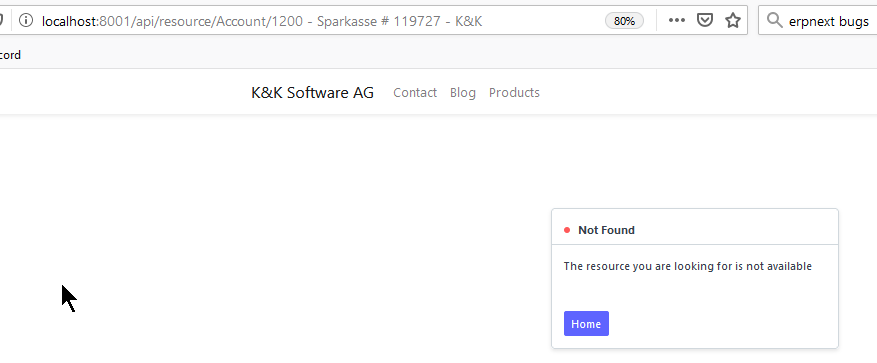
It's fine for UI:
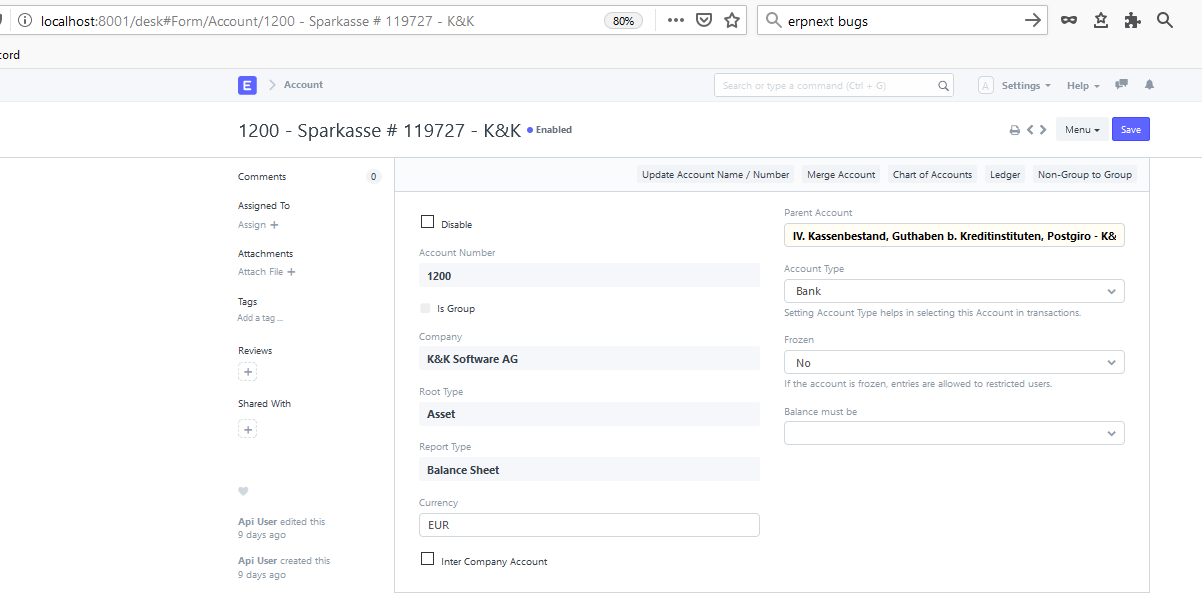
Remedy:
- Don't accept this kind of special characters in the first place
- If character is accepted, query via API should work when containing it.
This is 3 hrs worth of extra work for me (on a sunday) to workaround this S**T ...
Sorry, I'm loosing my patience.
Thank you very very much.
 grolode
All 5 comments
It's annoying stumbling over the same silly bugs since the late 90's.
Again and Again, as if predecessor generations hadn't made the same mistakes .... and learned from it.
Young developers know everything better - do everything better ... judging by their over exagerated self esteem. And then you see the same stupid mistakes you know for more than 20 years now.
I'm really P*ED.
Gotta do the same process all over again, simply to get rid of a silly little character.
grolode
on 7 Jun 2020
Note this InvalidNameError added to v13 in April https://github.com/frappe/frappe/pull/10030
 clarkejj
on 23 Jun 2020
clarkejj
on 23 Jun 2020
@clarkejj that name validation is for user name fields including first and last name. I don't think that's the cause in here.
@grolode, have you tried encoding the URL before passing it through the API? You do not need to get rid of anything.
 Thunderbottom
on 24 Jun 2020
Thunderbottom
on 24 Jun 2020
This is not an issue with ERPNext. Please read up on URL fragments, as that part of the URL is not sent to the server by the browser at all. The only way to fix your "issue" would be to follow the industry standard and encode the URL before making a request.
judging by their over exagerated self esteem. And then you see the same stupid mistakes you know for more than 20 years now.
This industry standard for URL Fragments has existed since 2005, as defined in RFC3986. The URL needs to be percent-encoded before the request is made. There is nothing anybody can do about it, other than sending a url-encoded request.
Thunderbottom
on 24 Jun 2020
Thanks very much for your especially patient informative notes Chinmay...
clarkejj
on 24 Jun 2020
Related issues
 nabinhait
·
4Comments
nabinhait
·
4Comments
 ioweb-gr
·
4Comments
ioweb-gr
·
4Comments
 gbard
·
4Comments
gbard
·
4Comments
 jboilesen
·
3Comments
jboilesen
·
3Comments
 rmehta
·
3Comments
rmehta
·
3Comments
Most helpful comment
This is not an issue with ERPNext. Please read up on URL fragments, as that part of the URL is not sent to the server by the browser at all. The only way to fix your "issue" would be to follow the industry standard and encode the URL before making a request.
This industry standard for URL Fragments has existed since 2005, as defined in RFC3986. The URL needs to be percent-encoded before the request is made. There is nothing anybody can do about it, other than sending a url-encoded request.