Client: Add mainnet and funding disclosure
Users should be warned that they are using the mainnet version of Aragon, and that the contracts will be holding real funds. Initially we should also warn users from depositing too much money, until the contracts are battle-tested in live, adverse environments.
Initial thought is to:
- Always show a modal with this text during onboarding
- Could we get by with a less intrusive screen? E.g. a separate step during onboarding?
- Show a modal the first time someone views a particular organization
- Show a warning in the deposit functionality of the Finance app
 sohkai
All 8 comments
👍. Also a link to the Rinkeby app for testing would be great to have here, as you proposed offline
 izqui
on 10 Oct 2018
izqui
on 10 Oct 2018
@jounih Please get rolling on the design for this.
 chris-remus
on 23 Oct 2018
chris-remus
on 23 Oct 2018
On onboarding (for a mainnet DAO) perhaps we just add a warning/info to one of the final screens rather than a modal.
Once a DAO is deployed, I think we could show this both on the empty state of the Finance app, as well as an info/warning box in the transaction panel when you deposit funds
 jounih
on 23 Oct 2018
jounih
on 23 Oct 2018
Edit: Updated wording
Design
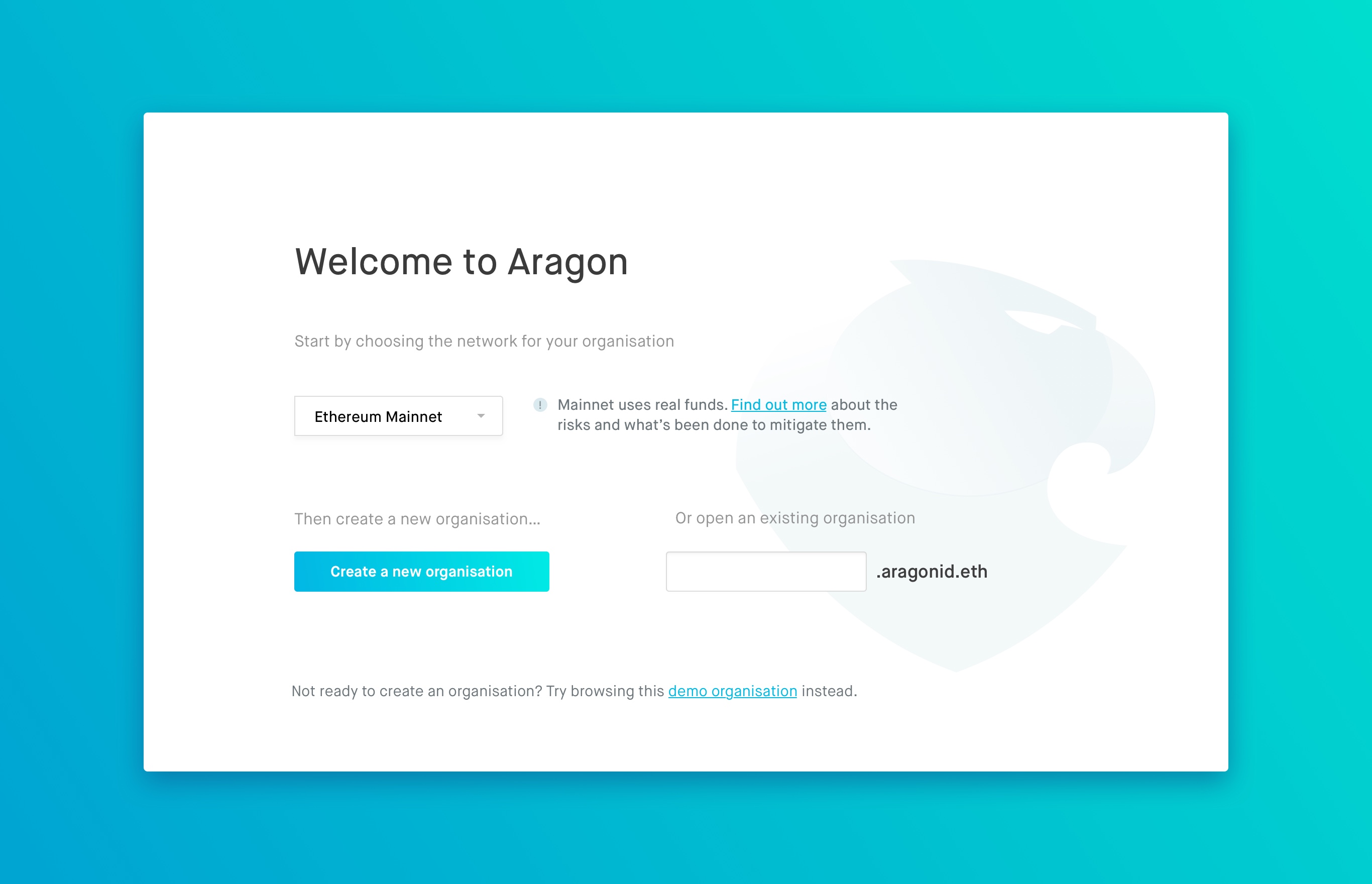
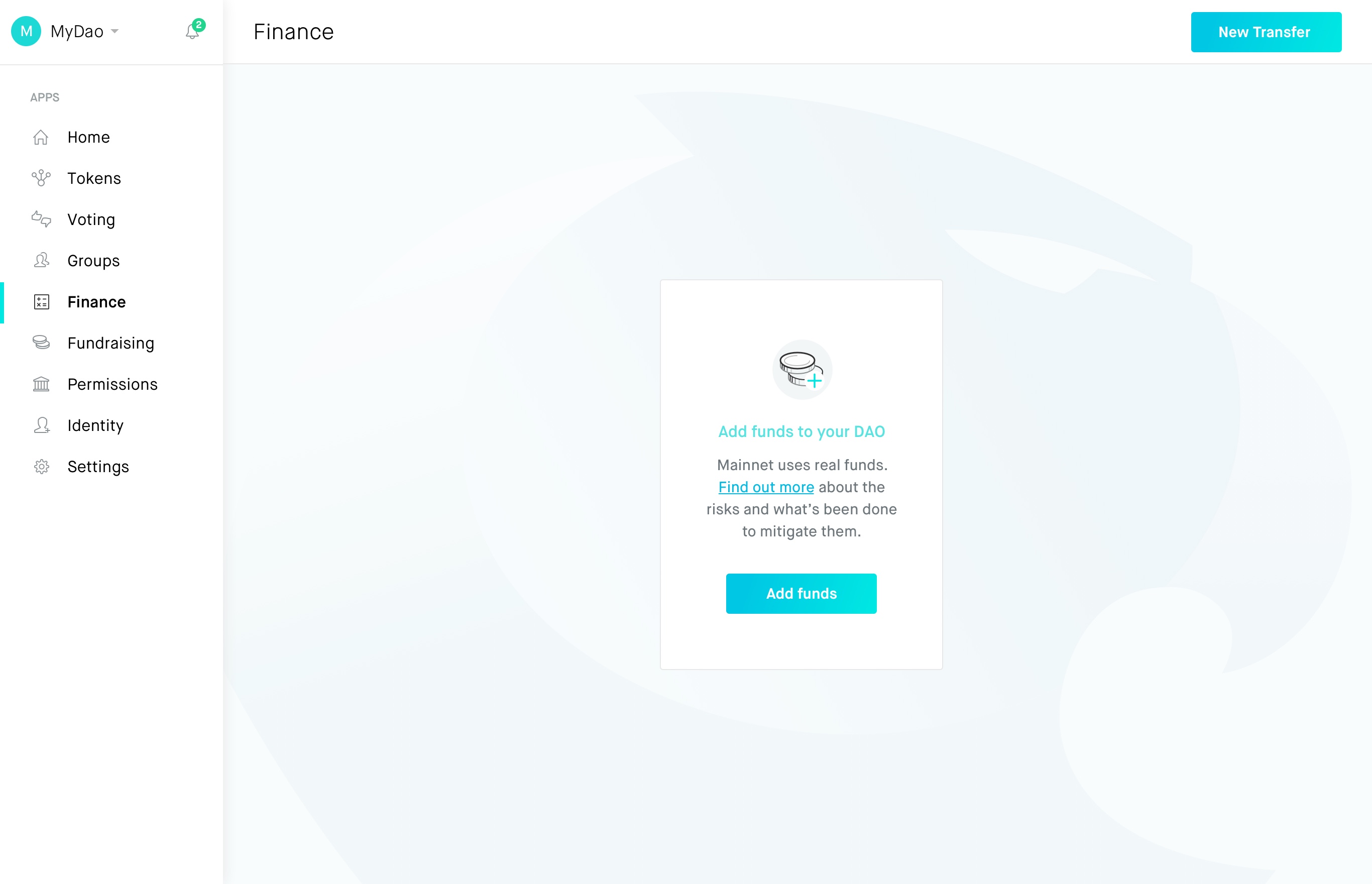
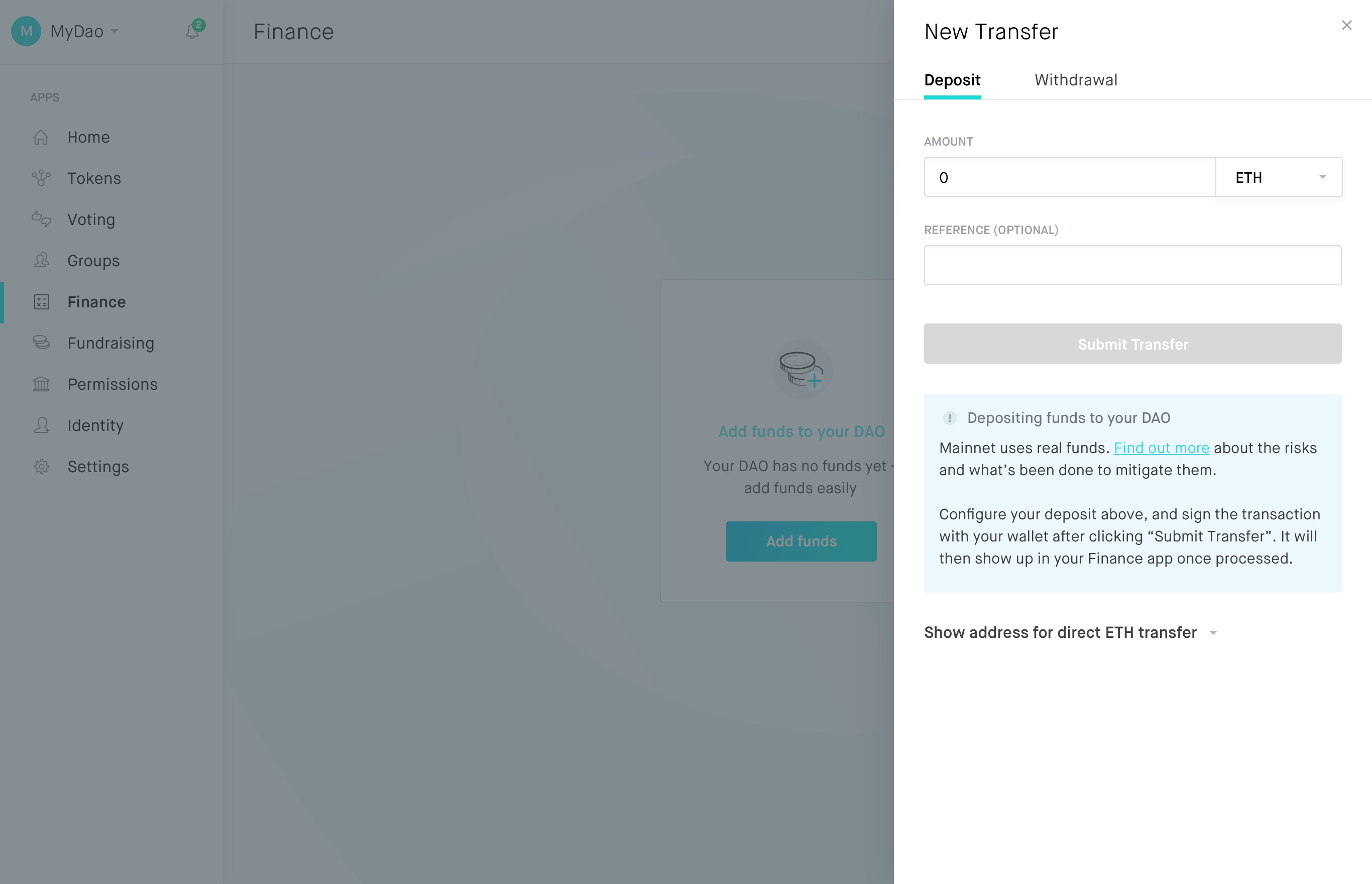
jounih
on 24 Oct 2018
@jounih for each screen -
Remember, Mainnet DAOs use real (not test) funds. Learn more about the risks and what's been done to mitigate them here.
Not ready to create an organization? You can browse this demo organization instead.
——
Your DAO has no funds . Deposit funds to get started.
Remember, Mainnet DAOs use real (not test) funds. Learn more about the risks and what's been done to mitigate them here.
—-
Remember, Mainnet DAOs use real (not test) funds. Learn more about the risks and what's been done to mitigate them here.
—-
This is a bit wordier than I would have liked. However, I believe the importance of the messaging justifies the text length.
We'll then need a short post to link to "the risks and what we’ve done to mitigate them here"
chris-remus
on 25 Oct 2018
@jounih Please add updated designs here.
chris-remus
on 26 Oct 2018
@chris-remus updated designs with new copy as discussed
jounih
on 26 Oct 2018
@jounih @chris-remus a few remarks:
In general, the term “organization” should be used instead of “DAO” in the interface.
About the mainnet warning itself:
I wonder how relevant it is to make it so important in the apps? Organization creators are warned already when they create an organization, which I think is important because we used to be testnet only. But it might seem a bit out of place for members of an organization: these users might never have used anything else than mainnet, and I believe the fact that they are interacting with a mainnet organization makes them very aware at this point that they are on mainnet (or simply “Ethereum”).
I feel that a warning like what @sohkai suggested would be more important:
Initially we should also warn users from depositing too much money, until the contracts are battle-tested in live, adverse environments.
About the card:
Your DAO has no funds . Deposit funds to get started.
Compared to the other empty state cards that we have (which are all using “Nothing here.”), this title is a bit lengthy. It would be nice to align them all, either by using “Nothing here” here, with the details in the description, or by changing it on the other apps, and maybe the style of the card (the blue + bold title looks a bit too strong and not contrasted enough for a long label).
I wonder if it’s necessary to say “Your organization has no funds”? “Deposit funds to get started” seem enough to me, and having no funds is not the exact reason why we see this empty state (it’s also because there are no transactions, or in other terms because it hasn’t been used yet).
For these reasons, my preference would be to go for “Nothing here” as a card title, with “Deposit funds to get started” as a description (the disclosure is in the panel already, and it would require an alternative description for other networks).
 bpierre
on 27 Oct 2018
bpierre
on 27 Oct 2018
Related issues
 lkngtn
·
3Comments
lkngtn
·
3Comments
 john-light
·
3Comments
sohkai
·
3Comments
john-light
·
3Comments
john-light
·
3Comments
sohkai
·
3Comments
john-light
·
3Comments
 luisivan
·
3Comments
luisivan
·
3Comments
Most helpful comment
👍. Also a link to the Rinkeby app for testing would be great to have here, as you proposed offline