Wp-calypso: SPT: Localization is based on account language instead of site language
Steps to reproduce
- Set user account language to English
- Set site language to Spanish
- Create a new page and look at text on the page layouts
What I expected
I would expect the layouts to be localized to the language of the site.
What happened instead
The text on page layouts will be localized based on the user account language, not the site's language. Conversely, if the user's account is set to Spanish, the layouts will be added in Spanish, even if the site's language is set to English.
Browser / OS version
Chrome Version 78.0.3904.97
MacOS 10.13.6 (17G2307)
Screenshot / Video
Account [EN]:
Site [ES]:
Result [EN]:
Context / Source
reallife #dogfooding
 mrfoxtalbot
All 7 comments
Looks the same issue #38776 but leaving both open just in case.
 apeatling
on 31 Jan 2020
apeatling
on 31 Jan 2020
2680626-zen Another case of a user where switching site language from French to English still didn't trigger Page louts to show on Mayland Theme. Only after switching account language from French to English Page Layouts appeared.
 zdenys
on 1 Feb 2020
zdenys
on 1 Feb 2020
@zdenys There are currently no templates that are translated to French, so French users will always be served English templates.
 obenland
on 5 Feb 2020
obenland
on 5 Feb 2020
Conversely, if the user's account is set to Spanish, the layouts will be added in Spanish, even if the site's language is set to English.
Have you actually tried that? Because I could not reproduce it.
@mrfoxtalbot @apeatling Could you help me reproduce the user language issue with a language other than English?
obenland
on 5 Feb 2020
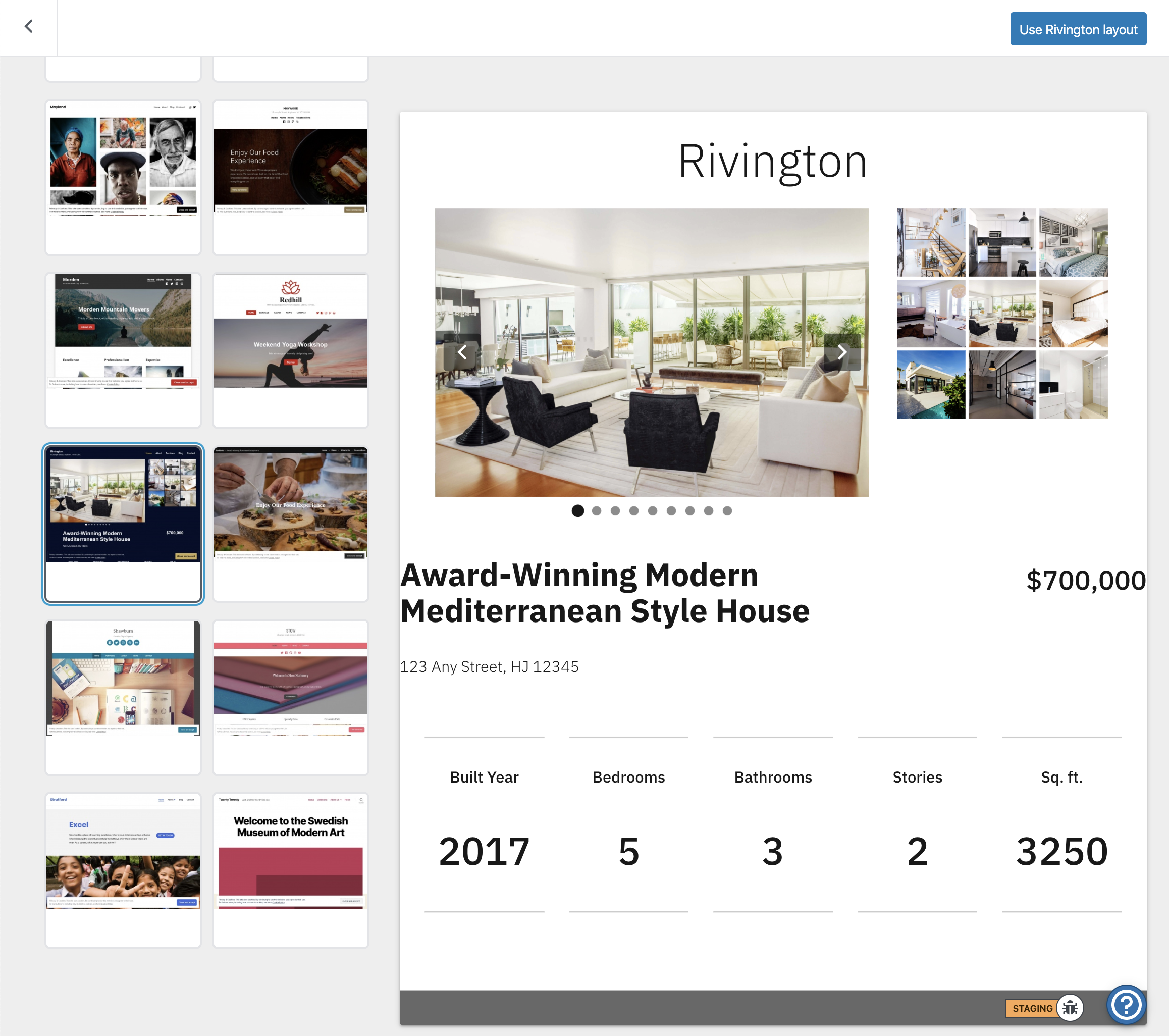
I'm able to reproduce the original reported behavior. The SPT template content follows the user's UI locale and not the site's locale.
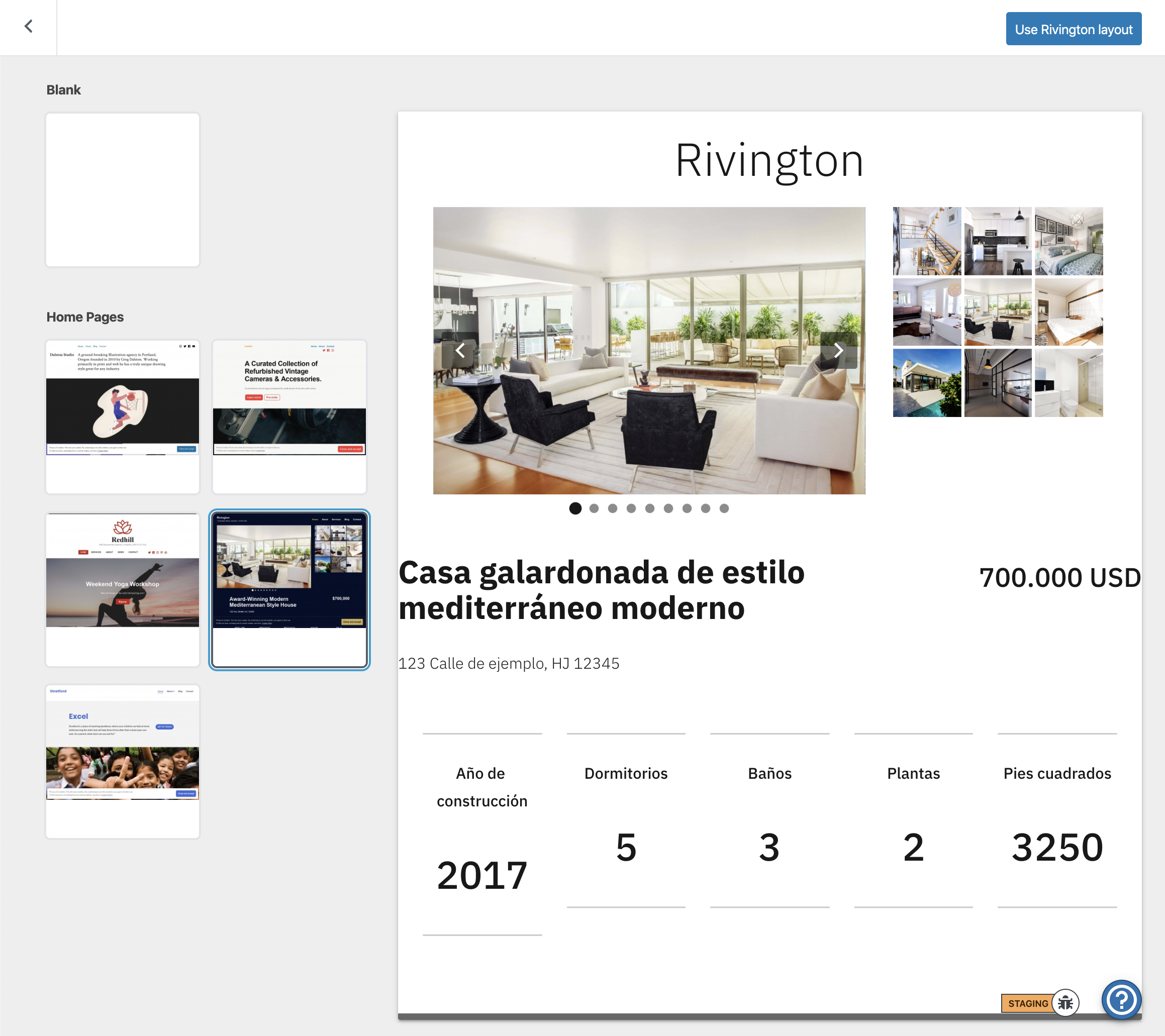
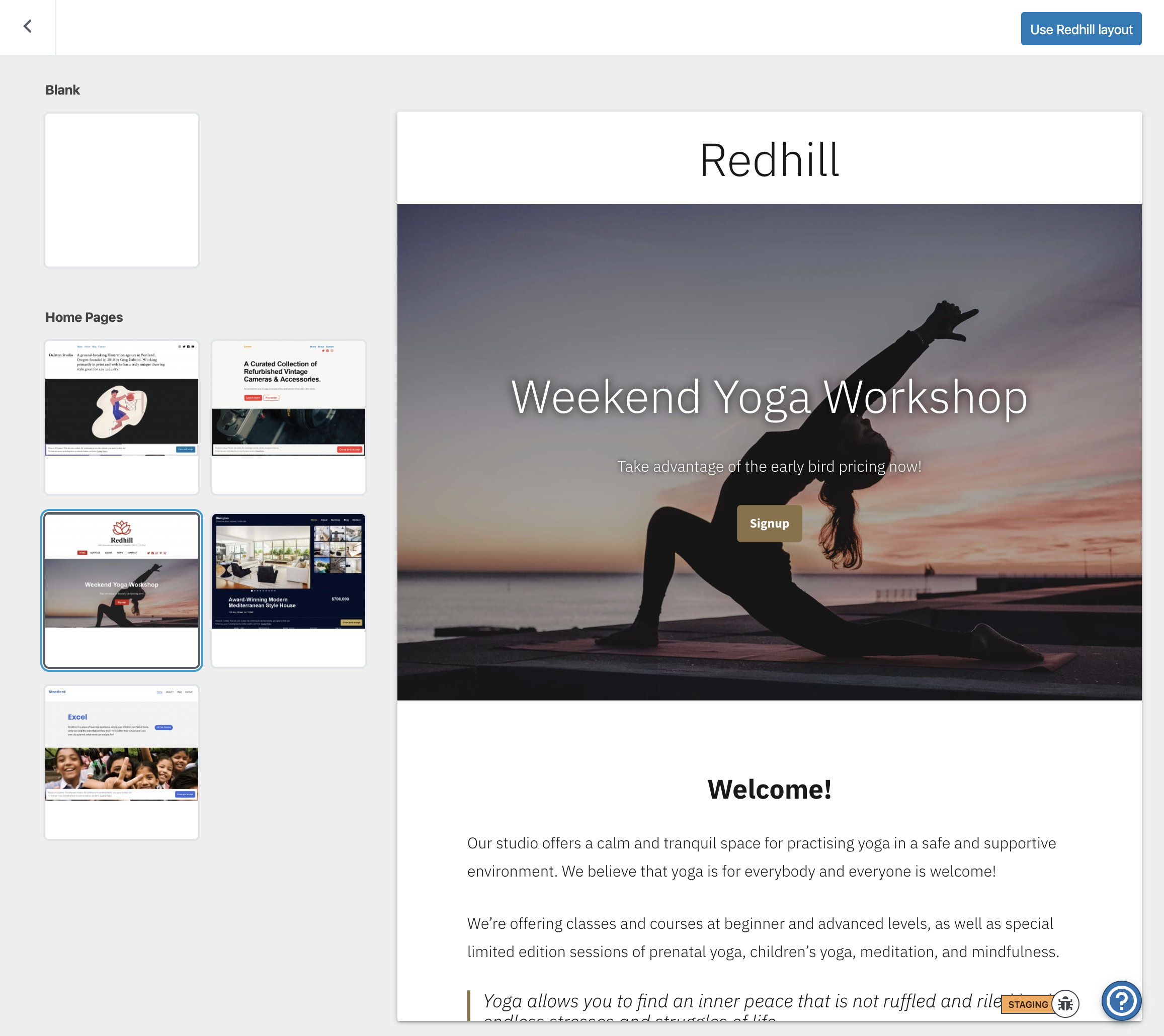
Switching the UI locale to another language (i.e. ES) reduces the number of homepage templates to just those with a "translated" annotation (Dalston, Leven, Redhill, Rivington, Stratford), but there seems to be the additional issue that some of these annotations are supposed to be translated, but still have english strings in them (i.e. /wp-content/themes/pub/redhill/inc/headstart/es.json#180).
UI: Spanish, Site: English:
UI: Spanish, Site: English, "false positive" translation:
UI: English, Site: Spanish:
 michaeldcain
on 5 Feb 2020
michaeldcain
on 5 Feb 2020
@obenland @apeatling: to start, I'll open a diff to remove the "false positive" translations from the backend. That should at least have the API returning the correct translated content. Then we'll need to troubleshoot the API request to see where it's getting switched from the site locale to the user locale.
michaeldcain
on 5 Feb 2020
It looks like we're filtering get_locale() and return the user locale because we're calling it from the admin. Next steps for troubleshooting would be to find out which callbacks are hooked to locale and which ones we'd need to unhook to get the blog locale.
obenland
on 7 Feb 2020
Related issues
 lamosty
·
3Comments
lamosty
·
3Comments
 ehg
·
3Comments
ehg
·
3Comments
 jeherve
·
3Comments
jeherve
·
3Comments
 jjchrisdiehl
·
3Comments
jjchrisdiehl
·
3Comments
 kellychoffman
·
3Comments
kellychoffman
·
3Comments