V8-archive: Prevent URL unsafe characters in primary keys
Bug Report
When selecting an element whose primary key contains / characters Directus App displays the Sign In page and the error Unauthorized Request.
Steps to Reproduce
- Create a Collection
testwith just the primary key as a field, named ID by default- - Update the
IDfield: selectStringas Field Type,VARCHARas MySQL Datatype and switch off theHidden on Detailoption. - Add an item to the
testcollection with the value ofIDfield set toa/b. - Save the newly created item.
- In the
testcollection page click on the newly created item.
Expected Behavior
The item with ID set to a/b is shown.
Actual Behavior
The Sign in page is displayed and the error Unauthorized request appears, below Something is wrong with this project (see screenshot).
Other Context & Screenshots
Screenshot:
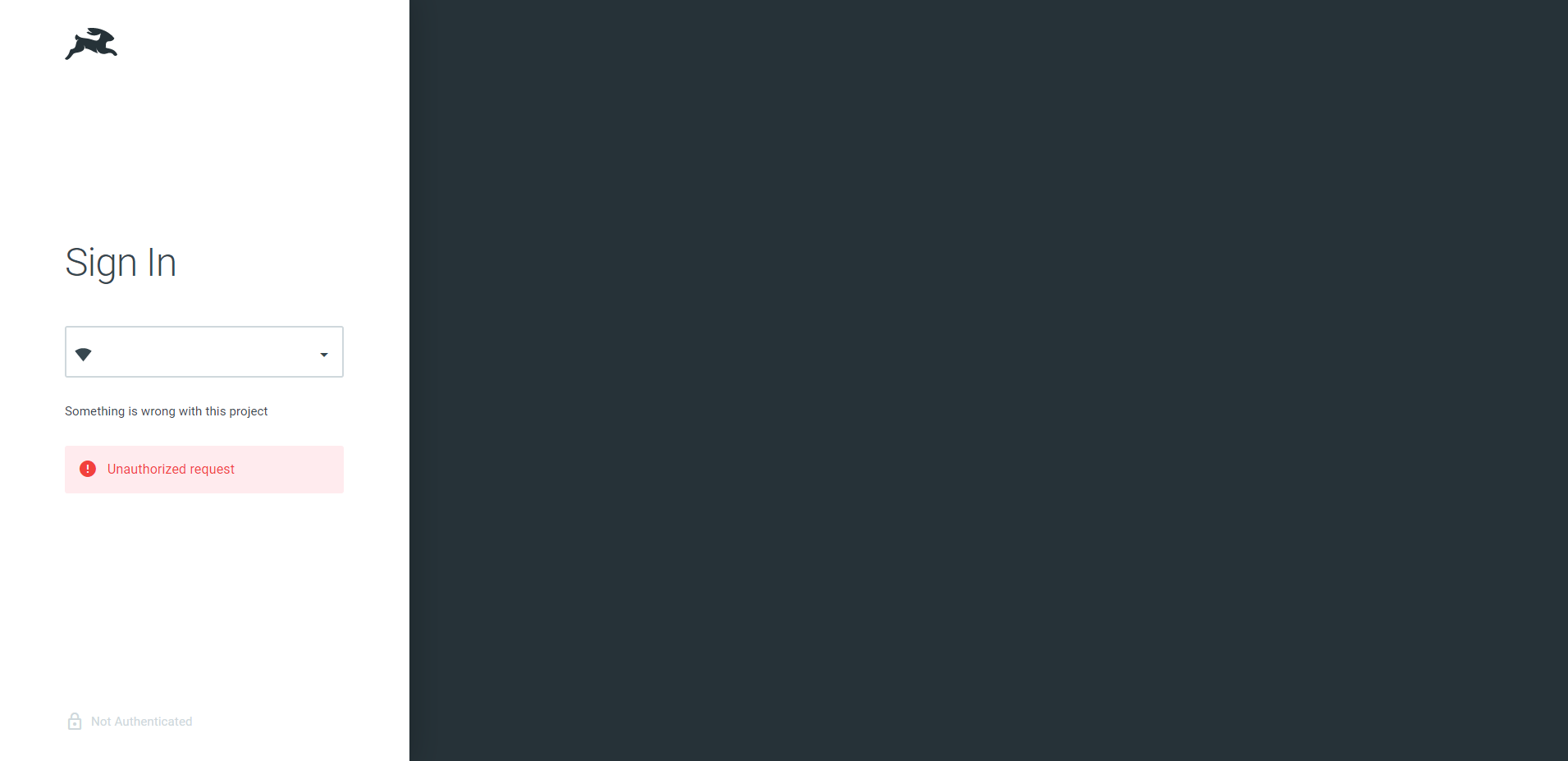
I think the issue is related to how links for items are generated. In many sections of the Directus App source I see code similar to this:
`/${this.currentProjectKey}/collections/${this.collection}/${pk}`
A / character in a primary key is directly injected in the URL, thus tricking the router which will consider the generated URL as a bad route.
I tried to replicate the issue in 190927A: when clicking on the a/b item I received the error Item not found and on the top of the screen the breadcrumb was Collections > Test > A > B (confirming that the URL was not interpreted correctly).
Technical Details
- Device: Desktop
- OS: Windows 10
- Web Server: Apache 2.4.38
- PHP Version: 7.3.3
- Database: MySQL 5.7.17
- Directus Release Version: v8.0.0-rc.2
- Install Method: cloned
masterbranch
 EPMatt
All 8 comments
Could you try what happens if you open the item in the API directly URL escaping the primary key?
 rijkvanzanten
on 22 Nov 2019
rijkvanzanten
on 22 Nov 2019
I'm also curious to the opposite side of this. Lets say we support escaped characters in primary keys. That means that a/b would be a%2Fb. What happens if you have both a/b and a%2Fb as primary keys (they're technically different in the DB). Or what happens if you have a primary key that has %2F in it (generated string maybe), but now you're not able to access it through the API because it'll search for / in the DB column?
rijkvanzanten
on 22 Nov 2019
Could you try what happens if you open the item in the API directly URL escaping the primary key?
Accessing the URL http://[path_to_directus]/public/[project_name]/items/test/a%2Fb returns Object not found (404).
If the AllowEncodedSlashes Option is set to On in Apache configuration, then accessing the API with the same URL returns: {"data":{"id":"a\/b"}}
I'm also curious to the opposite side of this. Lets say we support escaped characters in primary keys. That means that
a/bwould bea%2Fb. What happens if you have botha/banda%2Fbas primary keys (they're technically different in the DB). Or what happens if you have a primary key that has%2Fin it (generated string maybe), but now you're not able to access it through the API because it'll search for/in the DB column?
Yep, that creates lot of confusion...just tried to add an element with a%2Fb as a primary key and accessing it (with AllowEncodedSlashes Option set to Off): the UI displays "Server Trouble". In the requests it looks like it's trying to access the item a/b as it probably encodes the primary key.
More experiments I did:
- removed
a/bitem via SQL query; - created
a%2Fbvia UI; - accessed
http://[path_to_directus]/public/[project_name]/items/test/a%2Fb:
- with
AllowEncodedSlashesOption set toOff: 404 - with
AllowEncodedSlashesOption set toOn:{"error":{"code":203,"message":"Item with id \"a\/b\" not found"}}
- with
EPMatt
on 22 Nov 2019
I'm wondering if all the added server complexity and confusion is worth the ability to have a / in the primary key name. Seeing that we always retrieve the item through its primary key in the URL, I think we should state that we don't allow (#, ?, &, /) in the primary key..
@benhaynes thoughts?
rijkvanzanten
on 22 Nov 2019
Agree, and I think that definitely fits with our 80/20 rule. Most string PKs I've seen are alphanumeric hashes, UUIDs, or something similar. It sucks for those using those characters... but it really does make things _much_ harder to build/maintain.
 benhaynes
on 22 Nov 2019
benhaynes
on 22 Nov 2019
@rijkvanzanten @benhaynes what about not only stating in docs that those characters are not allowed in primary keys, but also implementing a check on string primary keys, such that it's impossible for the user to insert those characters by mistake?
EPMatt
on 22 Nov 2019
Yeah I agree. @bjgajjar Is that something we can do based on the primary-key directus datatype?
rijkvanzanten
on 22 Nov 2019
Yes, and Docs have fallen behind (we were busy with Client work,etc for the last 10 months). So that will be getting some much needed attention over the coming weeks.
benhaynes
on 22 Nov 2019
Related issues
 cdwmhcc
·
3Comments
cdwmhcc
·
3Comments
 metalmarco
·
3Comments
metalmarco
·
3Comments
 24js
·
3Comments
24js
·
3Comments
 magikstm
·
3Comments
cdwmhcc
·
3Comments
magikstm
·
3Comments
cdwmhcc
·
3Comments