Supervisor: Tellstick in Hass.IO
It's seems that using a Tellstick Duo is not working with Hass.IO. Have been reading forums about this issue.
Any plans on adding this funktion to Hass.IO?
 Fompa
Fompa
All 18 comments
I have no hardware and can't do that.
But if some one with sysadmin and development skills will do it, I can help him.
 pvizeli
on 18 Oct 2017
pvizeli
on 18 Oct 2017
We need now only one that add it into dockerfile...
pvizeli
on 19 Oct 2017
I have the Tellstick (non Duo) working with OpenHab2 on an Raspberry Pi 3 currently, but want to use Hass.IO instead, therefore this issue is a show stopper, so I am really interested in getting this working.
How can I help? I have decent sysadmin and dev skills (but not Python).
 michaeleklof
on 26 Oct 2017
michaeleklof
on 26 Oct 2017
No worry, the hassio/homeassistant integration can be done by me (python part). But you need add the service to https://github.com/home-assistant/hassio-build/blob/master/homeassistant/base/Dockerfile
pvizeli
on 26 Oct 2017
I just bought a Tellstick duo and I can help out too, am doing sysadmin stuff at work and python shouldn't be a problem either. Just need some first pointers of how thy system is build and updated.
 jeena
on 26 Oct 2017
jeena
on 26 Oct 2017
So it looks like we need to compile the code during the creation of the docker image?
jeena
on 26 Oct 2017
There seem to be prebuild binaries available for Raisin OS here https://github.com/endor-force/tellstick-core-2.1.2_resinos
jeena
on 26 Oct 2017
We run with Alpine linux and not with yocto linux (aka resinos) on that part.
You need now compile and install the tellstick core with the official docker file. After that I add a modification that allow to start telldusd as service on start.
pvizeli
on 27 Oct 2017
Ok, I tried my first stab on this problem https://github.com/jeena/hassio-build/commit/3c2b4e8dd538dd7ffa4eba7e3b243f35de2340a0 my problem right now is that I don't quite understand how I can test build this docker image.
Using plain docker build . stops at the first step which uses sh because I didn't give it the BUILD_FROM parameter which makes sense. My problem is now that I don't understand the flow on which of the build scripts I'd need to trigger so in the end this docker image would be build so I could test the stuff I'm trying to do.
jeena
on 27 Oct 2017
https://github.com/home-assistant/hassio-build/tree/master/builder
-> --homeassistant-base --amd64 --test --docker-hub homeassistant
You can remove the test and upload to your docker-hub account or map the local docker socket into this build and use --local-docker so you have the image on your local docker repository for tests.
pvizeli
on 29 Oct 2017
There are some patch available with google for alpine. Maybe you need use this. You can also build libftdi-compat from source before you build tellcore like other library does it above.
Please move that code above into compile section before we install regulary things.
We should also install last stable version and not the trunk version that is tagged as beta
pvizeli
on 29 Oct 2017
Ok thanks I will try that. The latest stable wouldn't compile that is why I chose trunk, but that was on my Arch linux, perhaps it compiles for Alpine.
jeena
on 29 Oct 2017
I'm not sure if I'm doing something wrong or if it's some kind of a bug.
I checked out this repo and ran:
cd hassio-build/builder
./create.sh --homeassistant-base --amd64 --test --docker-hub homeassistant
after some time I get this error:
...
Successfully built caca037178b9
Successfully tagged homeassistant/amd64-builder:20171030
Sending build context to Docker daemon  23.04kB
Step 1/11 : ARG BUILD_FROM
Step 2/11 : FROM $BUILD_FROM
armhf-xenial: Pulling from multiarch/ubuntu-core
8fa72fd9c5d5: Already exists
111863bd8769: Already exists
97ba519afe81: Already exists
ee269b7ebe33: Already exists
Digest: sha256:d7b678acb636b534cd8ade5dccab3fe66236869abc7ab7f75d71feb2aef79798
Status: Downloaded newer image for multiarch/ubuntu-core:armhf-xenial
 ---> 47ff729cbd0f
Step 3/11 : ARG BUILD_ARCH
 ---> Running in c324caf8f377
 ---> e9e4683da303
Step 4/11 : RUN apt-get update && apt-get install -y         jq         git         python3-setuptools     && rm -rf /var/lib/apt/lists/* ENV LANG C.UTF-8
 ---> Running in 33d1f294bd16
standard_init_linux.go:195: exec user process caused "exec format error"
The command '/bin/sh -c apt-get update && apt-get install -y         jq         git         python3-setuptools     && rm -rf /var/lib/apt/lists/* ENV LANG C.UTF-8' returned a non-zero code: 1
docker run --rm --privileged homeassistant/amd64-builder --homeassistant-base --amd64 --test --docker-hub homeassistant -r https://github.com/my_repository_fork/ -t homeassistant/base
Nice to see this moving forward! Given that I'm interested in seeing this getting in place, I went ahead and did some more stabbing on top of yours @jeena.
@endor-force has been so kind to provide us with all instructions needed to build telldus-core. See the README and the build script for required build deps.
My branch successfully compiles now; https://github.com/bjorne/hassio-build/tree/telldus-alpine
Unfortunately, the patches must go somewhere so in order to get it to work I've created a branch on top of 2.1.3-beta1, see https://github.com/bjorne/telldus/commit/687da09e5e09172204a98f5524ce737be196d0f9. Alternative solutions would be to get these changes into upstream or apply the patch during installation. What do you think?
Now, I'm completely lost in how to get the homeassistant-base build that I've created onto my raspberry pi hass.io installation to see that telldus works. How can I do that?
 bjorne
on 1 Nov 2017
bjorne
on 1 Nov 2017
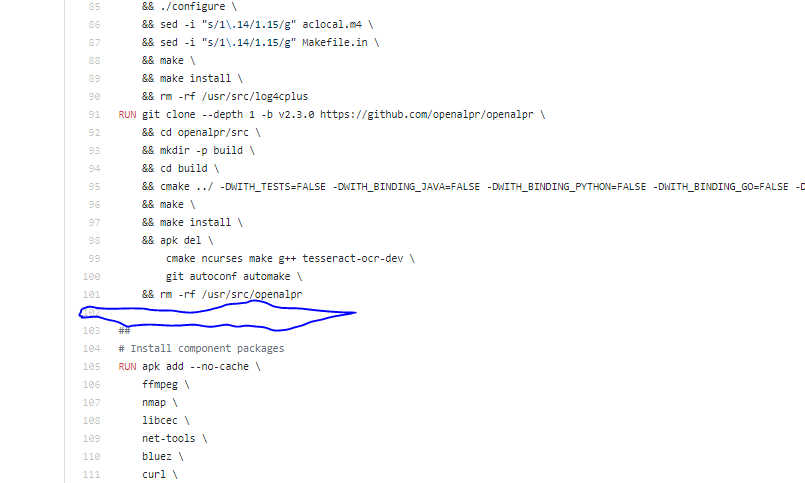
You can make a PR to our repository with this Build part. Look okay for me. Please move the code to suggestion positon to hold the cache correct and the image small :)
pvizeli
on 1 Nov 2017
Do I understand this right, what Tellstick now works in Hass.IO version 0.57.2?
I still got the error message
The following components and platforms could not be set up:
tellstick
From the log:
2017-11-09 15:58:44 ERROR (MainThread) [homeassistant.setup] Error during setup of component tellstick
Traceback (most recent call last):
File "/usr/lib/python3.6/site-packages/homeassistant/setup.py", line 194, in _async_setup_component
component.setup, hass, processed_config)
File "/usr/lib/python3.6/asyncio/futures.py", line 331, in __iter__
yield self # This tells Task to wait for completion.
File "/usr/lib/python3.6/asyncio/tasks.py", line 244, in _wakeup
future.result()
File "/usr/lib/python3.6/asyncio/futures.py", line 244, in result
raise self._exception
File "/usr/lib/python3.6/concurrent/futures/thread.py", line 55, in run
result = self.fn(self.args, *self.kwargs)
File "/usr/lib/python3.6/site-packages/homeassistant/components/tellstick.py", line 92, in setup
all_tellcore_devices = tellcore_lib.devices()
File "/usr/lib/python3.6/site-packages/tellcore/telldus.py", line 173, in devices
count = self.lib.tdGetNumberOfDevices()
File "/usr/lib/python3.6/site-packages/tellcore/library.py", line 257, in check_int_result
raise TelldusError(result)
tellcore.library.TelldusError: Could not connect to the Telldus Service (-6)
Fompa
on 9 Nov 2017
It is halfway there.. The libraries are compiled in to hass.io now. The service (daemon) is also compiled but it is not started - that is why the error persists.
There has been disussions whether it should be put as an add-on but then we have a problem with how the python service should communicate with the daemon in the addon.
My suggestion would be to start the already existing service in homeassistant docker and then we have tellstick support in hass.io. But i am waiting on feedback, pros and cons.
Maybe the decision is wrong to close the case since there is no tellstick/tellstick duo support in hass.io
 endor-force
on 9 Nov 2017
endor-force
on 9 Nov 2017
Related issues
 sepulworld
·
8Comments
sepulworld
·
8Comments
 sibbl
·
8Comments
sibbl
·
8Comments
 CiquattroFPV
·
3Comments
CiquattroFPV
·
3Comments
![move[bot] picture](https://avatars.githubusercontent.com/in/6673?v=4&s=40) move[bot]
·
8Comments
pvizeli
·
4Comments
move[bot]
·
8Comments
pvizeli
·
4Comments
Most helpful comment
It is halfway there.. The libraries are compiled in to hass.io now. The service (daemon) is also compiled but it is not started - that is why the error persists.
There has been disussions whether it should be put as an add-on but then we have a problem with how the python service should communicate with the daemon in the addon.
My suggestion would be to start the already existing service in homeassistant docker and then we have tellstick support in hass.io. But i am waiting on feedback, pros and cons.
Maybe the decision is wrong to close the case since there is no tellstick/tellstick duo support in hass.io