How to set response schema? I mean the model section for openapi ver. 3.0.1...
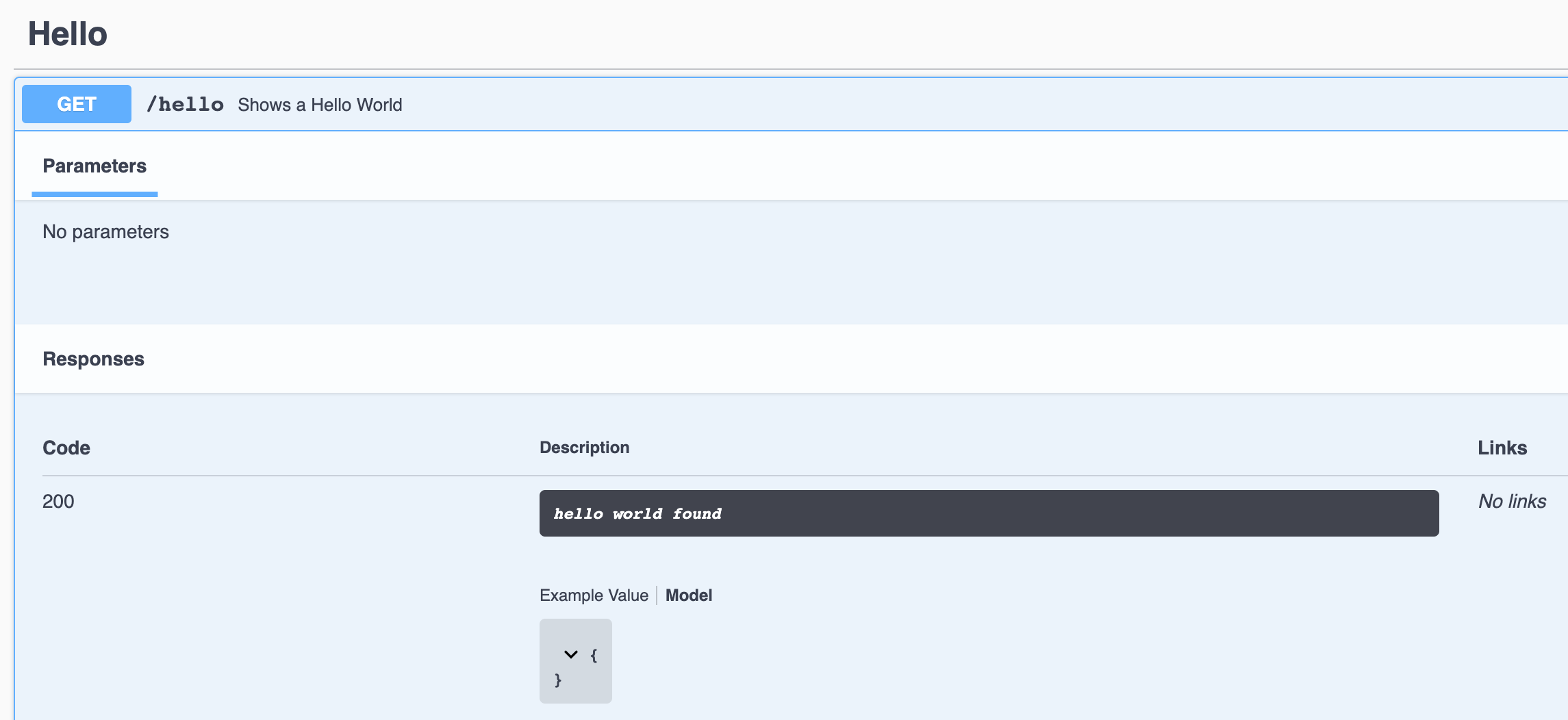
My a code:
require 'swagger_helper'

RSpec.describe "Hello World API" do
  path "/hello" do
    get "Shows a Hello World" do
      tags "Hello"
      produces "application/json"

      response "200", "hello world found" do
        schema type: :object, properties: {
          hello: {type: :string}
        }, required: ["hello"]

        examples "application/json" => {
          hello: "world"
        }

        run_test!
      end
    end
  end
end
 martio
All 4 comments
Hi @martio, I've just come against the same problem with 2.2.0.
The schema definition in your spec is used to validate the content of the response, but it looks like it's generating an OpenAPI output in the wrong place. The generated swagger.yaml looks like this:
paths:
  "/hello":
    get:
      summary: Shows a Hello World
      tags:
      - Hello
      produces:
      - application/json
      responses:
        '200':
          description: hello world found
          schema:
            type: object
            properties:
              hello:
                type: string
            required:
            - hello
          examples:
            application/json:
              hello: world
In the example above schema is a child of '200'.
However, the OpenAPI 3.0.1 ResponseObject spec describes the schema element as belonging within a content and application/json (or whatever your content type is) block.
If we move the schema to match the schema it works in swagger-ui:
paths:
  "/hello":
    get:
      summary: Shows a Hello World
      tags:
      - Hello
      produces:
      - application/json
      responses:
        '200':
          description: hello world found
          content:
            application/json:
              schema:
                type: object
                properties:
                  hello:
                    type: string
                required:
                - hello
          examples:
            application/json:
              hello: world
produces:
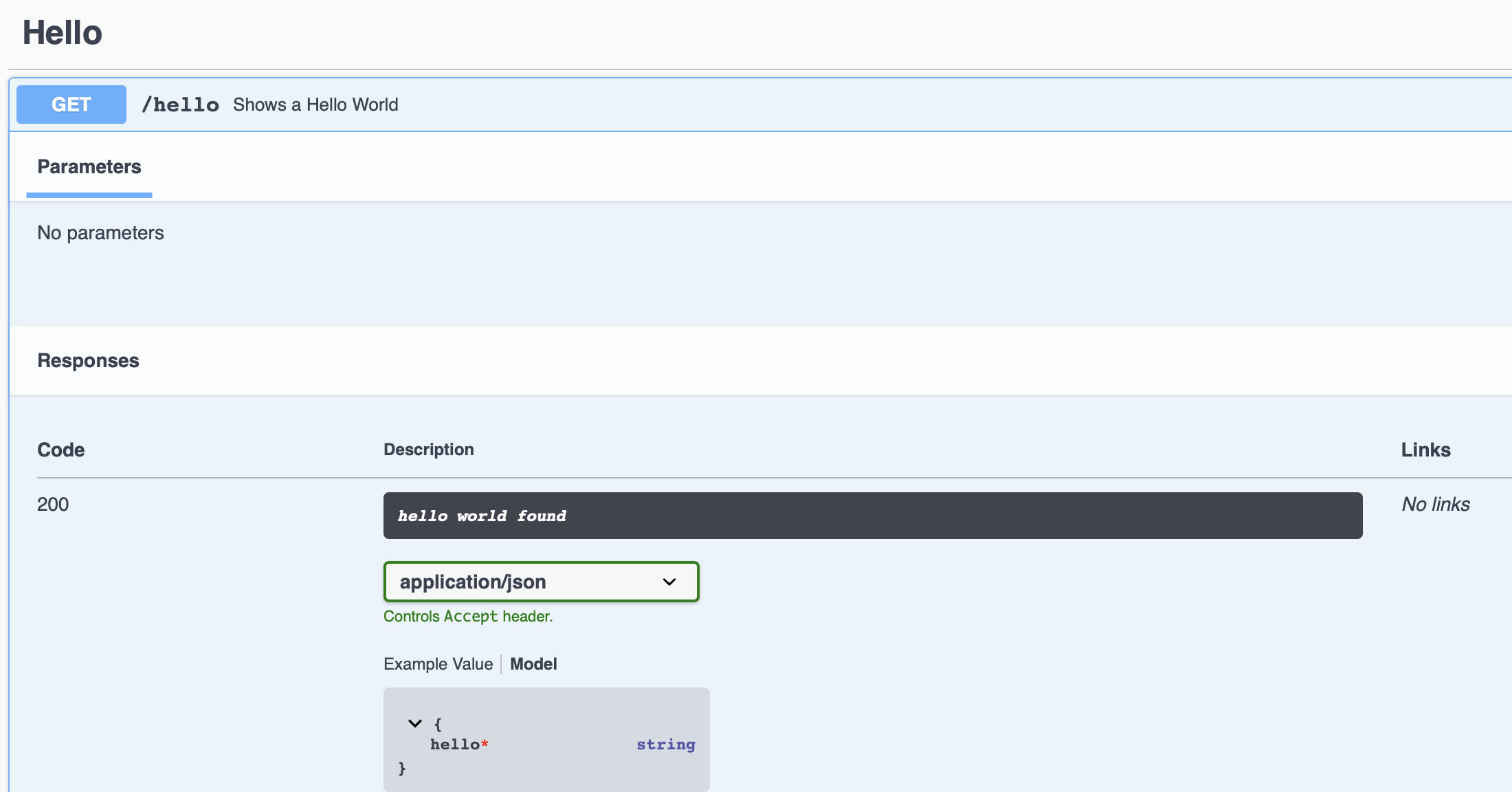
Obviously we don't want to be updating the yaml by hand, so we can work around this by adding the metadata in the spec:
RSpec.describe "Hello World API" do
  path "/hello" do
    get "Shows a Hello World" do
      tags "Hello"
      produces "application/json"

      response "200", "hello world found" do

        # Adds model metadata for Swagger UI. Should match the schema definition below
        metadata[:response][:content] = { "application/json": {
            schema: {
              type: :object, properties: {
                        hello: {type: :string}
                      }, required: ["hello"]
            }
          }
        }
        schema type: :object, properties: {
          hello: {type: :string}
        }, required: ["hello"]

        examples "application/json" => {
          hello: "world"
        }

        run_test!
      end
    end
  end
end
if you add this _as well as_ the schema definition you already have, the content will be validated against the schema _and_ it'll work in the swagger UI.
In summary:
Expected behaviour
- Adding a
schemadefinition in the test generates aschemablock as follows:
responses:
   '200':
    content:
      application/json:
        schema: ...
Actual behaviour
- The
schemablock is generated within the response code block (e.g.'200').
responses:
  '200':
    schema: ...
 spikeheap
on 3 Jan 2020
spikeheap
on 3 Jan 2020
I've added the following into my swagger_helper.json to automatically apply the workaround above to any swagger specs:
RSpec.configure do |config|
  config.after do |example|
    # if there's no response metadata, we can assume we're not in RSwag territory
    unless example.metadata[:response].nil?
      example.metadata[:response][:content] = {
        example.metadata[:operation][:produces].first => {
          schema: example.metadata[:response][:schema]
        }
      }
    end
  end
end
Having the same issue
@martio what worked for me was adding to the schema to the response block like so:
response '200', 'blog found' do
        schema type: :object,
          properties: {
            id: { type: :integer },
            title: { type: :string },
            content: { type: :string }
          },
          required: [ 'id', 'title', 'content' ]

        let(:id) { Blog.create(title: 'foo', content: 'bar').id }
        run_test!
      end
 cue232s
on 8 Jan 2020
cue232s
on 8 Jan 2020
I have had a similar issue. We initially generated documentation in Swagger v2 because when we tried generating it in OpenAPI v3 the response schemas were missing even though they were defined in our specs. After walking through the code I discovered our problem was that we had provided consumes but not produces on our responses.
The schema provided in https://github.com/rswag/rswag/issues/268#issue-541343154 has the inverse -- it has produces but not consumes. But I suspect that causes the same problem where the response schema is not output.
In OpenAPI v3 a single path and status code can have multiple responses that differ by response mime-type. So instead of Swagger v2's produces and consumes keys, OpenAPI v3's response schema looks something like:
responses:
  '200':
    description: something
    content:
      application/json:
        schema:
          type: object
          properties: ...
Nevertheless, I think we could get better diagnostic messages from rswag. It seems like multiple folks have hit this and it would have been nice to have some more information on why I wasn't getting the response schemas.
Starting at https://github.com/rswag/rswag/blob/0aca50c66c32d169754a476721d66522ebaee968/rswag-specs/lib/rswag/specs/swagger_formatter.rb#L23 the first conditions that cause us to not generate a response schema are at https://github.com/rswag/rswag/blob/0aca50c66c32d169754a476721d66522ebaee968/rswag-specs/lib/rswag/specs/swagger_formatter.rb#L33-L34
Which is to say our spec needs a response. Next condition is at https://github.com/rswag/rswag/blob/0aca50c66c32d169754a476721d66522ebaee968/rswag-specs/lib/rswag/specs/swagger_formatter.rb#L38
Which means we need to be using OpenAPI v3 and not Swagger v2.
Then we call into https://github.com/rswag/rswag/blob/0aca50c66c32d169754a476721d66522ebaee968/rswag-specs/lib/rswag/specs/swagger_formatter.rb#L45
Full definition at https://github.com/rswag/rswag/blob/0aca50c66c32d169754a476721d66522ebaee968/rswag-specs/lib/rswag/specs/swagger_formatter.rb#L124-L130
Line 126 means we either need to provide a document-level produces or an spec-level one.
The actual work is done in upgrade_content! https://github.com/rswag/rswag/blob/0aca50c66c32d169754a476721d66522ebaee968/rswag-specs/lib/rswag/specs/swagger_formatter.rb#L132-L141
Line 134 means we do not generate a response if we don't have a schema or if we never provided any produces.
Once I added produces to my specs I passed that early return and Line 139 and generated the right YAML for OpenAPI v3.
I hope that helps other folks debug why they might not be getting any response schema output from OpenAPI v3 even when it works just fine in Swagger v2.
Maybe we could add a log message or warning when someone is:
- Using OpenAPI v3
- Missing a
producesorconsumes - Provides a
responsewith aschema
 bubaflub
on 5 Mar 2021
bubaflub
on 5 Mar 2021
Related issues
 anjum-ahmed
·
6Comments
anjum-ahmed
·
6Comments
 hannesstruss
·
6Comments
hannesstruss
·
6Comments
 abevoelker
·
4Comments
abevoelker
·
4Comments
 DalfDev
·
3Comments
DalfDev
·
3Comments
 richthedev
·
5Comments
richthedev
·
5Comments
Most helpful comment
Hi @martio, I've just come against the same problem with 2.2.0.
The
schemadefinition in your spec is used to validate the content of the response, but it looks like it's generating an OpenAPI output in the wrong place. The generatedswagger.yamllooks like this:In the example above
schemais a child of'200'.However, the OpenAPI 3.0.1 ResponseObject spec describes the
schemaelement as belonging within acontentandapplication/json(or whatever your content type is) block.If we move the
schemato match the schema it works in swagger-ui:produces:

Obviously we don't want to be updating the yaml by hand, so we can work around this by adding the metadata in the spec:
In summary:
Expected behaviour
schemadefinition in the test generates aschemablock as follows:Actual behaviour
schemablock is generated within the response code block (e.g.'200').