Rasterio: WarpedVRT transform and results are not as expected
I am comparing the prior method of using reproject for cutting out spherical mercator tiles to the new WarpedVRT method, and I'm not seeing the results I expect.
Where:
tile = mercantile.Tile(70, 101, 8)
Using the reproject method I first derive a transform for the output (using the new mercantile.xy_bounds() from mercantile 0.10.0):
transform = rasterio.transform.from_bounds(*mercantile.xy_bounds(*tile), 256, 256)

out = np.empty(shape=(256, 256), dtype=src.profile['dtype'])
reproject(
    rasterio.band(src, src.indexes),
    out,
    dst_crs='EPSG:3857',
    dst_transform=transform,
    src_nodata=src.nodata,
    dst_nodata=src.nodata,
    num_threads=1,
    resampling=Resampling.nearest
)
transform is
| 611.50, 0.00,-9079495.97|
| 0.00,-611.50, 4226661.92|
| 0.00, 0.00, 1.00|
for bounds in Spherical Mercator:
Bbox(left=-9079495.967826376, bottom=4070118.882129065, right=-8922952.933898335, top=4226661.916057106)
Which looks correct: the transform of the extracted tile matches the bounds of the tile.
Whereas when I use the WarpedVRT method derived from the method in the docs:
with rasterio.open('/tmp/test.tif') as src:
    with WarpedVRT(src, dst_crs='EPSG:3857',
        src_nodata=src.nodata,
        dst_nodata=src.nodata,
        resampling=Resampling.nearest) as vrt:

        dst_window = vrt.window(*mercantile.xy_bounds(*tile), boundless=True)
        vrt_data = vrt.read(window=dst_window, out_shape=(1, 256, 256))

        dst_transform = vrt.window_transform(dst_window)
        scaling = Affine.scale(dst_window.num_cols / 256,
                               dst_window.num_rows / 256)
        dst_transform *= scaling
my dst_transform is:
| 612.50, 0.00,-9079636.67|
| 0.00,-612.50, 4226764.45|
| 0.00, 0.00, 1.00|
The output arrays are also not the same between the two approaches, so it isn't just that the calculation of the dst_transform is wrong.
Perhaps I am interpreting the docs wrong? They imply that using the WarpedVRT method should get to the same point: a tile in spherical mercator based on warping and extracting data for the bounds of that tile. But this doesn't seem to be the case?
Is there something I should be doing differently?
 brendan-ward
All 9 comments
@brendan-ward It's my intent that the results should be the same and that WarpedVRT is the convenient way to do this kind of thing for GDAL sources. I'll look into this for a bit before the 1.0a9 release, but I'm inclined to release with this bug since the fractional transform differences are ~= 1/600.
 sgillies
on 29 May 2017
sgillies
on 29 May 2017
@brendan-ward my current hypothesis: reproject() is correct and reads from WarpedVRT would be correct if we had full support for floating point values our our Window class.
sgillies
on 29 May 2017
Yes, this was it. I've got a branch that supports Windows with float offsets and height/width and the transforms (from your example above) come out the same. Integer indexes are assumed throughout the code and it'll take a little more work to relax this and get all the tests to pass. I expect to be done tomorrow and then will make the 1.0a9 release.
sgillies
on 29 May 2017
Putting this one off post-1.0a9
sgillies
on 2 Jun 2017
@sgillies I'd love to test your patch even if it's partially-baked. I'm running into floating point-related rendering issues that are painful to work around:
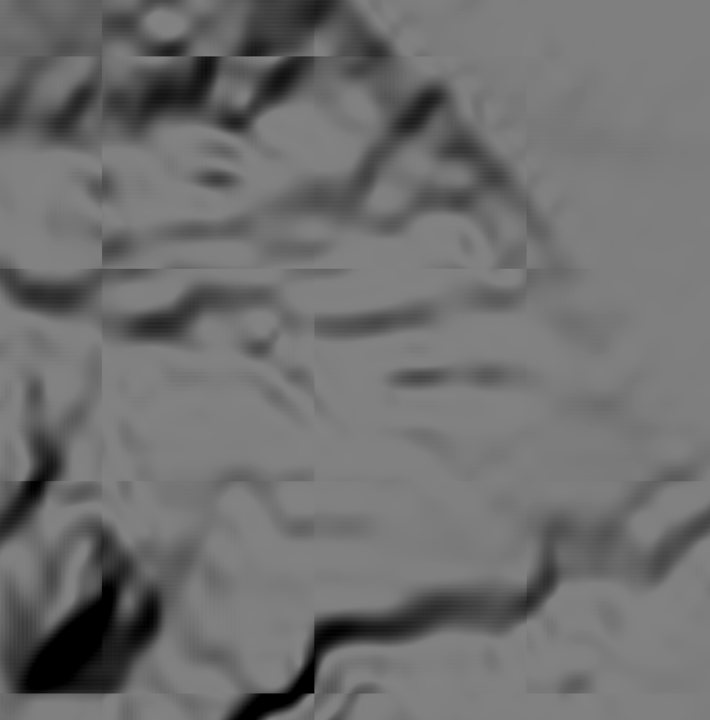
(here's an attempt that works in places but still isn't quite right: https://github.com/mojodna/marblecutter/commit/7f2038ac7265822cf933711165642f2da509c6a6)
 mojodna
on 6 Jun 2017
mojodna
on 6 Jun 2017
@mojodna it's the float-windows branch.
sgillies
on 7 Jun 2017
float-windows is working well for me. It's the difference between
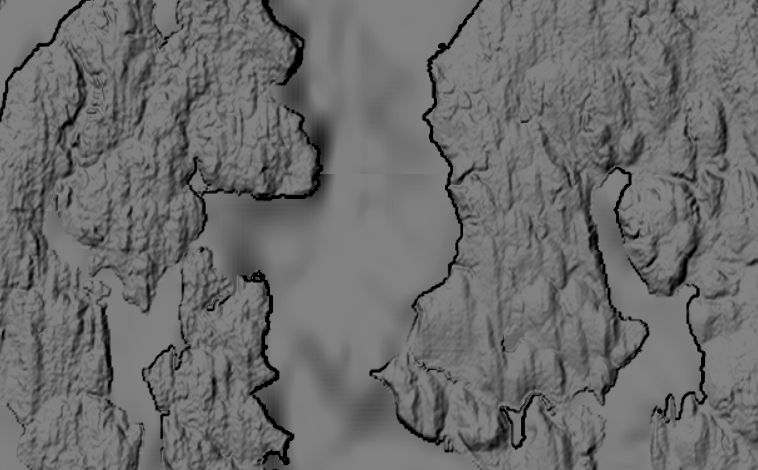
and
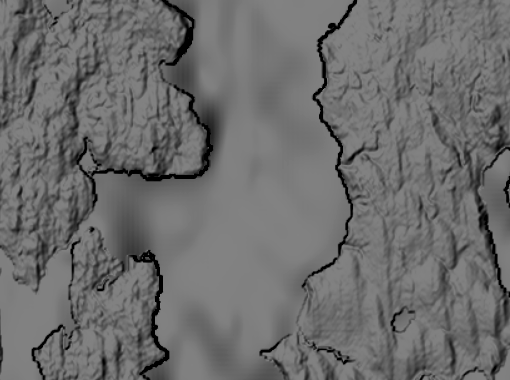
I haven't run into anything unexpected. Thanks!
mojodna
on 9 Jun 2017
Great. I've made a lot of progress on the branch today. All the tests are passing except, not surprisingly, the ones where I'm using merge to make a mosaic from single pixels windows.
sgillies
on 9 Jun 2017
@brendan-ward I'm happy to say that #1074 will solve the discrepancy you've reported here.
import rasterio
from rasterio.enums import Resampling
from rasterio.transform import Affine, from_bounds
from rasterio.vrt import WarpedVRT
from rasterio.windows import Window, rowcol, crop


with rasterio.open('tests/data/RGB.byte.tif') as src:
    with WarpedVRT(src, dst_crs='EPSG:3857', src_nodata=src.nodata,
                   dst_nodata=src.nodata, resampling=Resampling.nearest) as vrt:

        tile = mercantile.tile(*vrt.lnglat(), 8)

        dst_window = vrt.window(*mercantile.xy_bounds(*tile), boundless=True)

        vrt_data = vrt.read(window=dst_window, out_shape=(1, 256, 256), boundless=Tru
e)

        dst_transform = vrt.window_transform(dst_window)
        scaling = Affine.scale(dst_window.num_cols / 256,
                               dst_window.num_rows / 256)
        dst_transform_scaled = dst_transform * scaling
        print("Warped VRT transform:")
        print(dst_transform_scaled)

transform = rasterio.transform.from_bounds(*mercantile.xy_bounds(*tile), 256, 256)
print("Transform from bounds:")
print(transform)
Output:
$ python tensixtythree.py
Warped VRT transform:
| 611.50, 0.00,-8766409.90|
| 0.00,-611.50, 2974317.64|
| 0.00, 0.00, 1.00|
Transform from bounds:
| 611.50, 0.00,-8766409.90|
| 0.00,-611.50, 2974317.64|
| 0.00, 0.00, 1.00|
Related issues
brendan-ward
·
4Comments
sgillies
·
3Comments
 astrojuanlu
·
4Comments
astrojuanlu
·
4Comments
 atorch
·
3Comments
atorch
·
3Comments
 lwasser
·
3Comments
lwasser
·
3Comments
Most helpful comment
Yes, this was it. I've got a branch that supports
Windowswith float offsets and height/width and the transforms (from your example above) come out the same. Integer indexes are assumed throughout the code and it'll take a little more work to relax this and get all the tests to pass. I expect to be done tomorrow and then will make the 1.0a9 release.