Pyright: Bug when comparing generic/protocol types
Environment data
from typing import TypeVar

A = TypeVar("A")
B = TypeVar("B")


def compare(a: A, b: B) -> bool:
    return a < b


compare("first", "second")
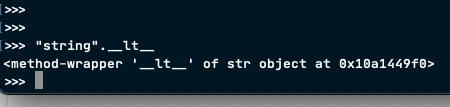
One way to try to solve this is to make a comparable protocol. Now comparing a < b will type check, but now you cannot use builtin types like str even if str do have a __lt__ method:
from abc import abstractmethod
from typing import Protocol, TypeVar

C = TypeVar("C", bound="Comparable")


class Comparable(Protocol):
    @abstractmethod
    def __lt__(self: C, other: C) -> bool:
        pass


AC = TypeVar("AC", bound=Comparable)
BC = TypeVar("BC", bound=Comparable)


def compare2(a: AC, b: BC) -> bool:
    return a < b


compare2("first", "second")
This gives error:

 dbrattli
All 6 comments
I think, you should declare Comparable as a Generic protocol.
This code works for me
from abc import abstractmethod
from typing import Protocol, TypeVar
C = TypeVar("C")
class Comparable(Protocol[C]):
@abstractmethod
def __lt__(self, other: C) -> bool:
...
AC = TypeVar("AC", bound=Comparable)
BC = TypeVar("BC", bound=Comparable)
def compare2(a: AC, b: BC) -> bool:
return a < b
compare2("first", "second")
 askurihin
on 3 Dec 2020
askurihin
on 3 Dec 2020
There are a few issues here.
First, when you use a TypeVar within a generic function, it should generally appear more than once. In your compare2 function, AC appears only once and BC appears only once. That means there's nothing for the TypeVar solver to "solve" when matching these type variables.
@askurihin is on the right path. You want to use a generic protocol here. However, you can't bind to an unspecialized generic class. (Pylance/Pyright should generate an error if you try to do so. It doesn't currently, but I've filed an issue on that.)
Here's how I'd approach this problem.
from abc import abstractmethod
from typing import Protocol, TypeVar

_T = TypeVar("_T")

class ComparableTo(Protocol[_T]):
    @abstractmethod
    def __lt__(self, other: _T) -> bool:
        pass

def compare2(a: ComparableTo[_T], b: _T) -> bool:
    return a < b

compare2("first", "second")
You'll note that Pyright generates an error on the line return a < b. I think that's a bug, and I'll look into it.
 erictraut
on 3 Dec 2020
erictraut
on 3 Dec 2020
Thanks for the feedback. Using a generic protocol fixed my issue.
dbrattli
on 3 Dec 2020
I've added support for binary operator magic methods that operate on constrained TypeVars. This eliminates the error in my proposed solution above. This fix will be in the next release.
erictraut
on 6 Dec 2020
Thanks for fixing. Look forwards to test this.
dbrattli
on 6 Dec 2020
This is addressed in Pyright 1.1.93, which I just published. It will also be included in the next release of Pylance.
erictraut
on 7 Dec 2020
Related issues
 mmicu
·
3Comments
mmicu
·
3Comments
 tg137
·
3Comments
tg137
·
3Comments
 lambdalisue
·
3Comments
lambdalisue
·
3Comments
 giyyapan
·
3Comments
giyyapan
·
3Comments
 letrec
·
3Comments
letrec
·
3Comments
Most helpful comment
There are a few issues here.
First, when you use a TypeVar within a generic function, it should generally appear more than once. In your
compare2function,ACappears only once andBCappears only once. That means there's nothing for the TypeVar solver to "solve" when matching these type variables.@askurihin is on the right path. You want to use a generic protocol here. However, you can't bind to an unspecialized generic class. (Pylance/Pyright should generate an error if you try to do so. It doesn't currently, but I've filed an issue on that.)
Here's how I'd approach this problem.
You'll note that Pyright generates an error on the line
return a < b. I think that's a bug, and I'll look into it.