Openwhisk: Use non-blocking UUID generation in controller
While doing profiling of controller we came across the fact that UUID generation is a blocking operation, e.g.
    synchronized public void nextBytes(byte[] bytes) {
        secureRandomSpi.engineNextBytes(bytes);
    }
We need to think of alternatives to the current approach considering the fact that we should enable several active controllers in the near future, e.g. both cross-thread/cross-controller unique UUIDs.
cc @mhenke1 @markusthoemmes @rabbah @cbickel
 vvraskin
All 8 comments
Very good find, there will definitly be contention going on when having multiple cores and thus largely parallel requests. Good find!
One thing to keep in mind as well is that activation ids need to be unique in the domain of one namespace only, not necessarily globally which might reduce the need for "secure" randomization.
 markusthoemmes
on 14 Sep 2017
markusthoemmes
on 14 Sep 2017
One possibility could be to have a cache of precomputed UUIDs that is populated by a background thread. That should allow the latency to be hidden.
 dgrove-oss
on 19 Sep 2017
dgrove-oss
on 19 Sep 2017
It looks like from Java 8 onwards you can provide ?custom? SecureRandom instances which aren't blocking. Found a similar github issue discussing this.
Usefulness of this depends on whether OpenWhisk supports Java 7 of course…
But I know I've seen third party implementations of UUID that aren't blocking. There's also the possibility of doing something like MongoDB Object IDs do with a custom UUID. Mongo OIDs were designed so that in a sharded (cluster) environment OIDs could be generated without cross-cluster / instance collision by combining time, a machine identifier (IIRC the Java driver uses the mac address for it?), a PID, and a counter (often implemented as a random). Within a single set of controllers the actor ID could be used for uniqueness-ness.
 bwmcadams
on 19 Sep 2017
bwmcadams
on 19 Sep 2017
@rabbah and I have been debating a fix for this. Providing an alternative SecureRandom instance could help (especially if it uses the non-blocking /dev/urandom vs /dev/random), but there would still be the problem of thread contention due to the synchronized nature of getBytes.
A naive implementation I did to at least get the issue out of the way for now is:
new java.util.UUID(ThreadLocalRandom.current.nextLong, ThreadLocalRandom.current.nextLong)
The randomness is not cryptographically secure, yes. We are namespacing our ActivationIds though, so the domain of collision is significantly smaller than having them globally namespaced. I'm not too much an expert in that area though to judge wether the randomness provided by ThreadLocalRandom is sufficient. It for sure does fix the contention and blocking problem though.
markusthoemmes
on 19 Sep 2017
Making up my mind, using ThreadLocalRandom seems like a bad idea. How does implementing ThreadLocal[SecureRandom] sound? As our dispatcher uses a fixed number of threads, the performance hit of generating a new SecureRandom instance should be negligible.
markusthoemmes
on 20 Sep 2017
Do we know if there is any synchronization around the reads from /dev/random or /dev/urandom within the guts of the SecureRandom implementation? If there is, we might not buy that much from making ThreadLocal instances.
dgrove-oss
on 20 Sep 2017
@dgrove-oss fair point, here are a few profiling results. I think I arrived at a solution for us:
Testcode
def main(args: Array[String]): Unit = {
  (1 to 100000000).par.foreach { _ =>
    val uuid = randomUUID()
  }
}
Parallel generation of 100000000 random UUIDs.
Baseline: java.util.UUID.randomUUID()
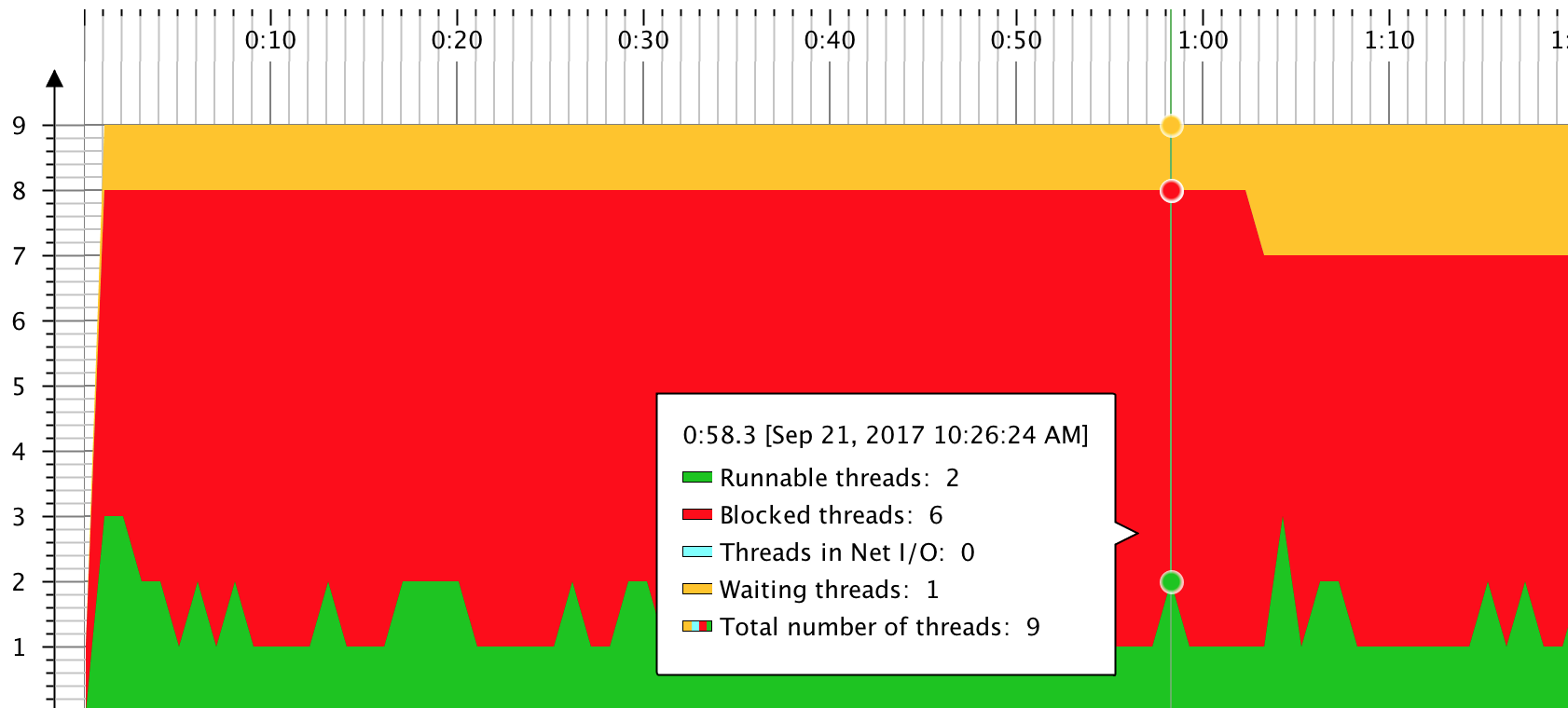
(It goes on until about 2:50 minutes)
Switching from /dev/random (blocking) to /dev/urandom (non-blocking)
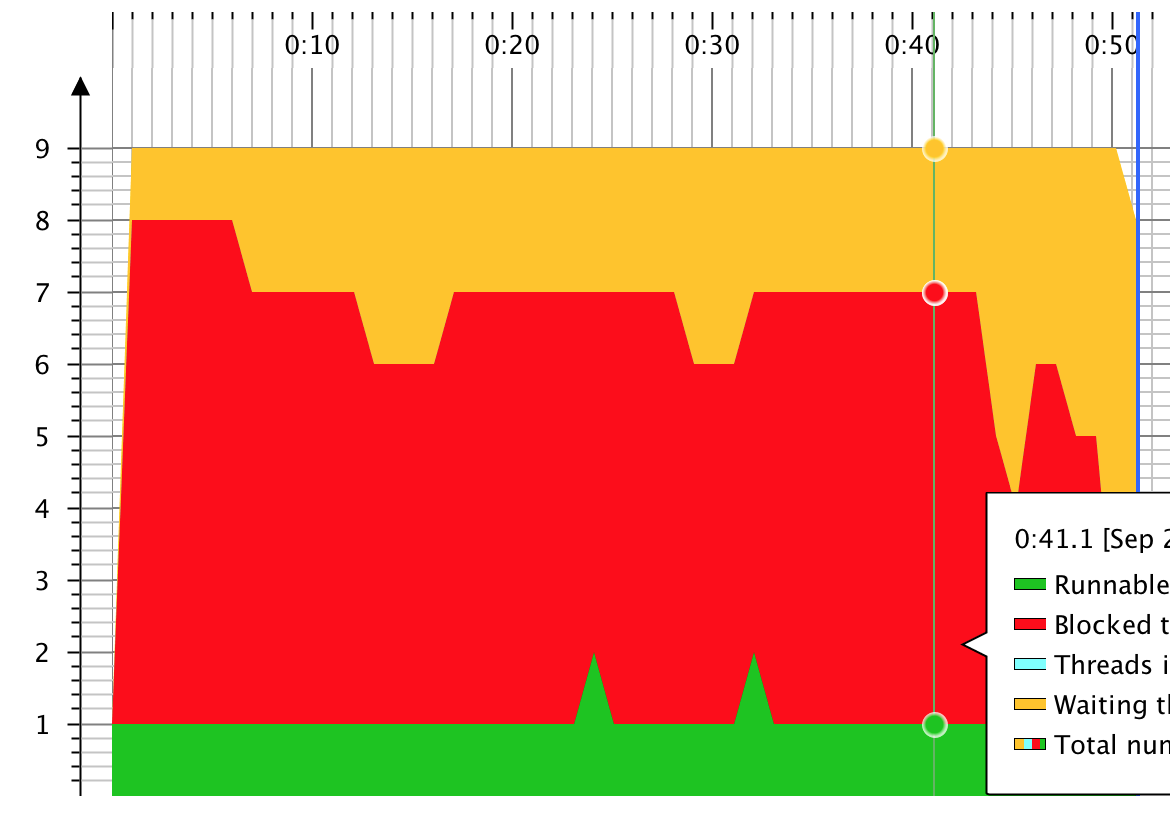
Much better already, but still a lot of thread contention.
Switching to ThreadLocal[SecureRandom]
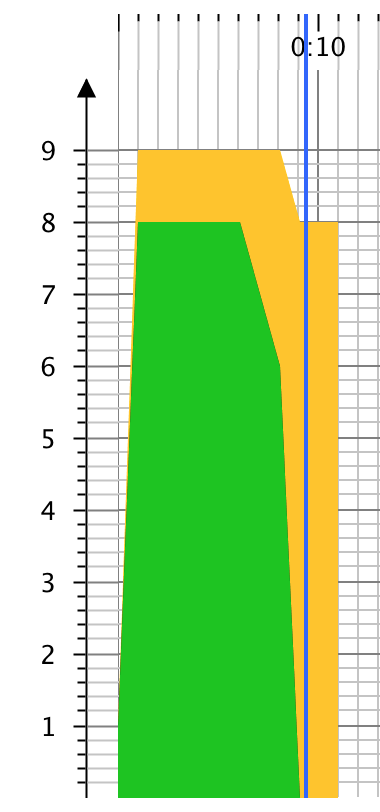
There we go!
So it looks like the innerts of SecureRandom do not contain any more contention which is great.
markusthoemmes
on 21 Sep 2017
Hi @markusthoemmes may I ask which tool/mode did you use to produce such pretty thread pictures?
 62mkv
on 16 Apr 2020
62mkv
on 16 Apr 2020
Related issues
 csantanapr
·
6Comments
csantanapr
·
4Comments
csantanapr
·
6Comments
csantanapr
·
4Comments
 tysonnorris
·
3Comments
tysonnorris
·
3Comments
 antengj
·
4Comments
antengj
·
4Comments
 YangZhou1997
·
5Comments
YangZhou1997
·
5Comments
Most helpful comment
@dgrove-oss fair point, here are a few profiling results. I think I arrived at a solution for us:
Testcode
Parallel generation of 100000000 random UUIDs.
Baseline:
java.util.UUID.randomUUID()(It goes on until about 2:50 minutes)
Switching from
/dev/random(blocking) to/dev/urandom(non-blocking)Much better already, but still a lot of thread contention.
Switching to
ThreadLocal[SecureRandom]There we go!
So it looks like the innerts of
SecureRandomdo not contain any more contention which is great.