Openpilot: Evidence of higher steering torque for Honda's
After speaking with @rbiasini yesterday about recent observations in my Accord, I performed a simple test and captured a datalog (here). In the log, from 0:42 - 0:46 the stock system overrides OpenPilot's steering commands somehow, and generates a much stronger steering result. During that time, the steer_torque_motor parameter becomes much more significant, and its phase shifts ahead of the steer_torque_sensor parameter. The steer_angle_rate also becomes much larger.
I suspect that there is more than 1 data stream that the EPS responds to, with different torque limits. I think that Road Departure Mitigation might be the system in control here, since my HUD was flashing yellow lane lines.

There are lots of unmapped frames from the camera, but 0xE5 seems related.

 Gernby
All 13 comments
Thanks for digging in to this!
The Cabana link you posted is only accessible by yourself. If you want everyone to be able to see it, when viewing the drive in Cabana, click "Copy Share Link" and then paste the URL from your clipboard. The URL should be much longer and have a url parameter in it.
 adhintz
on 19 Dec 2018
adhintz
on 19 Dec 2018
e5 is indeed related (for Bosch only it seems). From my research, it appears to only control the wheel wobble during a LDW/Correction event. The radar combines e4 and e5 from the camera into a single e4 frame that gets sent to the EPS. (Look at e4 on bus 0)
On civic, the wobble occurs while e5 is active and the corrective torque is applied through e4 immediately after.
Regardless, we could make the wheel wobble part of the driver monitoring inattentive alert. I am experimenting with how to get wheel wobble and OP command torque, but without the warnings on the hud.
 csouers
on 19 Dec 2018
csouers
on 19 Dec 2018
re Link" and then paste the URL from
Big oops ... I've updated the cabana link... Thanks for pointing it out!
Gernby
on 20 Dec 2018
That is really good to know about the combination of the messages, but I think there's more to it than just the wobble. The wobble seems like a first stage (Lane Departure Warning), but the next stage is much more impact-full and harder to reproduce. I wouldn't necessarily consider this particular event to be second stage, but I do have a few cabana drives that capture it. I've shared them on Slack, but they are long gone from history. I'll see if I can dig them up again.
Gernby
on 20 Dec 2018
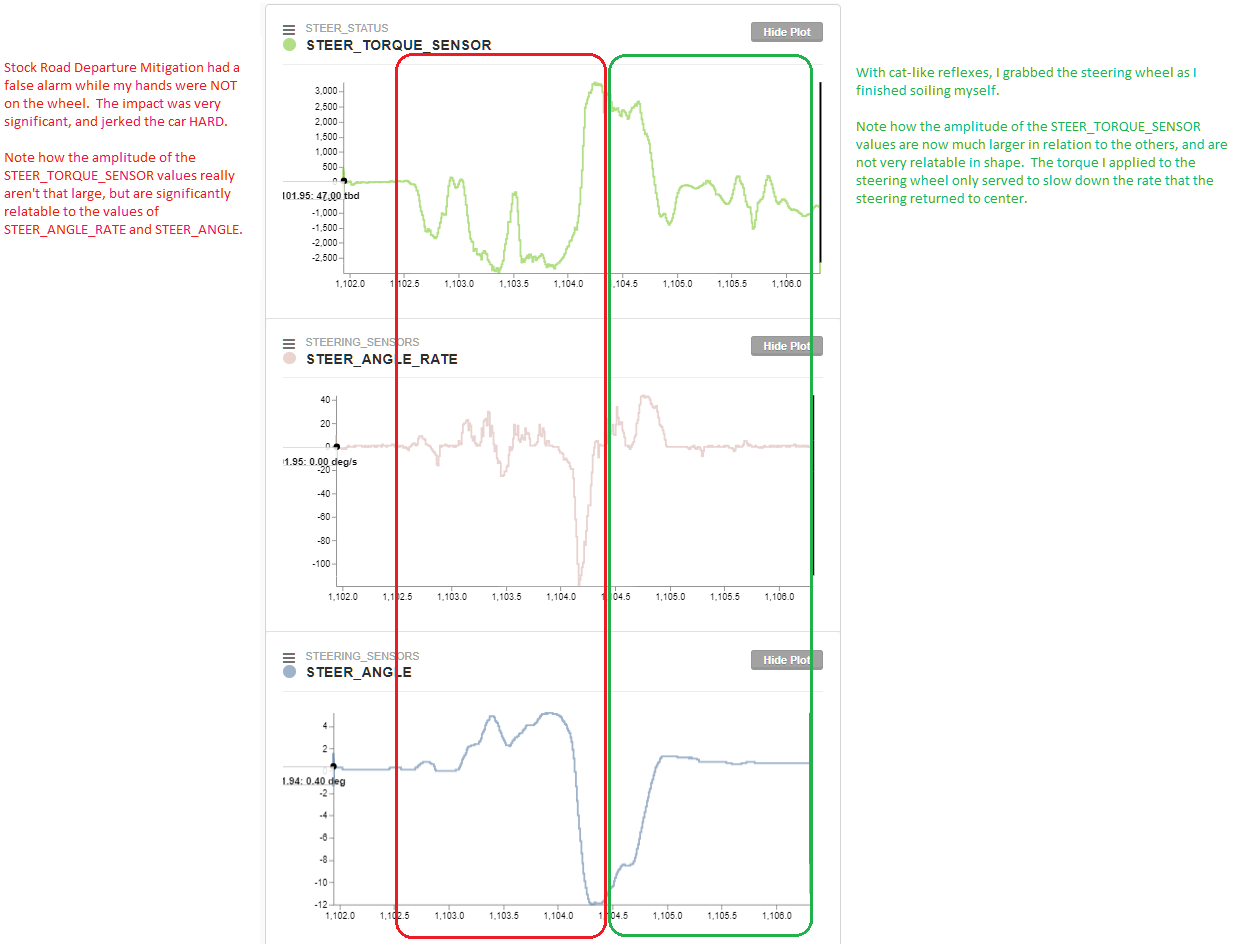
I found the most significant example(s) of apparent RDM intervention that I've ever experienced (here). There were several episodes over a few minutes between 16:00 - 22:00 while I was on the highway. Traffic was about as high as it could be at this speed. The sun was in a very non-optimal position, and the lane markings on the highway suck.
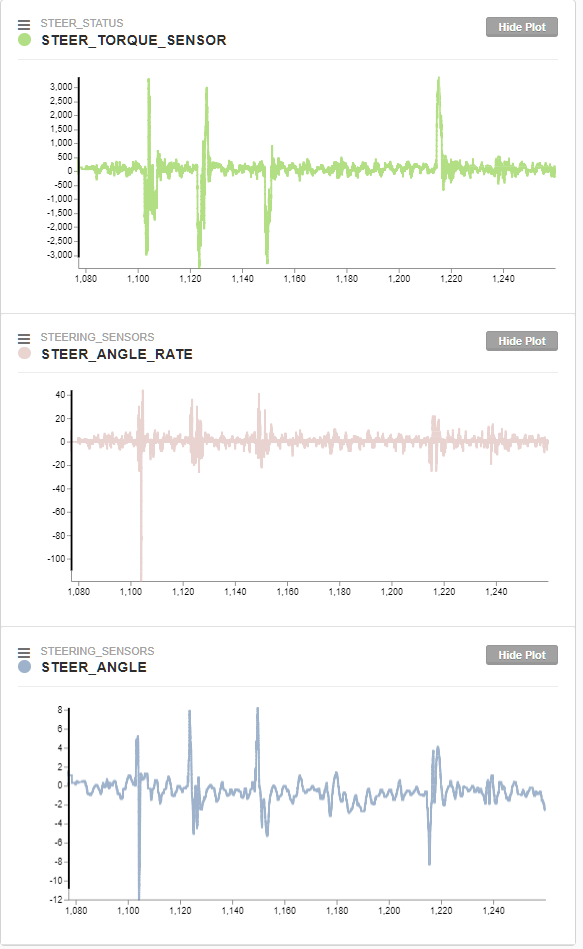
This was the most intense episode, which resulted in a very fast 16+ degree adjustment in steering before I could grab the wheel.
Gernby
on 20 Dec 2018
I was able to capture better data (here) by putting OpenPilot into Passive mode, so that I could observe the stock RDM behavior more clearly. This is with LKAS disengaged, but with the RDM set to "Narrow".
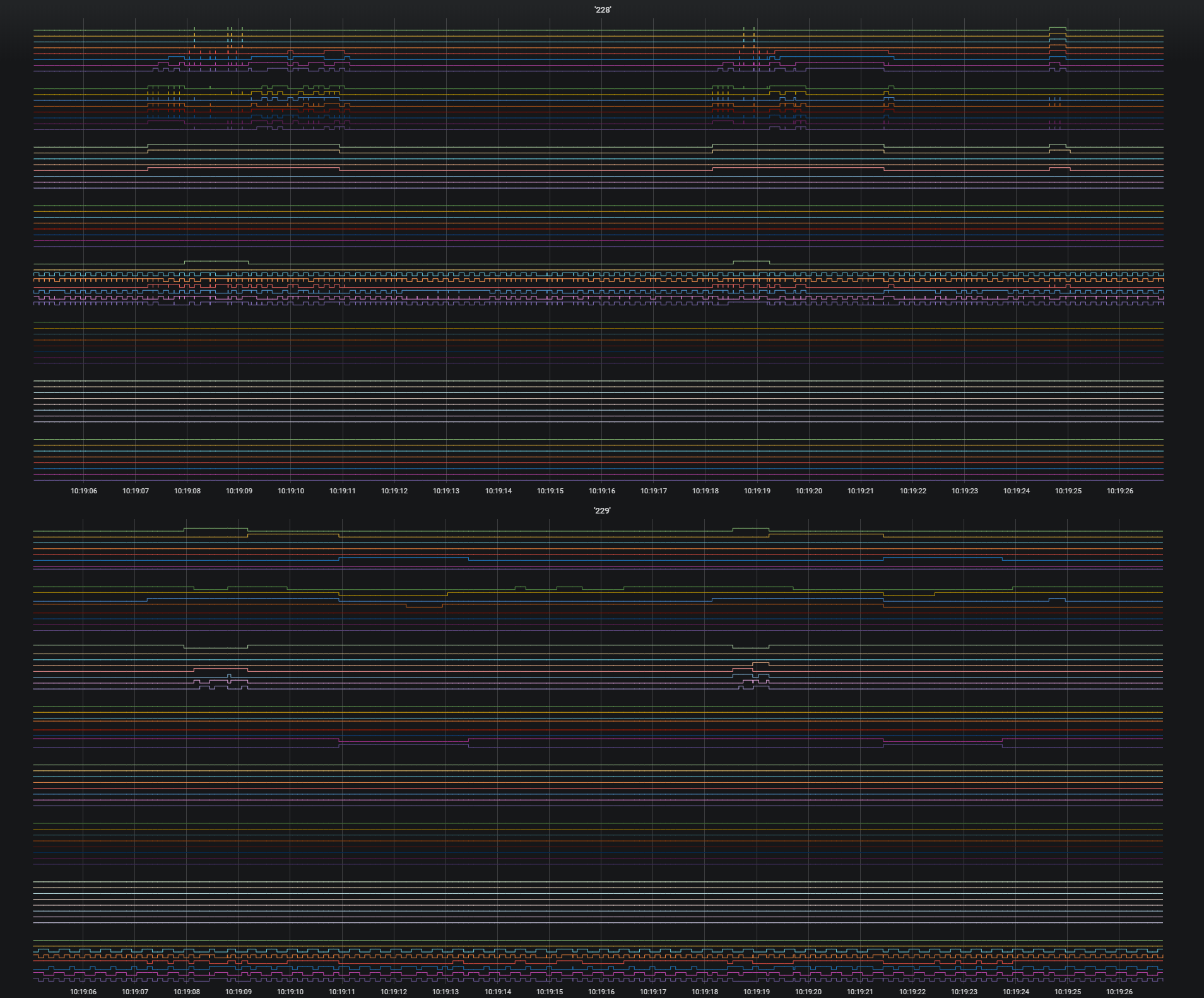
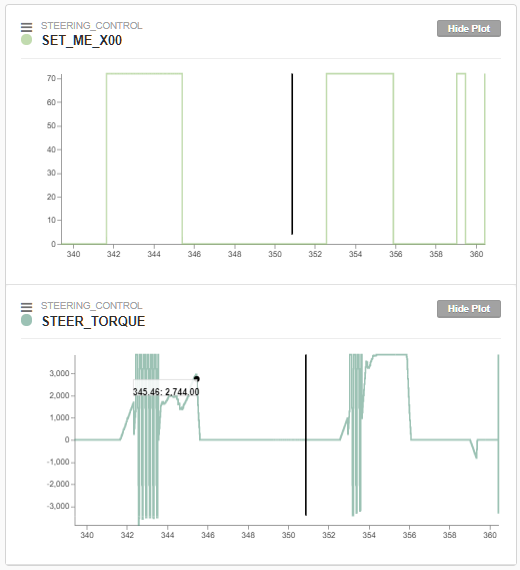
During this drive, I found that the steering system did "wobble" at first, then applied significant steering force back toward my lane. There's a clear relationship between e4 and e5, and it appears that some bits currently defined as SET_ME_X00 and an undefined bit may change the EPS gain or mode.
Below is a screenshot of my dashboard, showing the binary view of 0xe4 and 0xe5 during a couple RDM engagements. (from 340s to 360s in cabana drive)
Note that the data has been down-sampled to 10 frames per second.
Gernby
on 20 Dec 2018
From cabana
Gernby
on 20 Dec 2018
Which e4 are you looking at? CAN 0 or 1/2?
csouers
on 20 Dec 2018
The screenshot was showing e4 and e5 from bus 0 and 1 overlaid on top of each other.
Gernby
on 20 Dec 2018
I still want to get back on this issue, since I'm as convinced as ever that there is more steering torque available, if RDM and VSA are studied further. I don't know when I'll be able to build momentum on it, but I wanted to share a strong theory I have about it, in case somebody else can build momentum on it.
When I did the testing on December 20th with OP in passive mode, so that I could observe RDM in fully stock mode, I was manually forcing the car across yellow stripes (on my left). The response from the steering system against my hands was much stronger than anything OP is capable of, even though the requested torque was no greater than OP's request.
I've stated other theories above, but here's my latest theories about it.
- There may be an "opposition" mode that commands the EPS to explicity oppose input on the steering wheel. This is necessary in urgent situations required by RDM and VSA. This seems to be what I experienced when I was manually steering the car across yellow stripes. My first guess for triggering this mode would be the next bit after torque request in e4. That bit was not set during my other experiences with RDM when my hands were off the wheel.
- There may be a mode to change gain or invert gain from the steering torque sensor as part of RDM or Motion Adaptive EPS.
- If the 2 theories above are fruitless, we need to figure out how to reduce the torque reported by the steering torque sensor caused by moment of inertia and friction of the steering column (and steering wheel), which the EPS registers as opposition by the driver. It seems that a safe approach to hiding this false torque might be to short the torque sensor when higher torque is required.
Gernby
on 4 Jan 2019
After more testing, It seems that the EPS isn't really torque limited as much as rate limited. While testing at low speed in a parking lot, steering with a keyboard, I found that the EPS would steer quickly for a few degrees, then slow down for a few seconds, then steer quickly again for a few degrees. This was a repeatable behavior in both directions. It seems that the steering "bursts" are about 5-6 seconds apart, without much relation to the value of the steering commands. In the screenshots below, the steering commands (via keyboard) were multiple times the standard maximum value (0x1000).
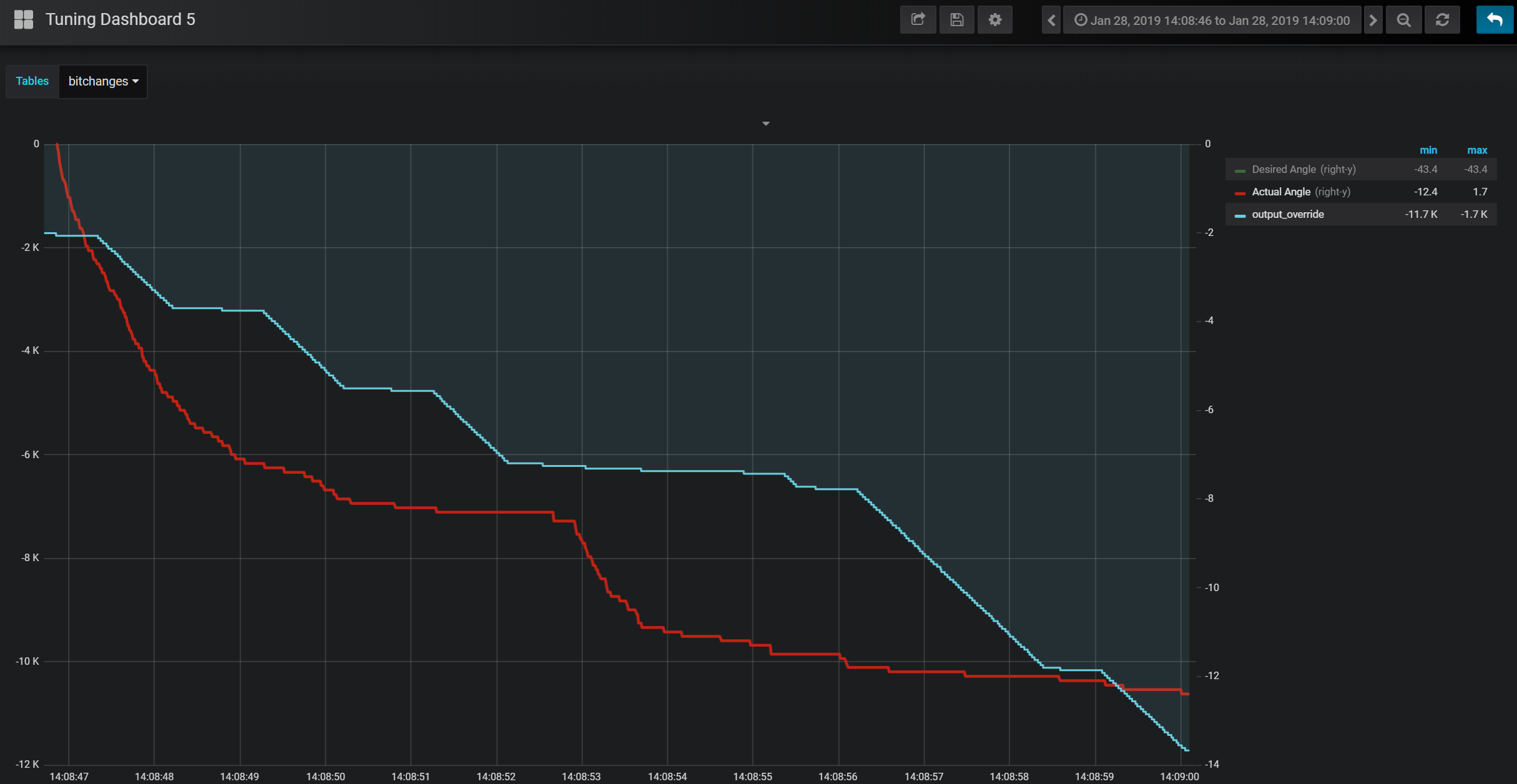
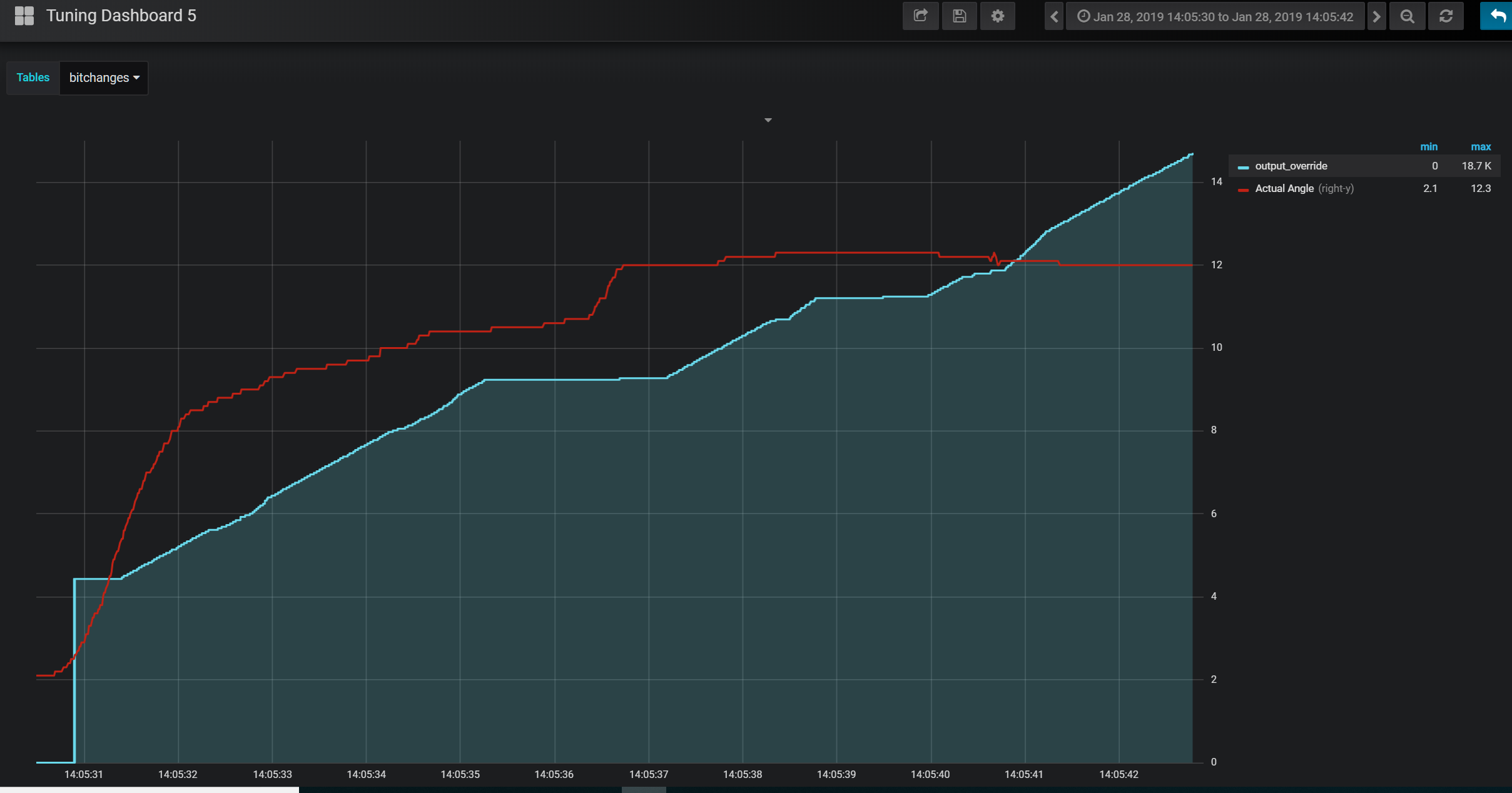
I've also observed somewhat similar results while testing other feed-forward strategies. I'm not sure how I would interpret this result, but it seems to indicate that the EPS has a max degrees per second that it will perform.
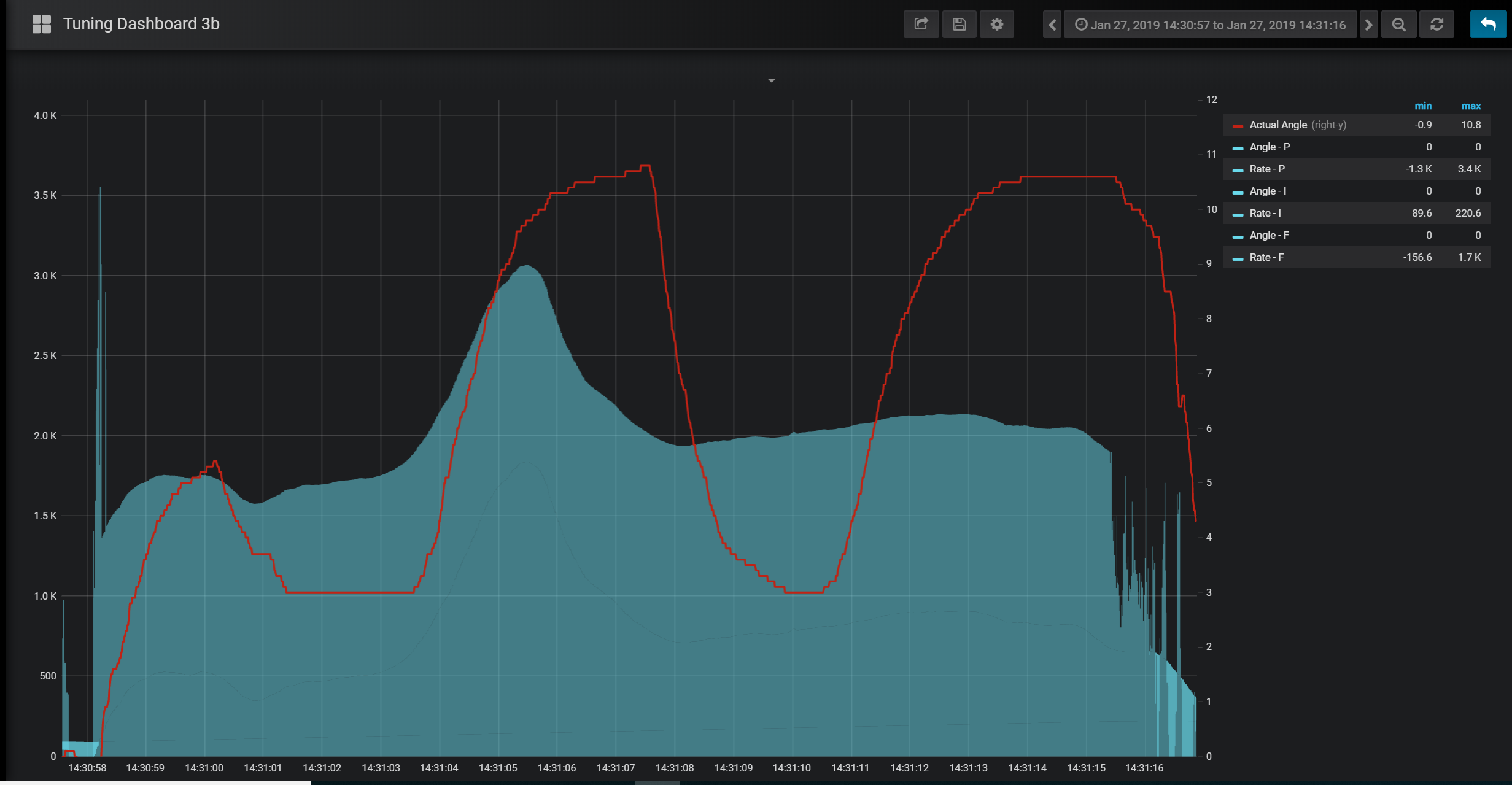
The reason why I think this may relate to my occasional "big steering torque" events, is because I think that the EPS may not limit itself so much when some other bit or bit combination is activated on the bus.
Gernby
on 29 Jan 2019
What's the status on this? Can higher steering torque be reproduced?
 geohot
on 23 Jan 2020
geohot
on 23 Jan 2020
The evidence in the original post is completely bogus. The signal identified as STEER_TORQUE_MOTOR is actually identical to STEER_ANGLE_RATE inverted. The rest of the data presented does not show anything conclusive and probably doesn't belong in a github issue. Feel free to discuss further in discord and submit a PR if you find something that works!
 gregjhogan
on 24 Jan 2020
gregjhogan
on 24 Jan 2020
Related issues
 franz101
·
3Comments
franz101
·
3Comments
 wongjunjin
·
4Comments
wongjunjin
·
4Comments
 midfield99
·
3Comments
midfield99
·
3Comments
 adeebshihadeh
·
4Comments
adeebshihadeh
·
4Comments
 pratikchhatbar
·
6Comments
pratikchhatbar
·
6Comments
Most helpful comment
After more testing, It seems that the EPS isn't really torque limited as much as rate limited. While testing at low speed in a parking lot, steering with a keyboard, I found that the EPS would steer quickly for a few degrees, then slow down for a few seconds, then steer quickly again for a few degrees. This was a repeatable behavior in both directions. It seems that the steering "bursts" are about 5-6 seconds apart, without much relation to the value of the steering commands. In the screenshots below, the steering commands (via keyboard) were multiple times the standard maximum value (0x1000).
I've also observed somewhat similar results while testing other feed-forward strategies. I'm not sure how I would interpret this result, but it seems to indicate that the EPS has a max degrees per second that it will perform.
The reason why I think this may relate to my occasional "big steering torque" events, is because I think that the EPS may not limit itself so much when some other bit or bit combination is activated on the bus.