Leetcode: 【每日一题】- 2019-10-17 - 234. 回文链表
请判断一个链表是否为回文链表。
示例 1:
输入: 1->2
输出: false
示例 2:
输入: 1->2->2->1
输出: true
进阶:
你能否用 O(n) 时间复杂度和 O(1) 空间复杂度解决此题?
来源:力扣(LeetCode)
链接:https://leetcode-cn.com/problems/palindrome-linked-list
著作权归领扣网络所有。商业转载请联系官方授权,非商业转载请注明出处。
 azl397985856
All 6 comments
#
# @lc app=leetcode.cn id=234 lang=python3
#
# [234] 回文链表
#
# @lc code=start
# Definition for singly-linked list.
# class ListNode:
# def __init__(self, x):
# self.val = x
# self.next = None
class Solution:
def isPalindrome(self, head: ListNode) -> bool:
pre = None
slow = fast = head
# 一边反转前半部分,一边找中点
while(fast and fast.next):
# 先更新fast指针
fast = fast.next.next
# 再反转和更新slow指针
next = slow.next
slow.next = pre
pre = slow
slow = next
# 处理奇数个节点的情况
if fast:
slow = slow.next
# 从中点开始分别向前和后遍历,逐个比较是否相同即可
while(slow):
if (slow.val != pre.val):
return False
pre = pre.next
slow = slow.next
return True
# @lc code=end
c++版本
~~~
**
- Definition for singly-linked list.
- struct ListNode {
- int val;
- ListNode *next;
- ListNode(int x) : val(x), next(NULL) {}
- };
/
/*
1 定义2个指针,head tail
- 递归遍历tail链表
- 通过
head++ 链表前进, 递归特点:从上到下
这个是子递归完在函数内部修改的,然后当前递归在使用
head已经发生改变)
tail -- 链表倒退,
递归特点 回溯,利用函数栈跟踪轨获取最后节点。
tail没有改变
判断是否回文 tail ==head
4.如果是继续,如果不是返回false
*/
class Solution {
public:
bool isPalindrome(ListNode head) {
return isPalindrome(head,head);
}
//bool isPalindrome(ListNode* tail,ListNode* head)
bool isPalindrome(ListNode* tail,ListNode* &head)
{
if(NULL==tail)
{
return true;
}
bool flag=isPalindrome(tail->next,head);
if (false ==flag)
{
return false;
}
if (tail->val !=head->val)
{
return false;
}
head =head->next;//
return flag;
}
};
~~~
 watchpoints
on 18 Oct 2019
watchpoints
on 18 Oct 2019
领取
使用递归的回溯来逆序访问链表,然后逆序过程中和正序进行比较就。没有出现不等的情况就是回文
class Solution {
public:
ListNode *h;
bool ok = true;
bool isPalindrome(ListNode* head) {
h = head;
DFS(head);
return ok;
}
void DFS(ListNode* tail){
if(tail == NULL) return ;
else{
DFS(tail->next);
if(tail->val != h->val) ok = false;
h = h->next;
}
}
};
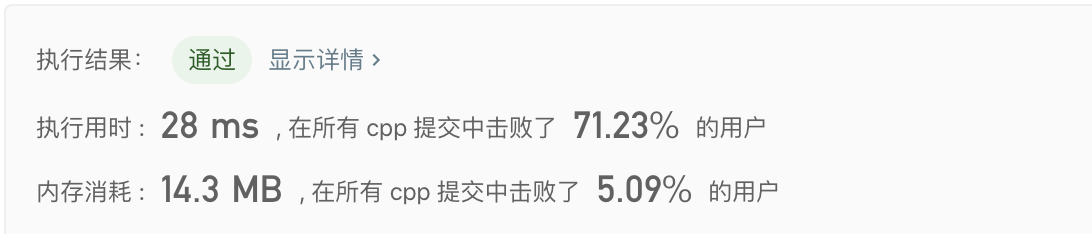
 maninbule
on 18 Oct 2019
maninbule
on 18 Oct 2019
领取
使用递归的回溯来逆序访问链表,然后逆序过程中和正序进行比较就。没有出现不等的情况就是回文
class Solution { public: ListNode *h; bool ok = true; bool isPalindrome(ListNode* head) { h = head; DFS(head); return ok; } void DFS(ListNode* tail){ if(tail == NULL) return ; else{ DFS(tail->next); if(tail->val != h->val) ok = false; h = h->next; } } };
done,但是其他解答把我的加上,因为你的空间复杂度不是常数
azl397985856
on 18 Oct 2019
O(n)时间复杂度 O(1)空间复杂度 三指针 c++实现
#include <cassert>
struct ListNode {
int val;
ListNode *next;
ListNode(int x) : val(x), next(nullptr) {}
};
class Solution {
public:
bool isPalindrome(ListNode *head) {
if (!head || !head->next) return true;
ListNode *left = head, *right = head, *pre = nullptr;
while (right && right->next) {
right = right->next->next;
auto tmp = left->next;
left->next = pre;
pre = left;
left = tmp;
}
if (right) left = left->next;
while (left) {
if (pre->val != left->val) return false;
pre = pre->next;
left = left->next;
}
return true;
}
};
int main() {
ListNode node1(1);
ListNode node2(2);
node1.next = &node2;
assert(Solution().isPalindrome(&node1) == false);
}
 wangyuxiang0829
on 19 Oct 2019
wangyuxiang0829
on 19 Oct 2019
java解法
/**
 * Definition for singly-linked list.
 * public class ListNode {
 *     int val;
 *     ListNode next;
 *     ListNode(int x) { val = x; }
 * }
 */
class Solution {
    public boolean isPalindrome(ListNode head) {
        if(head == null || head.next == null) return true;
        ListNode slow = head;
        ListNode fast = head;
        while(fast != null && fast.next != null) {
            slow = slow.next;
            fast = fast.next.next;
        }

        ListNode s1 = head;
        ListNode s2 = slow;
        //说明奇数个数
        if(fast != null) {
            s2 = s2.next;
        }


        //将s2反转
        ListNode p = s2;
        s2 = null;
        while(p != null) {
            ListNode next = p.next;
            p.next = s2;
            s2 = p;
            p = next;
        }

        while(s2 != null) {
            if(s1.val != s2.val) {
                return false;
            }

            s2 = s2.next;
            s1 = s1.next;
        }

        return true;

    }
}
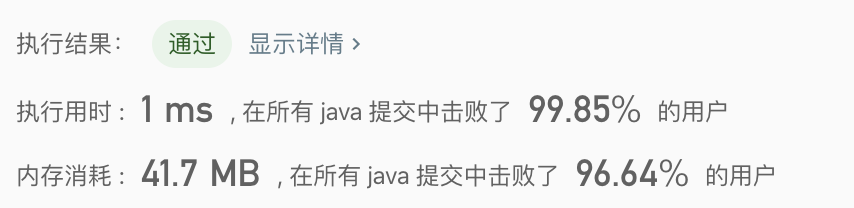
 aaaaaabiao
on 20 Oct 2019
aaaaaabiao
on 20 Oct 2019
👍2
Was this page helpful?
0 / 5 - 0 ratings
Related issues
azl397985856
·
3Comments
azl397985856
·
4Comments
azl397985856
·
3Comments
azl397985856
·
4Comments
azl397985856
·
3Comments
Most helpful comment
java解法