Espeasy: PUYA flash chip does not have SPIFFS available
It appears that the PUYA flash chip is being adopted by a growing number of manufacturers of the esp8266 modules. My most recent purchases of esp-01 modules from 3 separate suppliers have all had the PUYA chip on-board (for a total of 95 modules). The issue is that Arduino IDE x.xx sketches using any 8266 core can not currently write to SPIFFS on modules with this chip.
NOTE that all other functions are fine with this chip, as far as I have tested so far it is only SPIFFS that is a affected. Also worth noting is that the IDE's "Sketch Data Upload" function can successfully write to SPIFFS including file contents and sketches can then read the file contents, sketches just can't write to SPIFFS. Furthermore you can create a file in so far as that DIR can see the file and list the file name, but the file will have no contents.
I'd like to know how many others have bought esp modules that have the PUYA branded chips on board as I feel that this could soon be a very widespread problem.
Please don't post 'things to try for a fix' here. I'd rather only hear from those that actually have modules with the PUYA flash chip so I can get an idea of how widely they are being adopted.
Moderators, please don't close this issue without giving others with this chip time to respond. Rather, point them here. The other threads relating to this have become bloated with suggestions for fixes etc., so I think a thread that is only focused on those with the PUYA chip is the best way to gather info for the key guys to solve this.
 ondabeach
All 58 comments
this is duplicate of #650 i think
 psy0rz
on 20 Jan 2018
psy0rz
on 20 Jan 2018
@psy0rz there are at least 3 current threads that are related to this issue but they are all getting bloated by suggestions from people that don't even have a PUYA chip to test with. I know they, and you are trying to help but...
PLEASE, only people with PUYA chipped modules, or the 8266 'gurus' that are actively working on the problem to comment here
ondabeach
on 20 Jan 2018
ok thanks i'll leave it here for now util we have a fix :)
psy0rz
on 20 Jan 2018
So just to make it clear, it is just for a rough impact analysis?
I do have some ideas on what might be causing this, but I do not have any of these chips yet to test with.
Could you please give me a link to where these are being sold with fast shipment?
 TD-er
on 20 Jan 2018
TD-er
on 20 Jan 2018
No theories please! IF YOU DON'T HAVE A PUYA CHIPPED MODULE THEN PLEASE DON'T POST HERE!
ondabeach
on 20 Jan 2018
@ondabeach td-er is one of the main developers of ESPEasy at this moment. ;)
psy0rz
on 20 Jan 2018
Without a module to test with there is no point in commenting here. There are already 3 threads full of theories and ideas of 'things to try'. I was trying to avoid making this number 4. I don't know how I could have made that any more clear.
ondabeach
on 20 Jan 2018
Hi
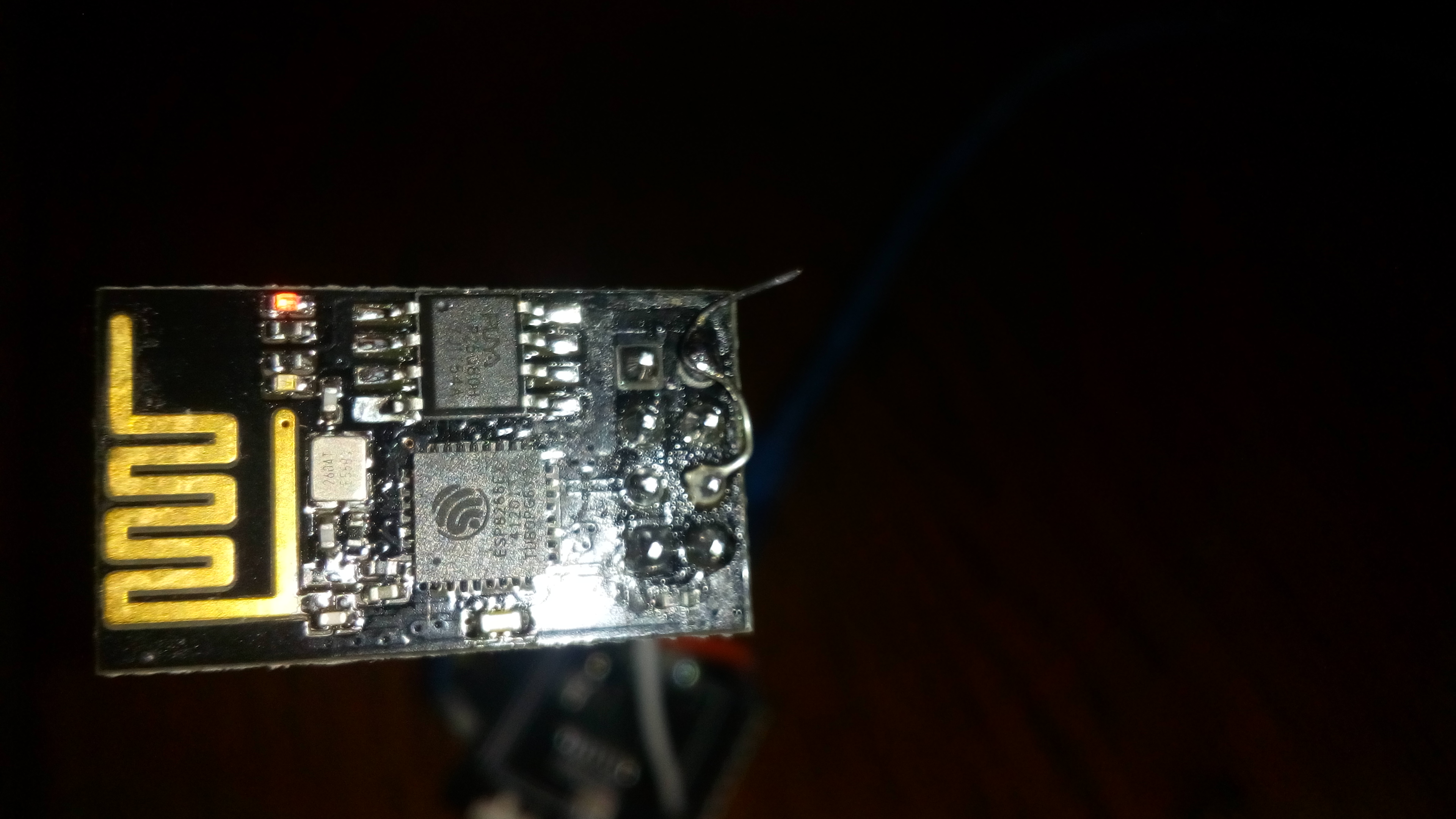
have the same problem - esp easy not starting on puya.esp-01s
It started once r147, could assign a SSID, but did not restart after that.
did a new flash but now espeasy is not restarting any more.
can still flash normal sketch without spiffs usage.
 riker65
on 21 Jan 2018
riker65
on 21 Jan 2018
@riker65 that's definitely the problem chip you have there. I see that horrid PUYA symbol in my sleep ;)
I'm having to replace the flash chips so I can make my products and keep my business going until @igrr or someone can find a solution. I'm using the Adesto AT25SF041-SSHD-B which is only a 512Kbyte chip but is all my sketch requires. I get them from RS Components but other places like mouser.com have them. I assume that the 1Mbyte and bigger chips from the same family would also support SPIFFS too.
Hopefully it won't be too long before one of the guns around here get their hands on a PUYA chipped module so they can actually fix the problem rather than take stabs in the dark. The replacement flash chips are only costing me 40cents delivered but it's a pain in the butt having to replace them.
ondabeach
on 21 Jan 2018
Hi
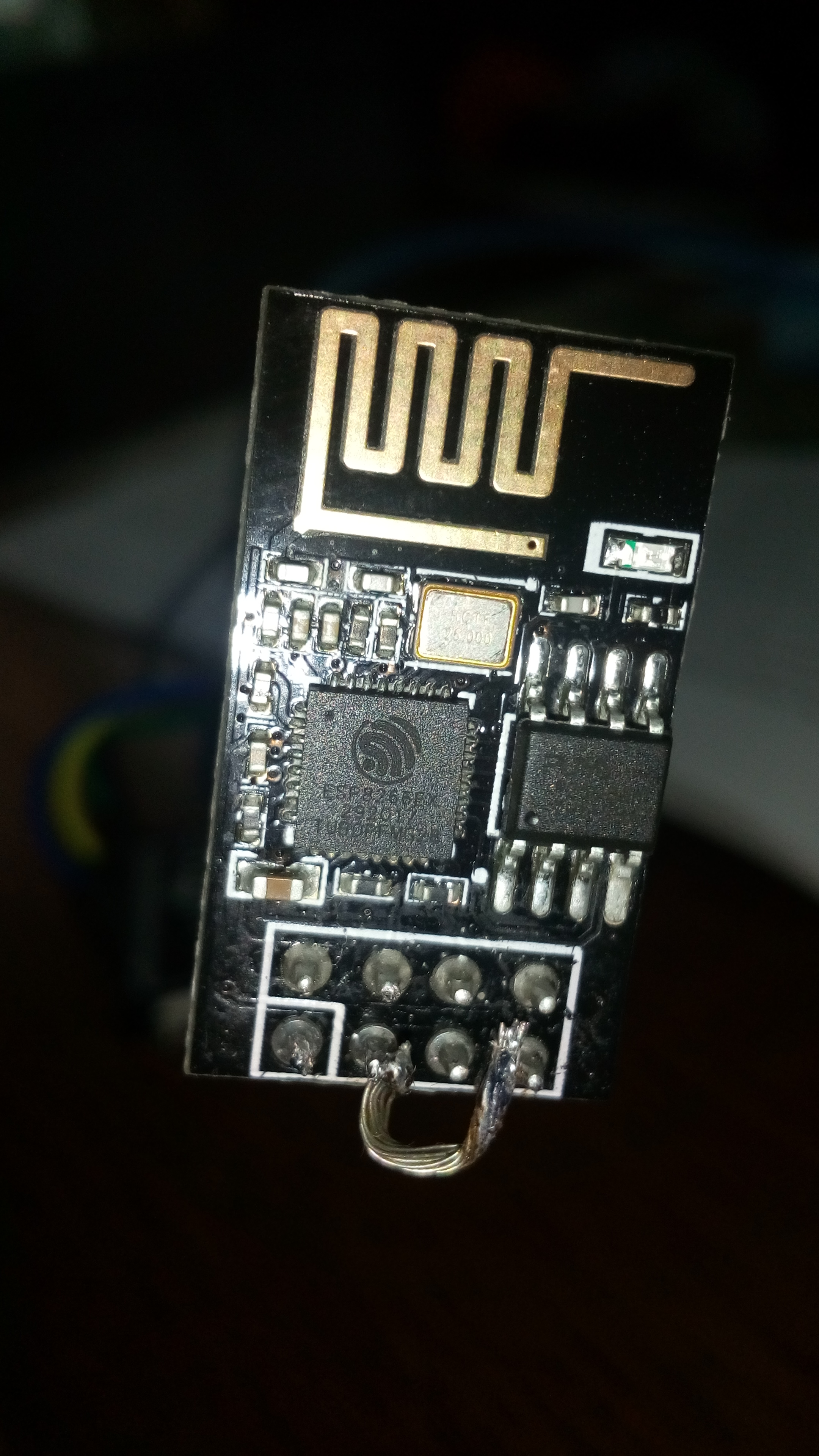
just check the other I am having. Also Puya, but there at least r147 is running.
Strange
riker65
on 21 Jan 2018
The issue with the PUYA chip is that you can't write to SPIFFS with a sketch. What is your sketch storing in SPIFFS?
ondabeach
on 21 Jan 2018
I do place some website xml on spiffs
have to change my design so.
riker65
on 21 Jan 2018
Ok, keep an out here for a fix.
ondabeach
on 21 Jan 2018
i received my ESP-01's, bought them at the same ebay address that someone mentioned. I'll test and try to debug now.
psy0rz
on 28 Jan 2018
I also received one by mail, sent by a user. (Tim Karnhof)
Hopefully we can test with the SPIFFS_NO_BLIND_WRITES flag mentioned here: https://github.com/esp8266/Arduino/issues/4061#issuecomment-359654138
TD-er
on 28 Jan 2018
@TD-er that's great. I'll keep my fingers crossed that it works. I need to replace another batch of the PUYA chips on my modules so I can keep making my products. If it does work I'd love a link where I can download the tweaked files to try. Are you tweaking 2.3 core files? 2.4 core seems to have too many bugs still to be used in a commercial product.
ondabeach
on 28 Jan 2018
Did someone confirm that the ESP-01S without PUYA chip does operate correctly with our platformio.ini settings?
I tried with SPIFFS_NO_BLIND_WRITES, but no difference here. (see https://github.com/esp8266/Arduino/issues/4061#issuecomment-361428719)
psy0rz
on 30 Jan 2018
@psy0rz it's looking pretty scary at this stage. No-one in the brains trust seems to be making any headway with this :(
ondabeach
on 30 Jan 2018
Hello!
These boards have P25Q80H soldered on it. Did someone read that chip's datasheet? I downloaded it from Puya Semiconductor's site. So I share it here. Hope this helps.
PUYA-P25Q80H.pdf
 csipeter
on 3 Feb 2018
csipeter
on 3 Feb 2018
Hi @csipeter , the brains trust do have the datasheet. I downloaded it before their website went off the air a few weeks ago. Good to see it is back up again, we were worried they had gone out of business.
Unfortunately the datasheet hasn't helped them solve the problem however :(
ondabeach
on 3 Feb 2018
@igrr, @TD-er the Puya website is back on line :) Maybe you can ask them for help.
ondabeach
on 3 Feb 2018
Is this related too?.. but with other chip than the PUYA one?
https://www.letscontrolit.com/forum/viewtopic.php?f=5&t=4803
 elucas2uy
on 7 Feb 2018
elucas2uy
on 7 Feb 2018
Possibly. @TD-er is the one to ask, he is one of the owners of ESPEasy I believe
ondabeach
on 8 Feb 2018
@ondabeach
I am not an owner, just an enthusiastic developer ;)
TD-er
on 8 Feb 2018
@TD-er, but apparently not enthusiastic enough to answer @elucas2uy's enquiry?
ondabeach
on 8 Feb 2018
@ondabeach Did I miss a question?
I thought I did answer opened an issue for it and was yesterday evening trying to test on one of my own NodeMCU's, which almost got bricked (thus no commit + pull req.) and then I went to bed.
TD-er
on 8 Feb 2018
@ondabeach, rest assured, everybody here wants to help. We all do it just for the fun of it and the occasional thumbs up. And so does @TD-er. Judging from his acitivities around here he looks pretty enthusiastic to me. Maybe that's why you believe that he owns this repo ;-)
If you feel like you have been ignored, just ask again for an answer. Politely if you like. It was probably not intentional.
Challenging someones committment, however, only works for little children but annoys grown ups. A lot.
So let's keep it professional, shall we ?
 s0170071
on 8 Feb 2018
s0170071
on 8 Feb 2018
s0170071, please don't comment after only reading one or two entries in a thread. If you had absorbed what you'd read instead of 'jumping to the rescue' of someone you see as a peer, you'd know that I said I believed him to be a co-owner of ESPEasy... not this repo. I was actually told by one of your more senior peers that TD was the co-owner of ESPEasy.
Similarly, if TD had bothered to read back as far as two posts before getting his back up, he would have seen the question that was asked. He's had his nose out of joint since I poked a little fun at him for suggesting that the PUYA flash chip problem might be due to the fact that the esp-01 module doesn't have an RF shield. And no, I'm not kidding, he really did.
I have asked, politely, repeatedly, on numerous threads, of numerous people, including contributors of God like stature, but all to no avail. And I have literally been ignored, and no, not since, but long before I started getting pissed at the lack of action on what is a serious problem to anyone who wants to use SPIFFS on an esp-01 module.
Yes, I understand fully the volunteer basis of this repo, but to simply walk away and bury your head in something else without any kind of feedback is anything but professional. If they don't know how to fix it or even what the problem is, just say so. And before you bother replying, spend a bit of time researching this issue, and by a little time I don't mean ten minutes.
I think it might actually be less painful to replace the flash chip on every module I use, rather than to keep getting my hopes up of anyone around here focusing on the issue long enough to resolve it.
Maybe I'll update when core 6.0 is released and see if any headway has been made.
ondabeach
on 8 Feb 2018
No need to close this issue, we have some units now where we try to get the SPIFFS reading/writing working... but PUYA need some other approach than what is currently used in the ESPlibrary. Thanks for your feedback. :+1:
 Grovkillen
on 8 Feb 2018
Grovkillen
on 8 Feb 2018
Thanks Grovkillen, a little feedback goes a long way. I've emailed PUYA and suggested it's in their best interest to work with the github 8266 repos to resolve this. I've also let guys on the 8266/Arduino repo know that Puya Semi's website is back up so they can contact them. I have no idea if they've done anything or if they've even read my posts. It's a bit like throwing stones down a bottomless well at times.
ondabeach
on 8 Feb 2018
Yes, we need to add as much pressure as possible to PUYA. Still not a word from them, I guess we're not in the big leagues...
Grovkillen
on 8 Feb 2018
LOL. I just went to the puya site. They call their SPI flash "indutrial".
http://www.puyasemi.com/English/pro.php?SortID=2&ID=30
s0170071
on 8 Feb 2018
Hehehe. In du TRIAL.
csipeter
on 8 Feb 2018
...like they PUYA chip! :rofl:
 beicnet
on 8 Feb 2018
beicnet
on 8 Feb 2018
@Grovkillen, exactly, we're tiny little fish that don't rate. I'm not expecting to hear back from them either.
Like it or not, the whole world of Arduino and even the world of IOT at large don't mean a damn thing to a chip manufacturer. They sell their products by the thousands, tens and hundreds of thousands to companies that manufacture commercial devices such as set top boxes, smart fridges, microwave ovens and thousands of other types of gadgets and products.
There are probably two or more middlemen between PUYA and the little companies that make our modules like the generic esp-01.
Quite possibly companies like Adafruit buy directly from chip suppliers, but either way, the volumes are insignificant compared to the big fish like Sony, Philips, LG and so on.
In short, they're not really going to care about us. We need to face that and look for a solution ourselves. Bitching about it won't get us anywhere.
The suppliers that sell the generic esp-01's on eBay or AliExpress are going to buy from the cheapest provider regardless, and at the moment it looks like that means a module with a PUYA chip on board. The fact that the modules work except for SPIFFS writing means they can get away with selling them because for most sketches they work.
Most people will just throw a $3 module in the bin rather than stuff around sending it back. If 1 in 20 people pursue a refund, the suppliers are happy to live with that. Don't forget that a lot of ebay suppliers of these things are just individual dudes working out of their mum's garage.
So, the options are either fork out for an Adafruit, Saprkfun or whatever module where you'll get something that you know will work, or buy a cheapie and be prepared to spend another 40 cents and replace the flash chip.
It sucks balls, but hey, that's life.
ondabeach
on 9 Feb 2018
@Grovkillen I have great news guys.
@igrr has fixed the SPIFFS write problem with the PUYA flash chip.
The fix is for Arduino and I've tested it on core 2.3 and 2.4.
@TD-er is working on getting @igrr to help him adapt the fix to platformio.
The Arduino fix is a patch of ESP.cpp in the core directory.
See https://github.com/esp8266/Arduino/issues/4061
in ESP.cpp you need to replace the existing flashWrite class which looks like this:
bool EspClass::flashWrite(uint32_t offset, uint32_t data, size_t size) {
ets_isr_mask(FLASH_INT_MASK);
int rc = spi_flash_write(offset, (uint32_t) data, size);
ets_isr_unmask(FLASH_INT_MASK);
return rc == 0;
}
And replace it with this:
define FLASH_QUIRK_WRITE_0_TO_1
bool EspClass::flashWrite(uint32_t offset, uint32_t data, size_t size) {
ets_isr_mask(FLASH_INT_MASK);
int rc;
uint32_t ptr = data;
#ifdef FLASH_QUIRK_WRITE_0_TO_1
static uint32_t read_buf[SPI_FLASH_SEC_SIZE / 4];
rc = spi_flash_read(offset, read_buf, size);
if (rc != 0) {
ets_isr_unmask(FLASH_INT_MASK);
return false;
}
for (size_t i = 0; i < size / 4; ++i) {
read_buf[i] &= data[i];
}
ptr = read_buf;
#endif // FLASH_QUIRK_WRITE_0_TO_1
rc = spi_flash_write(offset, ptr, size);
ets_isr_unmask(FLASH_INT_MASK);
return rc == 0;
}
If it's a new PUYA chipped module you should now be good to go. But, if you've already been writing to SPIFFS on a module (and failing), then you will also need to upload the File System. The easiest way to do that is to use the '8266 Sketch Data Upload' function.
ondabeach
on 9 Feb 2018
Awesome news!!
Grovkillen
on 9 Feb 2018
Yes indeed. I guess this can be closed now and referred over to https://github.com/esp8266/Arduino/issues/4061#
I'll leave that up to you @Grovkillen, I'm hitting the hay.
ondabeach
on 9 Feb 2018
I close and we'll wait for the merge.
Grovkillen
on 9 Feb 2018
I no longer know what to do, I have already followed all the steps described in the comments and I can not make it work. I have a 20 ESP-01 with PUYA chip.
 adapso
on 18 Feb 2019
adapso
on 18 Feb 2019
@adapso
If you're building using PlatformIO, then please have a look at the platformio.ini we use here at ESPeasy.
I patched the sources for core 2.3.0, 2.4.0, 2.4.1 and 2.4.2 (the patch is now included in core 2.5.0)
So for platformio, you can use the platform defines we use:
https://github.com/letscontrolit/ESPEasy/blob/a8bfa71bd5a6ddd6710fffb5445dfd1cab1e3b94/platformio.ini#L93-L119
For Arduino IDE, the Puya patch should be included in the core 2.5.0 and you must enable this patch by setting the define PUYA_SUPPORT=1 at compile time. (probably adding something like -DPUYA_SUPPORT=1 or some menu option)
TD-er
on 18 Feb 2019
@adapso
Se você está construindo usando o PlatformIO, então dê uma olhada no platformio.ini que usamos aqui no ESPeasy.
Eu patchei os fontes para o núcleo 2.3.0, 2.4.0, 2.4.1 e 2.4.2 (o patch agora está incluído no núcleo 2.5.0)
Então, para o platformio, você pode usar a plataforma define que usamos:
ESPEasy / platformio.iniLinhas 93 a 119 em a8bfa71
[core_2_3_0]
plataforma = https://github.com/TD-er/platform-espressif8266.git # patch / v1.5.0_Puya
build_flags = -D BUILD_GIT = ' "$ {sysenv.TRAVIS_TAG}" '
-DNDEBUG
-DVTABLES_IN_FLASH
-fno-exceptions
- DWEBSERVER_RULES_DEBUG = 0
- DPUYA_SUPPORT = 1
-DARDUINO_ESP8266_RELEASE_2_3_0[core_2_4_0]
plataforma = https://github.com/TD-er/platform-espressif8266.git # patch / v1.6.0_Puya
build_flags = $ {esp82xx_defaults.build_flags} -DARDUINO_ESP8266_RELEASE_2_4_0[core_2_4_1]
plataforma = https://github.com/TD-er/platform-espressif8266.git # patch / v1.7.3_Puya
build_flags = $ {esp82xx_defaults.build_flags} -DARDUINO_ESP8266_RELEASE_2_4_1[core_2_4_2]
plataforma = https://github.com/TD-er/platform-espressif8266.git # patch / v1.8.0_Puya
build_flags = $ {esp82xx_defaults.build_flags}[core_2_5_0]
; plataforma = [email protected]
; plataforma = https://github.com/TD-er/platform-espressif8266.git#feature/2.5.0-beta1
plataforma = https://github.com/platformio/platform-espressif8266.git # feature / stage
build_flags = $ {esp82xx_2_5_0.build_flags}
Para o Arduino IDE, o patch Puya deve ser incluído no núcleo 2.5.0 e você deve habilitar este patch definindo a definiçãoPUYA_SUPPORT=1em tempo de compilação. (provavelmente adicionando algo como-DPUYA_SUPPORT=1ou alguma opção de menu)
I am using Arduino IDE, I upgraded the core to 2.5.0 and it still does not work.
adapso
on 19 Feb 2019
Have you set the define to enable PUYA_SUPPORT ?
And where did you enable it?
You must make sure to do a clean build, since it must be triggered to re-build the core libraries.
TD-er
on 19 Feb 2019
2.5.0
#define PUYA_SUPPORT 1
no effect
 21h
on 11 Mar 2019
21h
on 11 Mar 2019
Where do you define that?
You have to make sure it is already defined before the core libraries are being built, so that's why I set it as defines for the build command itself. It is not set as a define in my own source code.
TD-er
on 11 Mar 2019
I defined it in head of my program.
In core sources .h file I see define it with it not defined before with value 0.
In .c file I see checking only existance of that define, not value (remember, it was defined in .h file if not defined before).
Its very strange. Looks like PUYA_SUPPORT not programmed correctly in latest 2.5.0.
21h
on 11 Mar 2019
No, that's not where you need to put it, you need to give it as an argument to the compiler.
So in PlatformIO it is -DPUYA_SUPPORT=1 in the list of build flags.
I don't know what you need for the Arduino IDE.
You must also make sure to make a full clean build then.
PUYA support is working fine, but you have to enable the flag in the correct place or else it will not be active when the core libraries are built.
TD-er
on 11 Mar 2019
I already gave up, I could not make it work, my project is stopped because of this PUYA. I try to make new purchases on Ebay and Aliexpress and just send me this damn PUYA
adapso
on 11 Mar 2019
Are you using PlatformIO or Arduino IDE?
TD-er
on 11 Mar 2019
I don't understand why it is not default
 uzi18
on 11 Mar 2019
uzi18
on 11 Mar 2019
Are you using PlatformIO or Arduino IDE?
Arduino IDE
adapso
on 12 Mar 2019
I don't understand why it is not default
That's what the guys from the esp8266/Arduino repo requested.
In the Arduino IDE, you can setup some stuff like board settings and such. Isn't there now an option to enable the PUYA patch? They discussed about adding that to the options.
Or maybe some build flags you can add somewhere?
Looks like you may have to look for a line like this:
compiler.c.flags= in platform.txt and then add the define -DPUYA_SUPPORT=1 to that line (not sure if it will be in multiple places)
See Arduino-IDE-1.5-3rd-party-Hardware-specification
TD-er
on 12 Mar 2019
@adapso
Se você está construindo usando o PlatformIO, então dê uma olhada no platformio.ini que não use no ESPeasy.
Você pode usar as
seguintes fontes para obter o núcleo 2.3.0, 2.4.0, 2.4.1 e 2.4.2 (o patch agora está incluído no núcleo 2.5.0) Então, para o platformio, você pode usar uma plataforma que define o que é:
ESPEasy / platformio.ini
Linhas 93 a 119 em a8bfa71
[core_2_3_0]
plataforma = https://github.com/TD-er/platform-espressif8266.git # patch / v1.5.0_Puya
build_flags = -D BUILD_GIT = '"$ {sysenv.TRAVIS_TAG}"'
-DNDEBUG
-DVTABLES_IN_FLASH
- exceções-fno
- DWEBSERVER_RULES_DEBUG = 0
- DPUYA_SUPPORT = 1
-DARDUINO_ESP8266_RELEASE_2_3_0
[core_2_4_0]
plataforma = https://github.com/TD-er/platform-espressif8266.git # patch / v1.6.0_Puya
build_flags = $ {esp82xx_defaults.build_flags} -DARDUINO_ESP8266_RELEASE_2_4_0
[core_2_4_1]
plataforma = https://github.com/TD-er/platform-espressif8266.git # patch / v1.7.3_Puya
build_flags = $ {esp82xx_defaults.build_flags} -DARDUINO_ESP8266_RELEASE_2_4_1
[core_2_4_2]
plataforma = https://github.com/TD-er/platform-espressif8266.git # patch / v1.8.0_Puya
build_flags = $ {esp82xx_defaults.build_flags}
[core_2_5_0]
; plataforma = [email protected]
; plataforma = https://github.com/TD-er/platform-espressif8266.git#feature/2.5.0-beta1
plataforma = https://github.com/platformio/platform-espressif8266.git # recurso / estágio
build_flags = $ {esp82xx_2_5_0.build_flags}
Para o Arduino IDE, o patch deve ser incluído no núcleo 2.5.0 e você deve habilitar este patch definindo a definiçãoPUYA_SUPPORT=1em tempo de compilação. (algo adicionando algo como-DPUYA_SUPPORT=1alguma opção de menu)Estou usando o Arduino IDE, atualizei o núcleo para 2.5.0 e ainda não funciona.
@adapso
Se você está construindo usando o PlatformIO, então dê uma olhada no platformio.ini que usamos aqui no ESPeasy.
Eu patchei os fontes para o núcleo 2.3.0, 2.4.0, 2.4.1 e 2.4.2 (o patch agora está incluído no núcleo 2.5.0)
Então, para o platformio, você pode usar a plataforma define que usamos:
ESPEasy / platformio.iniLinhas 93 a 119 em a8bfa71
[core_2_3_0]
plataforma = https://github.com/TD-er/platform-espressif8266.git # patch / v1.5.0_Puya
build_flags = -D BUILD_GIT = ' "$ {sysenv.TRAVIS_TAG}" '
-DNDEBUG
-DVTABLES_IN_FLASH
-fno-exceptions
- DWEBSERVER_RULES_DEBUG = 0
- DPUYA_SUPPORT = 1
-DARDUINO_ESP8266_RELEASE_2_3_0[core_2_4_0]
plataforma = https://github.com/TD-er/platform-espressif8266.git # patch / v1.6.0_Puya
build_flags = $ {esp82xx_defaults.build_flags} -DARDUINO_ESP8266_RELEASE_2_4_0[core_2_4_1]
plataforma = https://github.com/TD-er/platform-espressif8266.git # patch / v1.7.3_Puya
build_flags = $ {esp82xx_defaults.build_flags} -DARDUINO_ESP8266_RELEASE_2_4_1[core_2_4_2]
plataforma = https://github.com/TD-er/platform-espressif8266.git # patch / v1.8.0_Puya
build_flags = $ {esp82xx_defaults.build_flags}[core_2_5_0]
; plataforma = [email protected]
; plataforma = https://github.com/TD-er/platform-espressif8266.git#feature/2.5.0-beta1
plataforma = https://github.com/platformio/platform-espressif8266.git # feature / stage
build_flags = $ {esp82xx_2_5_0.build_flags}
Para o Arduino IDE, o patch Puya deve ser incluído no núcleo 2.5.0 e você deve habilitar este patch definindo a definiçãoPUYA_SUPPORT=1em tempo de compilação. (provavelmente adicionando algo como-DPUYA_SUPPORT=1ou alguma opção de menu)
I installed PlatformIO and now, what I do not understand where to edit DPUYA_SUPPORT = 1
adapso
on 21 Mar 2019
I don't thing plataforma is a valid entry in the Platformio.ini configuration.
Also the url's do not have spaces.
Just have a look at the config we're using. First the sections describing the core environment and some default flags describing to set the PUYA flag:
You can see the sections labelled with something like [core_stage] and [esp82xx_2_5_0]
As you can see, the core_stage section does refer to esp82xx_2_5_0 in the build_flags parameter.
Now the same for the next important part of this platformio.ini file:
The most important sections here are common , regular_platform and beta_platform
These are used in all other env configurations (the ones listed in PlatformIO to build)
Let's just focus on the normal builds we make.
I think you can see the pattern already.
They are just referring to other sections to make sure we do not have a lot of copy/paste configurations in the file and it makes it also easier to compare different builds.
Since you are trying to build for a PUYA node, I guess you have an ESP8266 + 1M flash, so just take that config:
And now we define the build for a node with "normal" build and 1M flash:
As you can see these are only references to sections we made before.
But the most important part you need to know is that it all comes down to adding the PUYA flag to the build_flags.
So that list of flags will have a lot of parameters and one of them is the PUYA_SUPPORT=1
Flags set in that list must have -D in front of them, so either -D PUYA_SUPPORT=1 or -DPUYA_SUPPORT=1.
So the build_flags line will be something like this:
build_flags = ....lots_of_other_flags... -DPUYA_SUPPORT=1
I hope it is now clear how this works.
TD-er
on 21 Mar 2019
Eu não coisa
plataformaé uma entrada válida na configuração Platformio.ini.
Além disso, o URL não possui espaços.Basta dar uma olhada na configuração que estamos usando. Primeiro, as seções que descrevem o ambiente principal e alguns sinalizadores padrão descrevendo para definir o sinalizador PUYA:
Linhas 72 a 122 em 147da97
[esp82xx_defaults]
build_flags = -D BUILD_GIT = ' "$ {sysenv.TRAVIS_TAG}" '
-D NDEBUG
-lstdc ++ -lsupc ++
-mtarget-align
-DPIO_FRAMEWORK_ARDUINO_LWIP2_LOW_MEMORY
- DWEBSERVER_RULES_DEBUG = 0
-DVTABLES_IN_FLASH
- DPUYA_SUPPORT = 1[esp82xx_2_5_0]
build_flags = -D BUILD_GIT = ' "$ {sysenv.TRAVIS_TAG}" '
-DNDEBUG
-DVTABLES_IN_FLASH
-fno-exceptions
-DPIO_FRAMEWORK_ARDUINO_LWIP2_LOW_MEMORY_LOW_FLASH
- DWEBSERVER_RULES_DEBUG = 0
- DPUYA_SUPPORT = 1
-DCORE_POST_2_5_0[core_2_3_0]
plataforma = https://github.com/TD-er/platform-espressif8266.git # patch / v1.5.0_Puya
build_flags = -D BUILD_GIT = ' "$ {sysenv.TRAVIS_TAG}" '
-DNDEBUG
-DVTABLES_IN_FLASH
-fno-exceptions
- DWEBSERVER_RULES_DEBUG = 0
- DPUYA_SUPPORT = 1
-DARDUINO_ESP8266_RELEASE_2_3_0[core_2_4_0]
platform = https://github.com/TD-er/platform-espressif8266.git#patch/v1.6.0_Puya
build_flags = ${esp82xx_defaults.build_flags} -DARDUINO_ESP8266_RELEASE_2_4_0[core_2_4_1]
platform = https://github.com/TD-er/platform-espressif8266.git#patch/v1.7.3_Puya
build_flags = ${esp82xx_defaults.build_flags} -DARDUINO_ESP8266_RELEASE_2_4_1[core_2_4_2]
platform = https://github.com/TD-er/platform-espressif8266.git#patch/v1.8.0_Puya
build_flags = ${esp82xx_defaults.build_flags} -DARDUINO_ESP8266_RELEASE_2_4_2[core_2_5_0]
plataforma = [email protected]
build_flags = $ {esp82xx_2_5_0.build_flags}[core_stage]
plataforma = https://github.com/platformio/platform-espressif8266.git # feature / stage
build_flags = $ {esp82xx_2_5_0.build_flags}Você pode ver as seções marcadas com algo parecido
[core_stage]e[esp82xx_2_5_0]
Como você pode ver, acore_stageseção se refereesp82xx_2_5_0nobuild_flagsparâmetro.Agora, o mesmo para a próxima parte importante deste arquivo platformio.ini:
Linhas 154 a 180 em 147da97
[debug_flags]
build_flags = " "[comum]
board_build.f_cpu = 80000000L
build_flags = $ {debug_flags.build_flags}
build_unflags = -DDEBUG_ESP_PORT
lib_deps = " "
lib_ignore = ESP32_ping, ESP32WebServer, IRremoteESP8266
lib_ldf_mode = chain
lib_archive = false
upload_speed = 115200
estrutura = arduino
board = esp12e
monitor_speed = 115200
; alvos = tamanho, checkprogsize
alvos =[regular_platform]
build_unflags =
build_flags = $ {core_2_4_2.build_flags} $ {common.build_flags}
plataforma = $ {core_2_4_2.platform}[beta_platform]
build_unflags =
build_flags = $ {core_stage.build_flags} $ {common.build_flags} - DARDUINO_ESP8266_RELEASE = ' "2.6.0-dev" '
plataforma = $ {core_stage.platform}
As seções mais importantes estão aquicommon,regular_platformebeta_platform
Estes são usados em todas as outras configurações env (os listados na PlatformIO para construir)Vamos nos concentrar apenas nas
normalconstruções que fazemos.Linhas 184 a 202 em 147da97
[normal]
platform = $ {regular_platform.platform}
build_flags = $ {regular_platform.build_flags}[normal_241]
plataforma = $ {core_2_4_1.platform}
build_flags = $ {core_2_4_1.build_flags} $ {common.build_flags} -DFORCE_PRE_2_5_0[normal_242]
plataforma = $ {core_2_4_2.platform}
build_flags = $ {core_2_4_2.build_flags} $ {common.build_flags} -DFORCE_PRE_2_5_0[normal_250]
plataforma = $ {core_2_5_0.platform}
build_flags = $ {core_2_5_0.build_flags} $ {common.build_flags}[normal_beta]
platform = $ {beta_platform.platform}
build_flags = $ {beta_platform.build_flags}
Eu acho que você pode ver o padrão já.
Eles estão apenas se referindo a outras seções para garantir que não tenhamos muitas configurações de copiar / colar no arquivo e também torna mais fácil comparar construções diferentes.Como você está tentando construir um nó PUYA, eu acho que você tem um flash ESP8266 + 1M, então pegue essa configuração:
Linhas 252 a 258 em 147da97
[esp8266_1M]
board = esp01_1m
board_build.flash_mode = dout
board_build.f_cpu = $ {common.board_build.f_cpu}
board_upload.maximum_size = 786432
build_unflags = $ {regular_platform.build_unflags}
build_flags = -Wl, -Tesp8266.flash.1m128.ld
E agora definimos a compilação para um nó com build "normal" e flash 1M:Linhas 362 a 378 em 147da97
; NORMAL: versão 1024k --------------------------
[env: normal_ESP8266_1M]
plataforma = $ {normal.platform}
lib_deps = $ {common.lib_deps}
lib_ignore = $ {common.lib_ignore}
lib_ldf_mode = $ {common.lib_ldf_mode}
lib_archive = $ {common.lib_archive}
framework = $ {common.framework}
upload_speed = $ {common.upload_speed}
monitor_speed = $ {common.monitor_speed}
board = $ {esp8266_1M.board}
board_upload.maximum_size = $ {esp8266_1M.board_upload.maximum_size}
board_build.f_cpu = $ {esp8266_1M.board_build.f_cpu}
board_build.flash_mode = $ {esp8266_1M.board_build.flash_mode}
build_unflags = $ {esp8266_1M.build_unflags}
build_flags = $ {esp8266_1M.build_flags} $ {normal.build_flags}
targets = $ {common.targets}
Como você pode ver, estas são apenas referências a seções que fizemos anteriormente.Mas a parte mais importante que você precisa saber é que tudo se resume a adicionar a bandeira PUYA ao
build_flags.
Então, essa lista de flags terá muitos parâmetros e um deles é oPUYA_SUPPORT=1
Flags definido na lista que deve estar-Dna frente deles, então-D PUYA_SUPPORT=1ou-DPUYA_SUPPORT=1.
Então abuild_flagslinha será algo assim:build_flags = ....lots_of_other_flags... -DPUYA_SUPPORT=1Espero que agora esteja claro como isso funciona.
It is not clear to me what I should do with this platformio, should I edit my or do douwnload and replace.
Where I find my platformio, I searched the filename and it has several platformio. The core I am using is 2.4.0
adapso
on 21 Mar 2019
What are you trying to do?
Building ESPeasy?
Then just download it from the Github repository and there you have a platformio.ini file that simply works.
Or have at least a look at how the files are organized in a src directory, lib directory and a platformio.ini file.
In Arduino IDE the main .ino file (the one with the loop() and setup() function) must have the same name as the directory it is in (so ESPeasy.ino is in the directory ESPeasy)
PlatformIO is a bit more flexible, as long as you only have one .ino file in the src directory that has a setup() and loop() function.
This is becoming more a discussion on how to start using Arduino IDE or PlatformIO and not about ESPeasy.
Also how to use stuff in the core library is more a question for the core library repository.
I already spent several hours on explaining how to build the core library, while it is actually a question to be asked to the maintainers of the core library.
Just to give some extra links for you to continue:
TD-er
on 21 Mar 2019
I'm trying to make my ESP PUYA work. I have tried several times without success in arduino IDE, there I was suggested trying to use plataform.IO, so I did this now do not know how to make the necessary changes inside it to work. I do not use ESPeasy.
adapso
on 21 Mar 2019
Please read the links I placed in my post.
They should give enough information to get started in almost every topic you will probably encounter in this process.
TD-er
on 22 Mar 2019
Related issues
 jroux1
·
6Comments
jroux1
·
6Comments
 wolverinevn
·
4Comments
wolverinevn
·
4Comments
 Barracuda09
·
5Comments
TD-er
·
3Comments
uzi18
·
5Comments
Barracuda09
·
5Comments
TD-er
·
3Comments
uzi18
·
5Comments
Most helpful comment
@ondabeach, rest assured, everybody here wants to help. We all do it just for the fun of it and the occasional thumbs up. And so does @TD-er. Judging from his acitivities around here he looks pretty enthusiastic to me. Maybe that's why you believe that he owns this repo ;-)
If you feel like you have been ignored, just ask again for an answer. Politely if you like. It was probably not intentional.
Challenging someones committment, however, only works for little children but annoys grown ups. A lot.
So let's keep it professional, shall we ?