Drf-yasg: Adding an endpoint breaks grouping
Hi.
We have the following documentation:
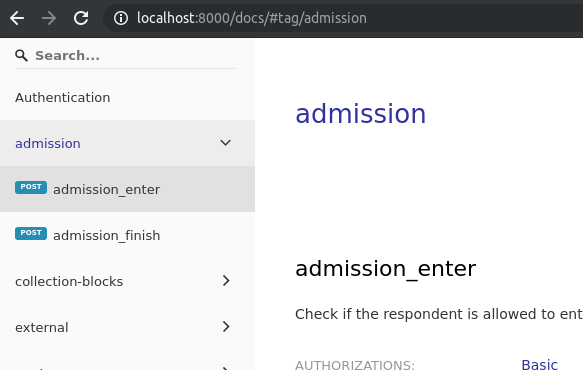
as you can see, endpoints are grouped based on "viewsets" (tags named after its url/viewset name).
If we add a very simple endpoint:
# views.py
class StatusView(APIView):
    permission_classes = [AllowAny]

    # pylint: disable=redefined-builtin
    def get(self, request, *args, **kwargs):
        return Response({"status": "ok"})

# urls.py
urlpatterns = [
    re_path(r"^status/", StatusView.as_view()),
    re_path(
        r"^docs/$", SchemaView.with_ui("redoc", cache_timeout=0), name="schema-redoc"
    ),
    re_path(
        r"^docs/swagger(?P<format>\.json|\.yaml)/$",
        SchemaView.without_ui(cache_timeout=0),
        name="schema",
    ),
    re_path(
        r"^api/v1/",
        include(([*quotas_patterns, *users_patterns], "api"), namespace="v1"),
    )
]
the grouping gets broken:
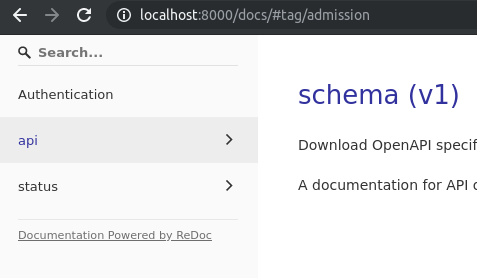
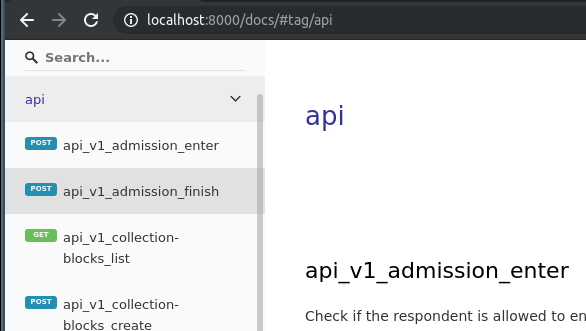
It's because after adding this endpoint, the generated OpenAPI spec tags are simply having api and not the previous names.
Even after trying to tweak it by adding swagger_auto_schema with explicit tags:
class StatusView(APIView):
    permission_classes = [AllowAny]

    @never_cache
    @swagger_auto_schema(
        operation_id="status",
        tags=["api"],
        responses={200: StatusSerializer},
    )
    # pylint: disable=redefined-builtin
    def get(self, request, *args, **kwargs):
        return Response({"status": "ok"})
the grouping is broken - the status is under api group but that's the same as for any other endpoint. In the swagger.yaml schema, I can see that all of endpoints have simply tags: api instead of e.g. tags: quota as it has before.
Is there a way how to fix this?
 hnykda
All 3 comments
I think the way to go would be to subclass SwaggerAutoSchema and to override the get_tags() method to return the tags you want. Note that you don't only have to work with the provided operation_keys, you can also access the currently inspected view as self.view if needed.
 etene
on 15 Nov 2019
etene
on 15 Nov 2019
Yeah, thanks, this did the trick:
from drf_yasg.inspectors import SwaggerAutoSchema


class SquadSwaggerAutoSchema(SwaggerAutoSchema):
    def get_tags(self, operation_keys=None):
        tags = super().get_tags(operation_keys)

        if "api" in tags and operation_keys:
            # NOTE: `operation_keys` is a list like ["api", "v1", "token", "read"].
            tags[0] = operation_keys[2]

        return tags
cc who came up with it @DusanMadar
hnykda
on 15 Nov 2019
In my case I've implemented following solution, in you settings define default schema class:
SWAGGER_SETTINGS = {
   'DEFAULT_AUTO_SCHEMA_CLASS': 'app.models.CustomSwaggerAutoSchema',
}
and based on the comments of @hnykda and @etene:
from drf_yasg.inspectors import SwaggerAutoSchema


class CustomSwaggerAutoSchema(SwaggerAutoSchema):
    def get_tags(self, operation_keys=None):
        operation_keys = operation_keys or self.operation_keys

        tags = self.overrides.get('tags')
        if not tags:
            tags = [operation_keys[0]]
        if hasattr(self.view, "swagger_tags"):
            tags = self.view.swagger_tags

        return tags
Then you can define the tags on view:
class PageView(ApiView):
    ...
    swagger_tags = ["tag1"]
    ...

class PageView2(ApiView):
    ...
    swagger_tags = ["tag1", "tag2"]
    ...

class PageView3(ApiView):
    ...
    swagger_tags = ["tag3"]
    ...
 khashashin
on 22 Mar 2021
khashashin
on 22 Mar 2021
Related issues
 gertjanol
·
5Comments
gertjanol
·
5Comments
 mkurnikov
·
3Comments
mkurnikov
·
3Comments
 marcosgeorgopoulos
·
4Comments
marcosgeorgopoulos
·
4Comments
 vinayan3
·
5Comments
vinayan3
·
5Comments
 Amoki
·
4Comments
Amoki
·
4Comments
Most helpful comment
Yeah, thanks, this did the trick:
cc who came up with it @DusanMadar