Bull: Redis master/slave setup on Kubernetes throwing error: BRPOPLPUSH { ReplyError: MOVED 2651
Description
I'm trying to debug this issue I'm seeing on Kubernetes where I have redis configured as a cluster.
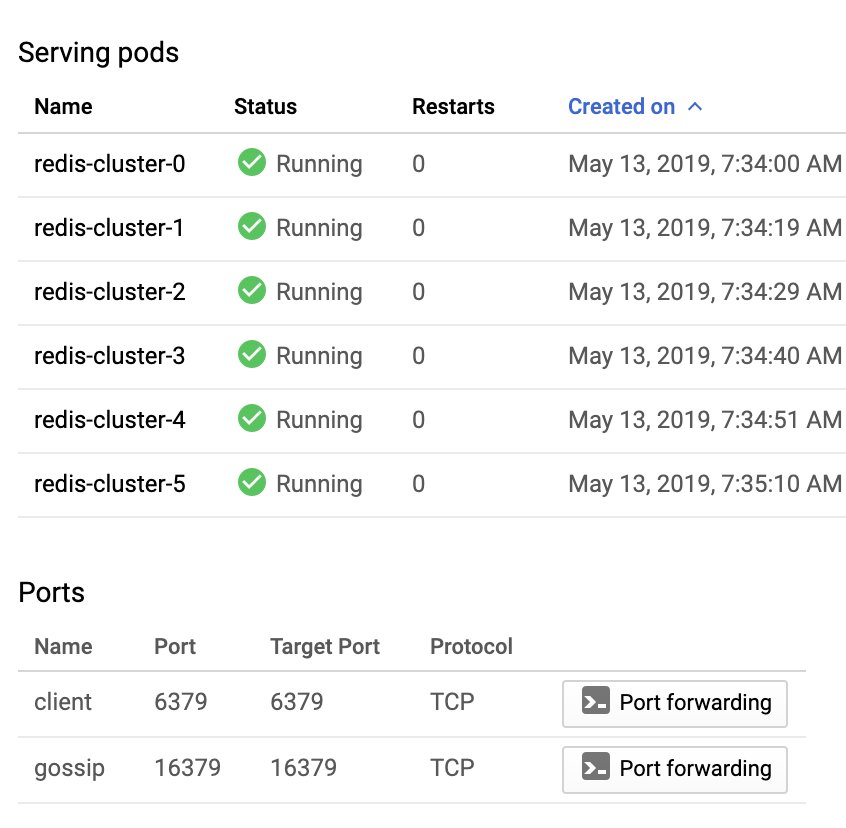
When Kubernetes restarts upon deployments, I run into this following error:
BRPOPLPUSH { ReplyError: MOVED 2651 <IP_ADDRESS>:6379
at parseError (/usr/src/app/node_modules/ioredis/node_modules/redis-parser/lib/parser.js:179:12)
at parseType (/usr/src/app/node_modules/ioredis/node_modules/redis-parser/lib/parser.js:302:14)
command:
{ name: 'brpoplpush',
args:
[ '{slack}:slack notifications:wait',
'{slack}:slack notifications:active',
'5' ] } }
Where
Or is it a networking issue with K8s?
Would enabling: https://github.com/OptimalBits/bull#cluster-support be the solution? Is this the right approach?
Here is my code:
Minimal, Working Test code to reproduce the issue.
(An easy to reproduce test case will dramatically decrease the resolution time.)
This is where I initialize the queues.
import Queue from 'bull';
import config from 'config';
import { run as slackRun } from './tasks/send-slack-message';
import { run as emailRun } from './tasks/send-email';

const redisConfig = {
  redis: {
    host: config.redis.host,
    port: config.redis.port
  }
};

const slackQueue = new Queue('slack notifications', { ...redisConfig, ...{ prefix: '{slack}' } });
const emailQueue = new Queue('email notifications', { ...redisConfig, ...{ prefix: '{email}' } });

slackQueue.process(slackRun);
emailQueue.process(emailRun);

emailQueue.on('completed', (job, result) => {
  job.remove();
});

export { emailQueue, slackQueue };
Then when I add a job to the queue after a specific action:
import { emailQueue, slackQueue } from 'worker/worker';

const queueOptions = {
  attempts: 2,
  removeOnComplete: true,
  backoff: {
    type: 'exponential',
    delay: 60 * 1000
  }
};

emailQueue.add(
  {
    params: {
      from: email,
      fromname: name,
      text: body
    }
  },
  queueOptions
);
slackQueue.add(
  {
    channelId: SLACK_CHANNELS.FEEDBACK,
    attachments: [
      {
        text: req.body.body
      }
    ]
  },
  queueOptions
);
Bull version
3.6.0
Additional information
Here is the configmap:
Name:         redis-cluster-config
Namespace:    default
Labels:       <none>
Annotations:  <none>

Data
====
update-node.sh:
----
#!/bin/sh
REDIS_NODES="/data/nodes.conf"
sed -i -e "/myself/ s/[0-9]\{1,3\}\.[0-9]\{1,3\}\.[0-9]\{1,3\}\.[0-9]\{1,3\}/${POD_IP}/" ${REDIS_NODES}
exec "$@"

redis.conf:
----
cluster-enabled yes
cluster-require-full-coverage no
cluster-node-timeout 15000
cluster-config-file nodes.conf
cluster-migration-barrier 1
appendonly yes
# Other cluster members need to be able to connect
protected-mode no

Events:  <none>
 hagginoaks
All 6 comments
ok, I do not know why this error appears, I would need to setup a cluster myself to debug it, it is probably an issue with ioredis instead of bull anyway.
Having said that, you will not gain so much using a cluster setup for Bull, so unless you are using the cluster for other stuff, a simple master->slave redis setup (slave for redundance), would be more than enough.
 manast
on 16 May 2019
manast
on 16 May 2019
@manast thanks for the quick response. :)
When setting up a simple master->slave redis setup, is there anything special I need to do when configuring a Bull queue?
hagginoaks
on 16 May 2019
nope, just use the IP or address of the master.
manast
on 16 May 2019
Has anyone else seen this issue? I'm getting this same error now connecting to a cluster using the nestjs wrapper. Is there a solution other than just using a simple master-> slave setup?
 jlvallelonga
on 14 Apr 2020
jlvallelonga
on 14 Apr 2020
@jlvallelonga I have same issue with nestjs. Did you find a solution?
 omeraplak
on 9 Oct 2020
omeraplak
on 9 Oct 2020
I managed to get rid of those bull BRPOPLPUSH ReplyError: MOVED errors by building an ioredis connection and reusing it:
// redisOpts contains the usual redis connect params, plus redisOpts.clustered which I use to differentiate between cluster and non-cluster mode. I'm sure there must be other methods for doing this, but I was in a hurry to find a fix
const _getConnOpts = function (redisOpts) {
    // these are for non cluster redis mode
    if (!redisOpts?.clustered) {
      return {
        redis: {
          host: redisOpts?.redis?.host || 'localhost',
          port: redisOpts?.redis?.port || 6379,
          password: redisOpts?.redis?.password || null,
        },
        prefix: redisOpts?.redis?.prefix || '{worker}',
      }
    }

    const Redis = require('ioredis');
    const client = new Redis.cluster([{ host: redisOpts.host }], { dnsLookup: (address, callback) => callback(null, address) });
    const subscriber = new Redis.cluster([{ host: redisOpts.host }], { dnsLookup: (address, callback) => callback(null, address) });
    let opts = {
      createClient: function (type) {
        switch (type) {
          case 'client':
            return client;
          case 'subscriber':
            return subscriber;
          default:
            return new Redis.cluster([{ host: redisOpts.host }], { dnsLookup: (address, callback) => callback(null, address) });
        }
      }
    }
And then, instantiate your queue like const myQueue = new Queue('myQueue', __getConnOpts(redisOpts))
Hope this helps!
 tudorconstantin
on 22 Oct 2020
tudorconstantin
on 22 Oct 2020
Related issues
 NicolasDuran
·
4Comments
NicolasDuran
·
4Comments
 alolis
·
4Comments
alolis
·
4Comments
 sarneeh
·
3Comments
sarneeh
·
3Comments
 weeco
·
3Comments
weeco
·
3Comments
 thelinuxlich
·
3Comments
thelinuxlich
·
3Comments
Most helpful comment
Has anyone else seen this issue? I'm getting this same error now connecting to a cluster using the nestjs wrapper. Is there a solution other than just using a simple master-> slave setup?