Awx: Job Template Runtime performance is dramatically impacted by Notification on Start
ISSUE TYPE
- Bug Report
SUMMARY
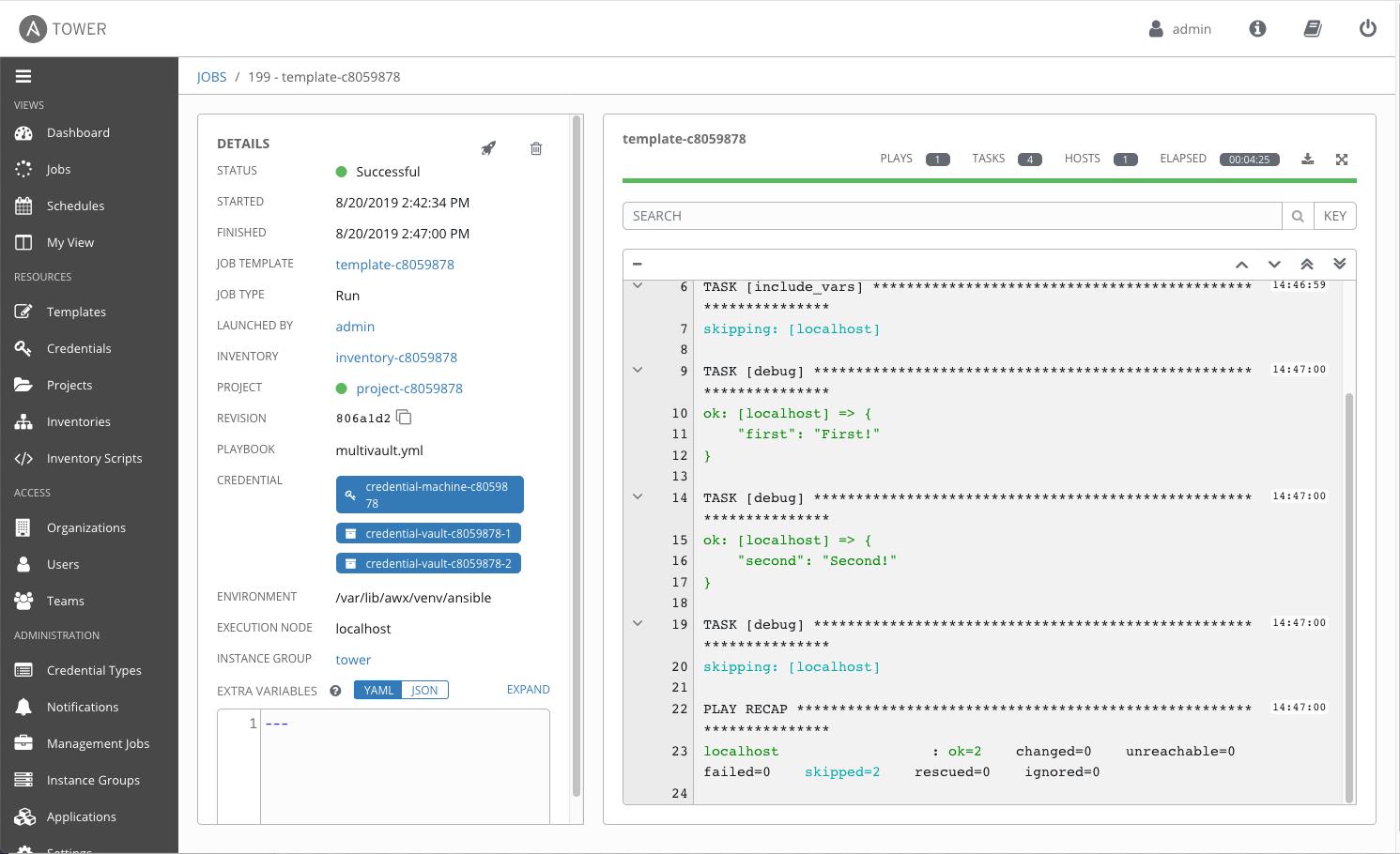
Notify on Job Start notifications can dramatically reduce the performance of a JT run. In the scenario:
JT: multivault.yml
Notifications: 26 Slack Notifications being triggered on launch and on success
Runtime is 4:25
Note: the time between success messages is considerable (15 seconds). The time between success messages is less than a second
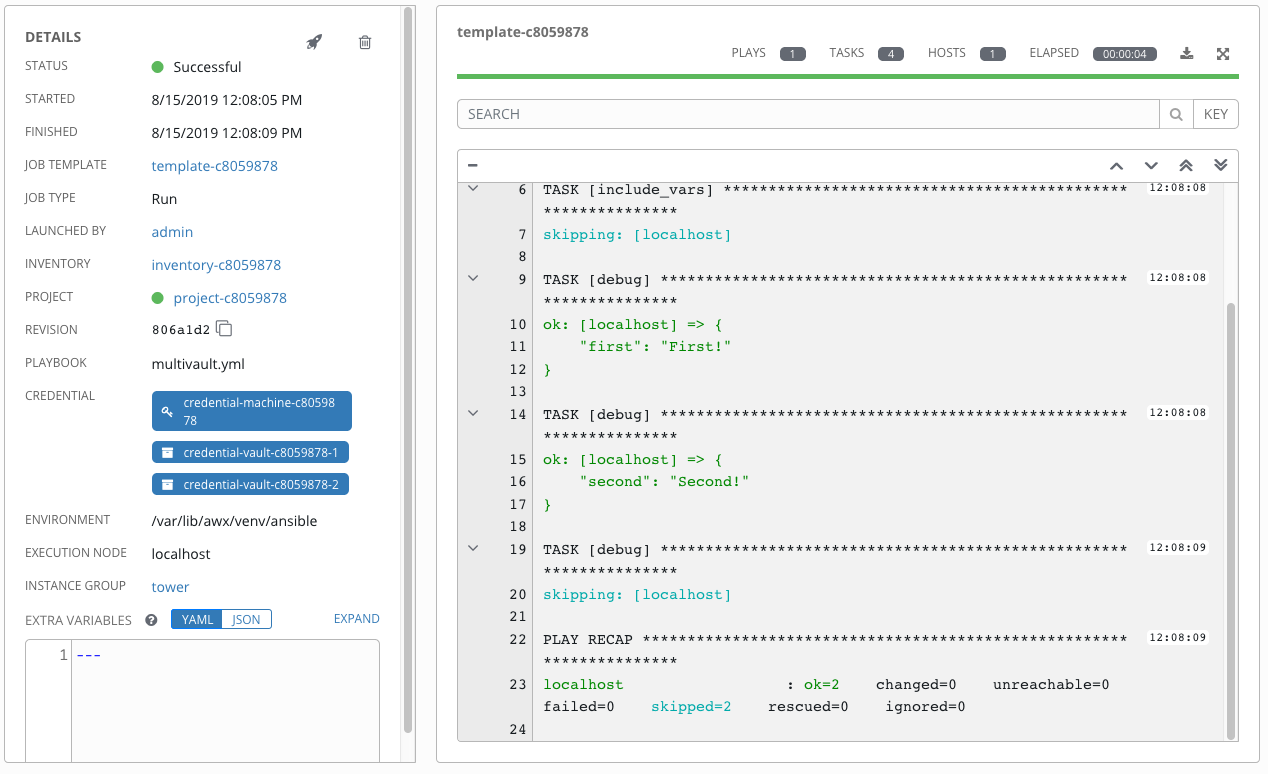
JT: multivault.yml
Notifications: Disabled
Runtime is 0:03
JT: multivault.yml
Notifications: Notification on success
Runtime is 0:03
Note: this is occurs with Webhook notifications as well
STEPS TO REPRODUCE
- Create a generic JT
- Run to completion
- Create 26 Slack Notifications
- Add Notifications to JT on step 1 to start on Launch
- Run to completion
EXPECTED RESULTS
Expect JT runtimes to be similar and notifications to trigger async.
ACTUAL RESULTS
Runtime performance dramatically impacted
ADDITIONAL INFORMATION
26 Notifications
No notifications
 unlikelyzero
All 11 comments
Quick poking at the code. We create notifications at the beginning of when a job enters the running state. The created notifications are created such that they will run in a background task. Maybe creating the notifications is very expensive? This sure does smell of the notification not being processed in the background.
https://github.com/ansible/awx/blob/devel/awx/main/tasks.py#L1172
 chrismeyersfsu
on 20 Aug 2019
chrismeyersfsu
on 20 Aug 2019
~It seems unlikely, but a part of me wondered if https://github.com/ansible/awx/issues/4533 might have negatively impacted performance as a side effect. (It's not clear to me that it would, but the change did happen recently and the change happened pretty close to where we register notifications to run asynchronously, so I'm a bit suspicious of the change).~
(UPDATE: Found smoking gun, described later in thread)
 jladdjr
on 21 Aug 2019
jladdjr
on 21 Aug 2019
@unlikelyzero to clarify, is this a regression you've noticed in devel, or as part of @jladdjr's open PR: https://github.com/ansible/awx/pull/4291 ?
 ryanpetrello
on 21 Aug 2019
ryanpetrello
on 21 Aug 2019
@ryanpetrello it does not appear on devel but is likely related to the custom messages changes
unlikelyzero
on 21 Aug 2019
Bingo:
https://github.com/ansible/awx/blame/devel/awx/main/models/jobs.py#L676
Walked through the code and confirmed we're hitting this repeatedly for 'start' notifications.
I haven't walked through the code w/ success / failure notifications, but at a higher level did confirm that success messages fire with hardly a delay.
jladdjr
on 22 Aug 2019
cc @matburt @ryanpetrello - saw you all chatting about ^ this this morning. Based on what I read, sounds like there may be some hidden side-effects with pulling the sleep out. Can you provide some context on that?
jladdjr
on 22 Aug 2019
okay, I think I see why this is only affecting start notifications:
runtask callsself.instance.send_notification_templates("running")- .. which calls
self.build_notification_message(nt, status) - .. which calls
self.notification_data()twice notification_datapolls forself.job_host_summaries.all()and sleeps (up to 5 seconds by default) until something is returned- .. _but_, since all of this is being called _before_ the job has finished running, I wouldn't expect there to be any job summaries
So, doing the math:
self.notification_data()is called twice- .. and there's a total of 5 seconds of sleep each time
- and @unlikelyzero used 26 notifications
- that gives us 2 * 5 * 26 = 260 seconds which is 4 minutes and 20 seconds
That's only 5 seconds longer than @unlikelyzero's total run time, which sounds about right given that his other jobs only took 3 seconds to run.
I think we have our smoking gun.
jladdjr
on 22 Aug 2019
Added a small change that tells notification_data not to bother with blocking if the job is still running.
With that change:
- job w/ 26 notifications set to fire on job start: 9.863 seconds
- job w/out notifications: 7.0 seconds
jladdjr
on 22 Aug 2019
Oh man @jladdjr, excellent detective work on that one - that would have been a really noticeable regression and definitely caused problems for people using start notifications.
ryanpetrello
on 22 Aug 2019
Danke! Huge props to @unlikelyzero for finding the nasty regression in the first place! Seriously, good find.

jladdjr
on 22 Aug 2019
Verified:
Without NT on Start or Success:
0:02
20+ Notification on Start and Success:
0:04
20+ nonfunctional NTs on Start and Success
0:04
unlikelyzero
on 23 Aug 2019
Related issues
 pebbledavec
·
3Comments
pebbledavec
·
3Comments
 shortsteps
·
3Comments
shortsteps
·
3Comments
 grahamn-gr
·
3Comments
grahamn-gr
·
3Comments
 augabet
·
3Comments
augabet
·
3Comments
 astraios
·
3Comments
astraios
·
3Comments
Most helpful comment
Added a small change that tells
notification_datanot to bother with blocking if the job is still running.With that change: