Abp: Add Permission Dynamically by Tenant
Hi,
I need to add permission Dynamically by Tenant.
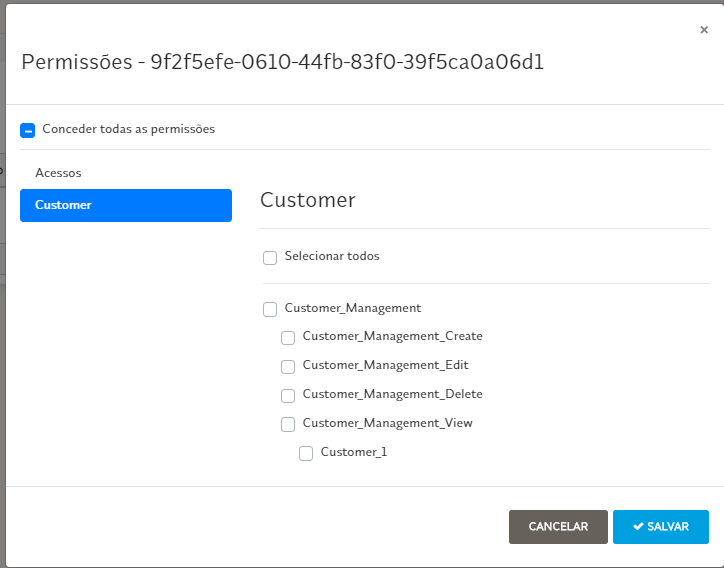
I got it that way with the "Permission DefinitionProvider" and the permissions loaded right, but when I change Tenant, it doesn't update the list of permissions on the screen. This works if I restart the API application. Is there a way to resolve this? I'm using Angular 9.
Thanks by this excelent framework!!
I intend to make some videos in Portuguese for the community.
My Code:
 public class CustomerPortalPermissionDefinitionProvider : PermissionDefinitionProvider, ITransientDependency
    {
        private IRepository<Cliente, int> _customerRepository;
        private readonly ICurrentTenant _currentTenant;

        public CustomerPortalPermissionDefinitionProvider(IRepository<Cliente, int> customerRepository, ICurrentTenant currentTenant)
        {
            _customerRepository = customerRepository;
            _currentTenant = currentTenant;
        }
        public override void Define(IPermissionDefinitionContext context)
        {

            var grpCustomer = context.AddGroup("Customer");

            var customerManagement =  grpCustomer.AddPermission("Customer_Management", null, MultiTenancySides.Tenant);
            customerManagement.AddChild("Customer_Management_Create");
            customerManagement.AddChild("Customer_Management_Edit");
            customerManagement.AddChild("Customer_Management_Delete");

            var visualizar = customerManagement.AddChild("Customer_Management_View");
            var customers = _customerRepository.Where(c => c.TenantId == _currentTenant.Id).ToList();
            foreach (var item in customers)
            {
                visualizar.AddChild("Customer_" + item.Id);
            }

        }
    }
 gumalheiros
All 4 comments
I think that's not how the tenants are intended to be used.
You can't define permissions per tenant, since the permission provider runs only once (i think).
 NecatiMeral
on 22 Jun 2020
NecatiMeral
on 22 Jun 2020
I think that's not how the tenants are intended to be used.
You can't define permissions per tenant, since the permission provider runs only once (i think).
Thanks @NecatiMeral for the comment. As far as I could see, that's right. I'm trying to find a way to refresh the "Define" method, but without success yet!
gumalheiros
on 22 Jun 2020
The easiest way is to customize PermissionDefinitionManager and set DI life to transient(Will be initialized every time), like this:
[Dependency(ReplaceServices = true)]
[ExposeServices(typeof(IPermissionDefinitionManager))]

public class MyPermissionDefinitionManager : PermissionDefinitionManager,ITransientDependency
{
    public MyPermissionDefinitionManager(
        IOptions<AbpPermissionOptions> options,
        IServiceProvider serviceProvider)
        : base(options, serviceProvider)
    {
    }

    public override PermissionDefinition Get(string name)
    {
        try
        {
            return base.Get(name);
        }
        catch (Exception e)
        {
            return MyPermissionDefinition.CreatePermissionDefinition(name);
        }

    }
}

public class MyPermissionDefinition : PermissionDefinition
{
    protected internal MyPermissionDefinition(string name, ILocalizableString displayName = null, MultiTenancySides multiTenancySide = MultiTenancySides.Both, bool isEnabled = true)
        : base(name, displayName, multiTenancySide, isEnabled)
    {
    }


    public static PermissionDefinition CreatePermissionDefinition(string name)
    {
        return new MyPermissionDefinition(name,isEnabled:false);
    }
}
This way can achieve your purpose, but it is not a best practice. Another way is that you can define the Refresh method in the custom PermissionDefinitionManager class and call it when switching tenants.
 realLiangshiwei
on 23 Jun 2020
realLiangshiwei
on 23 Jun 2020
The easiest way is to customize
PermissionDefinitionManagerand set DI life totransient(Will be initialized every time), like this:[Dependency(ReplaceServices = true)] [ExposeServices(typeof(IPermissionDefinitionManager))] public class MyPermissionDefinitionManager : PermissionDefinitionManager,ITransientDependency { public MyPermissionDefinitionManager( IOptions<AbpPermissionOptions> options, IServiceProvider serviceProvider) : base(options, serviceProvider) { } public override PermissionDefinition Get(string name) { try { return base.Get(name); } catch (Exception e) { return MyPermissionDefinition.CreatePermissionDefinition(name); } } } public class MyPermissionDefinition : PermissionDefinition { protected internal MyPermissionDefinition(string name, ILocalizableString displayName = null, MultiTenancySides multiTenancySide = MultiTenancySides.Both, bool isEnabled = true) : base(name, displayName, multiTenancySide, isEnabled) { } public static PermissionDefinition CreatePermissionDefinition(string name) { return new MyPermissionDefinition(name,isEnabled:false); } }This way can achieve your purpose, but it is not a best practice. Another way is that you can define the
Refreshmethod in the customPermissionDefinitionManagerclass and call it when switching tenants.
Works Like a Charm!! 😄 Thanks @liangshiw
gumalheiros
on 23 Jun 2020
Related issues
 mehdihadeli
·
3Comments
mehdihadeli
·
3Comments
 hikalkan
·
3Comments
hikalkan
·
3Comments
 Trojaner
·
3Comments
Trojaner
·
3Comments
 hitaspdotnet
·
3Comments
hikalkan
·
3Comments
hitaspdotnet
·
3Comments
hikalkan
·
3Comments
Most helpful comment
The easiest way is to customize
PermissionDefinitionManagerand set DI life totransient(Will be initialized every time), like this:This way can achieve your purpose, but it is not a best practice. Another way is that you can define the
Refreshmethod in the customPermissionDefinitionManagerclass and call it when switching tenants.